
Why go
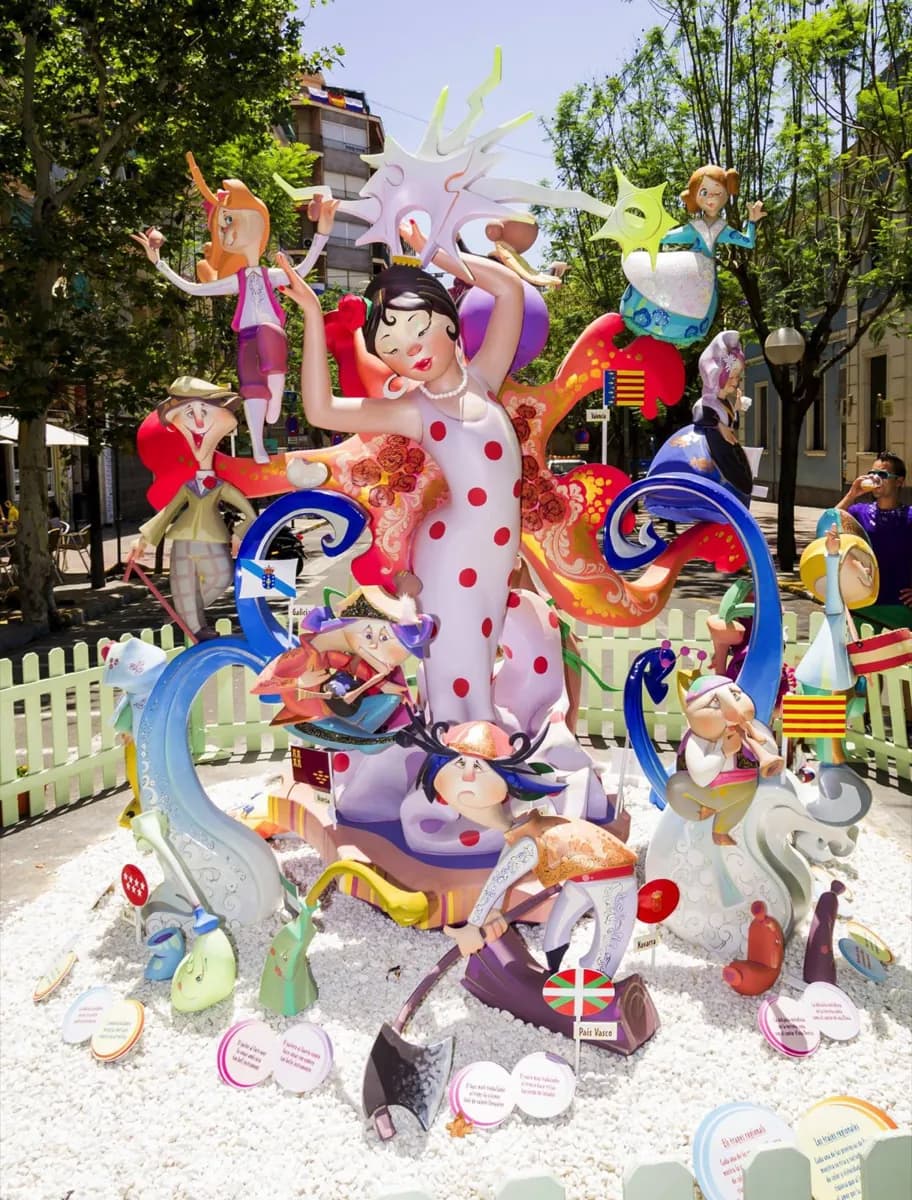
Fogueres is worth understanding before seeing either the June celebration or the year-round museum. Its large constructions are designed to be temporary, while selected ninots survive by popular vote. That tension between careful craft and deliberate destruction gives the festival its distinctive emotional and visual force.
The full story
Bonfires have long marked midsummer around the Mediterranean, but Alicante developed the tradition into its modern civic form in 1928, drawing inspiration from Valencia's Falles. Artists and neighbourhood groups create large constructions made of individual figures and scenes, often using caricature to comment on public life. Most are burned as the festival reaches its climax around Saint John's feast, making fire part of the work rather than an accident that destroys it. A small number of figures escape. These Ninots Indultats are spared by popular vote and preserved, creating a physical record of changing styles, jokes and concerns. Fireworks and pyrotechnic displays extend the celebration beyond the monuments, while food and street gatherings connect it to older midsummer customs. Outside festival dates, the Fogueres Museum provides the clearest way to see how sculpture, satire and neighbourhood organisation fit together.