
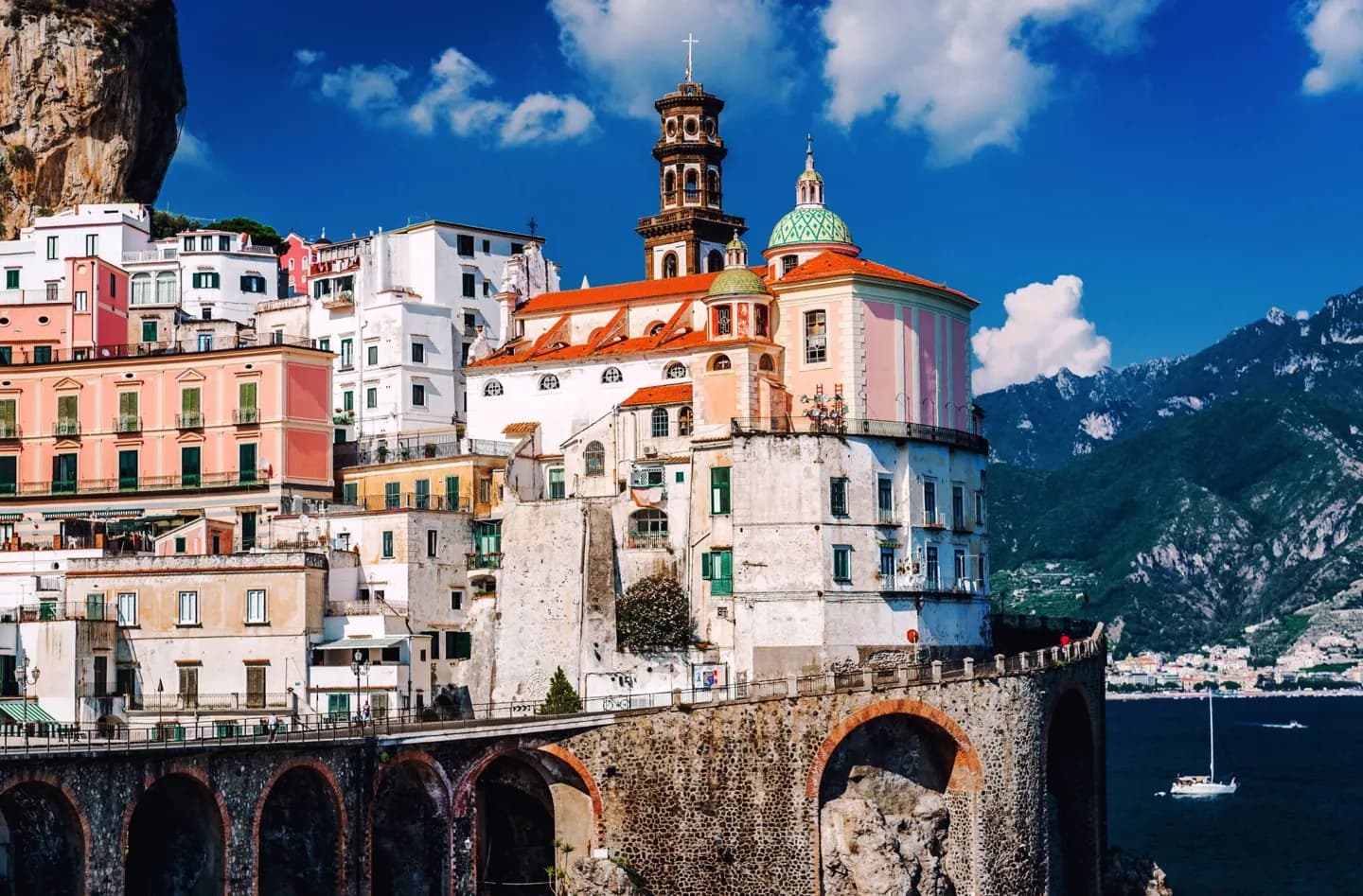
Why go
Amalfi became an independent maritime power in the ninth century and connected Mediterranean trading centres from North Africa to Constantinople. Its merchants and ships supported a republic that also included nearby towns. The Tabula Amalphitana, a code of maritime law, shows how far its influence reached beyond this small stretch of shore.
The full story
With little farmland on the steep coast, Amalfi's people looked outward to shipping and trade. The town gained increasing autonomy under Byzantine influence and became a maritime republic in the ninth century. Its merchants worked across the Mediterranean, and its shipyards and coinage reflected the strength of that network. Amalfi's reach also took in neighboring places such as Atrani, Ravello, Scala, Maiori and Minori. The Tabula Amalphitana set down rules for seafaring commerce and remained influential after the republic's peak. Norman conquest in the eleventh century and Pisan attacks in the twelfth weakened Amalfi's position, but trade did not simply vanish. Looking from the crowded waterfront toward the hills makes the original choice of the sea as an economic route easy to understand.