
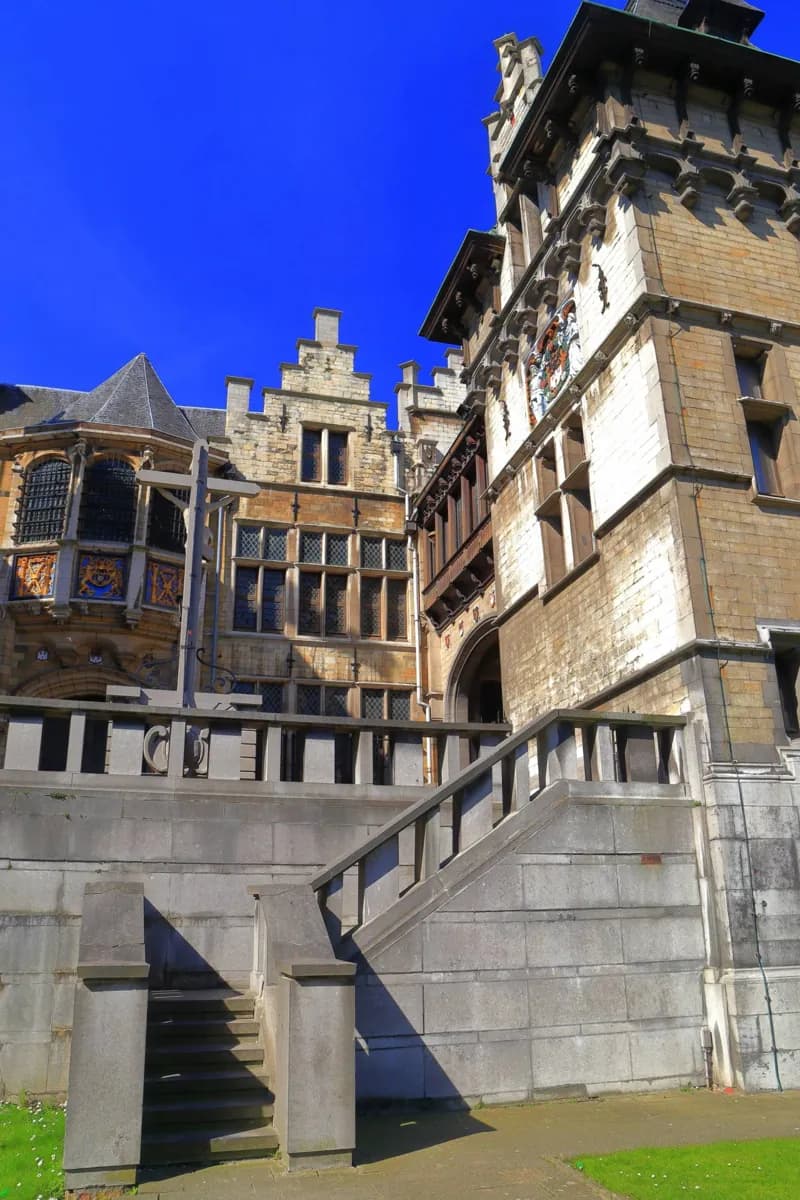
Why go
This history makes the old waterfront more legible. The fortified wharf was a compact place of gates, streets, civic functions and river trade, not a city-wide wall. Look near the Vleeshuis for traces of masonry and read Burchtgracht as a clue to its ditch.
The full story
The Scheldt once formed a political frontier, and Antwerp's riverside position demanded protection. A small fortified enclosure developed on raised ground by the wharf around the late tenth century. Its wall faced both land and river; a ditch protected the landward sides. The name Burchtgracht preserves the memory of that ditch, even though the surrounding streets have changed greatly. Inside the enclosure were lanes, a square, houses and important civic and religious buildings. A gate and toll house faced the water, where river traffic helped sustain the settlement. The Vleeshuis stands just beyond the area of the early wall, near where later excavations exposed fragments of masonry. Het Steen also points to this first fortified riverfront, though the structure seen today includes substantial later work. Taken together, these clues show how small Antwerp's defended core was before trade pushed the city beyond it.