
Why go
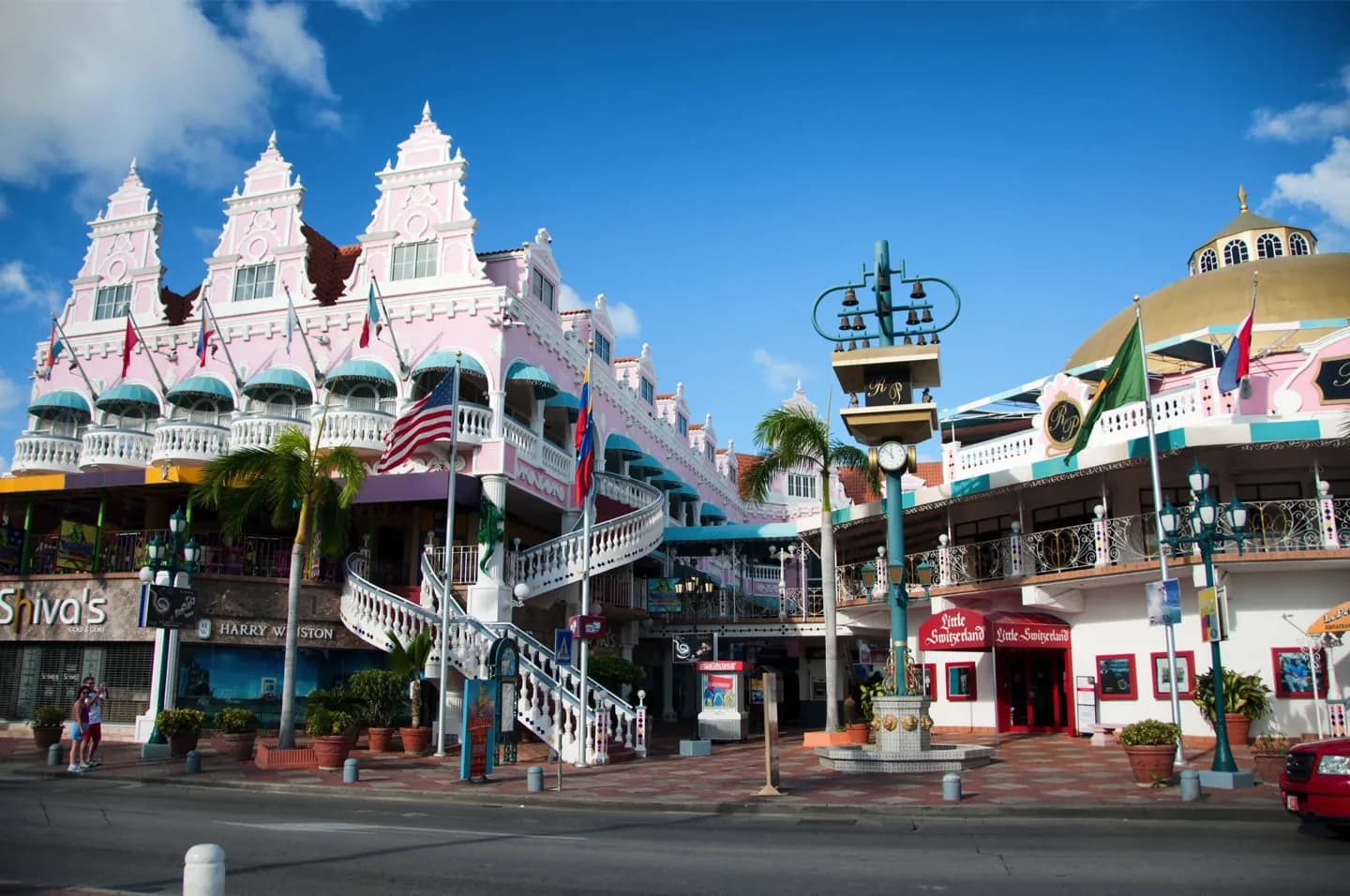
Cultural context makes a town visit or museum stop more meaningful. Indigenous rock markings at Fontein Cave connect the island to its earlier history, while Papiamento and Dutch show later layers. Carnival and Dia di San Juan bring music and color into public celebrations; check current event details if you hope to attend.
The full story
The Caquetíos left material traces on Aruba before Spanish and Dutch rule reshaped the island. Later migration added further influences, visible in language, food and celebrations. Papiamento is one expression of that layered history, drawing vocabulary from several European and African languages. Aruba’s Carnival is a public celebration associated with music and color. Dia di San Juan is another named tradition; red and yellow clothing represents fire. These events have their own calendars and settings, so their meaning is clearer when encountered as particular traditions rather than as a general promise of festivities. Fontein Cave’s Indigenous rock markings and museum collections add context between events. Taken together, language, objects and celebrations reveal a culture shaped by the island’s proximity to South America and its place within the Dutch Caribbean.