
Why go
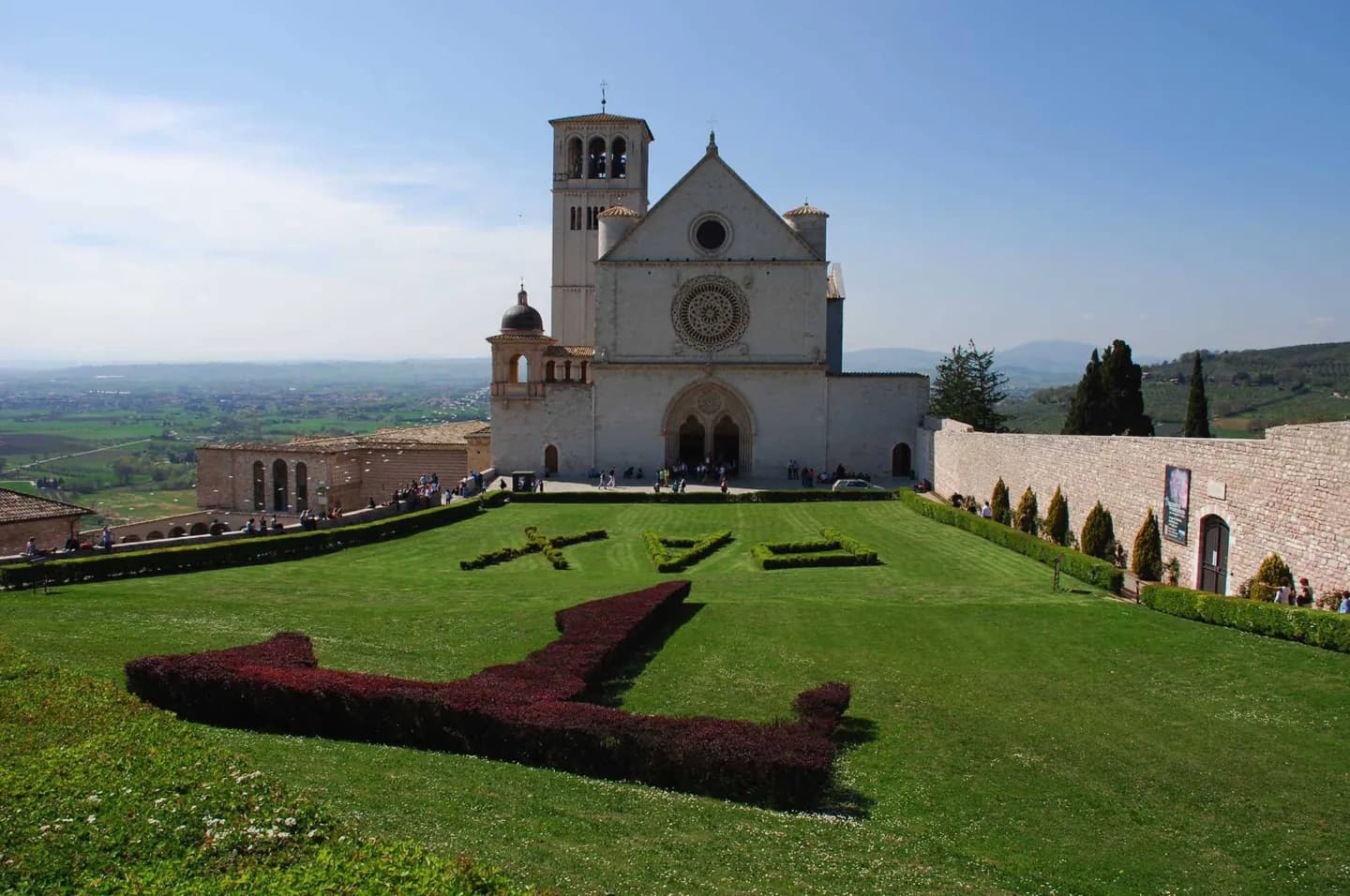
His biography links places that otherwise seem like separate monuments. San Rufino recalls his baptism, Chiesa Nuova the tradition of his family home, the Porziuncola the early community, and San Francesco the pilgrimage centre built after his death. This sequence separates his life from its later commemoration.
The full story
Francis was born into the family of the merchant Pietro di Bernardone in the late twelfth century. His early life included military ambition and a period of captivity during conflict with Perugia. A gradual turn toward poverty and preaching brought him into conflict with the expectations of his family and society. Companions gathered around him, and the Order of Friars Minor received papal approval in the early thirteenth century. Clare formed a women’s community inspired by his example, with its own lasting history. The Porziuncola is closely associated with the movement’s beginnings; Francis died nearby in 1226. He was canonized in 1228, and the basilica that holds his remains began soon afterward. Francis’s writings and remembered stories often describe other creatures as kin. The account of him preaching to birds is a legend, while his “Canticle of the Creatures” gives a direct glimpse of that outlook. Reading the town through these stages keeps the living Francis distinct from the monuments made in his name.