
Why go
Travelers will hear several languages in Bali, especially in tourism areas. Knowing the difference between Indonesian and Balinese prevents easy confusion, and a few courteous phrases show attention without pretending mastery of a language whose registers and ceremonial uses require real social knowledge.
The full story
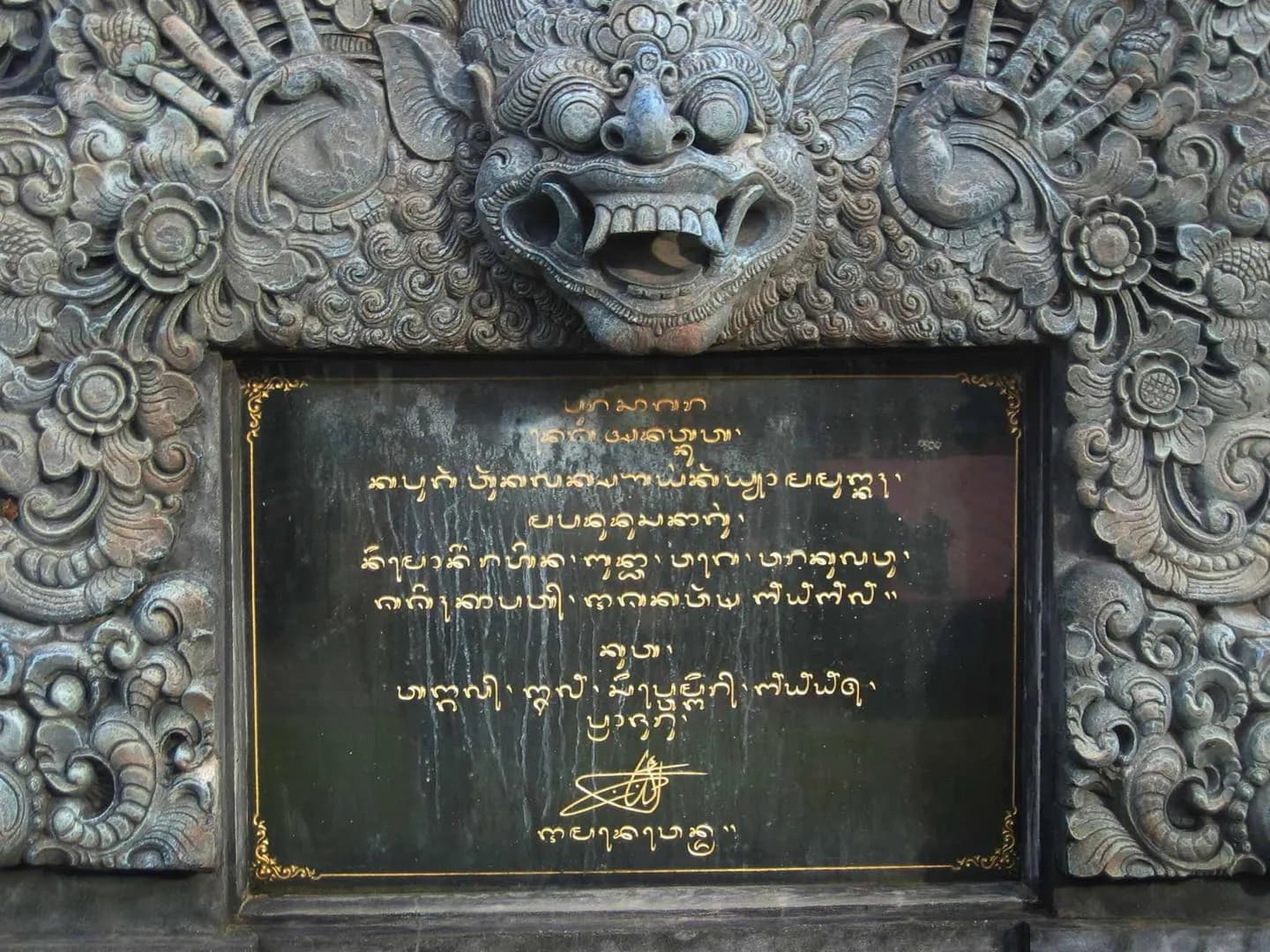
Bahasa Indonesia is the national language and the most useful shared language for travel across the archipelago. Balinese belongs to the Austronesian language family and remains central to family, village and ceremonial life for many island residents. Its speech levels reflect social relationships and context, so vocabulary can change depending on who is speaking to whom. Balinese may be written in the Latin alphabet or in a traditional script derived from Indic writing systems. The script appears on signs, temples and cultural materials, sometimes alongside Indonesian. English is common in major visitor areas, but it should not be assumed everywhere. Simple Indonesian greetings such as selamat pagi, good morning, and terima kasih, thank you, are widely understood. In Balinese contexts, om swastiastu is a formal greeting with religious resonance rather than a casual phrase to scatter indiscriminately. Listen to how local people use language before copying unfamiliar expressions.