
Why go
Cultural context changes what visitors notice at temples, palaces and performance stages. Direction, offerings, calendars and community groups organize daily life, while artists continually adapt older forms. Understanding those connections prevents Bali's dance, carving and ceremony from becoming interchangeable decoration.
The full story
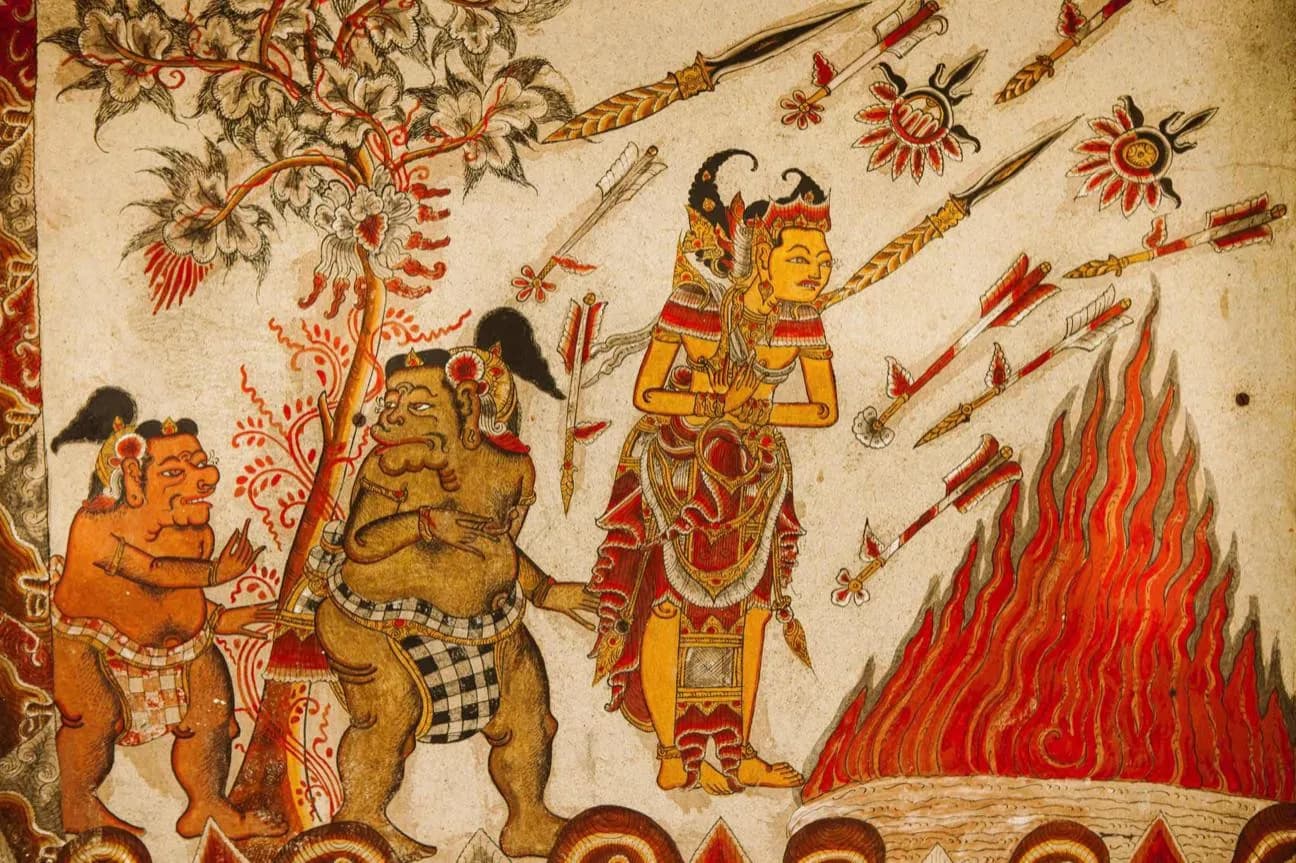
Balinese culture is often described through arts, yet music, dance, carving and textiles are deeply connected with ritual and community life. Villages maintain temples and organize obligations through local institutions, while family compounds contain their own shrines. Direction carries meaning: kaja points toward the mountain or sacred interior, and kelod toward the sea or less sacred edge. These orientations shift across the island rather than matching simple compass points. The 210-day pawukon calendar schedules many temple anniversaries and ceremonies, so processions and decorated streets are recurring parts of life rather than staged festivals alone. Gamelan ensembles, dance dramas and masked performances may serve temple occasions, court traditions or public stages. Ubud and nearby villages became major centers for painting and performance through exchanges among Balinese artists, royal patrons and international residents. The strongest visit respects continuity and change together: living traditions are neither frozen relics nor merely tourist entertainment.