
Why go
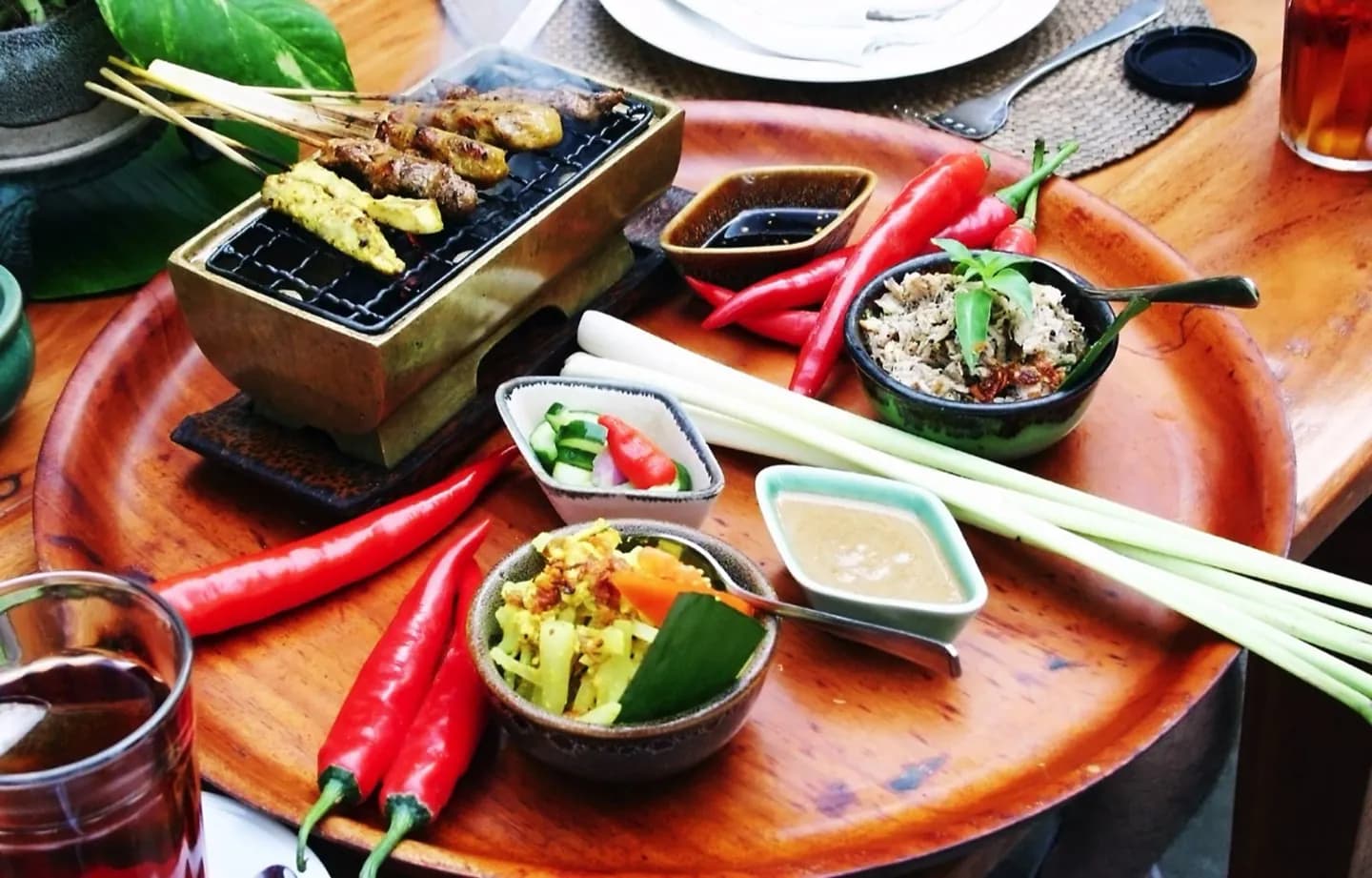
Food offers a direct route into the island's agriculture and ritual life. Look beyond generic Indonesian fried rice toward lawar, sate lilit, ayam or bebek betutu and babi guling, while recognizing that some dishes are tied to ceremonies, specific communities or early selling hours.
The full story
Balinese kitchens build flavor with a spice base often called base genep, combining ingredients such as shallot, garlic, turmeric, ginger, galangal, candlenut, chili and aromatic leaves. Lawar mixes chopped vegetables, coconut and seasonings, sometimes with meat or blood, so ask which version is being served. Sate lilit wraps seasoned minced meat or fish around a skewer. Betutu slowly cooks chicken or duck with a rich spice paste, while babi guling seasons and roasts a whole pig and is especially associated with Bali's Hindu food culture. Rice remains the center of many meals, supported by vegetables, sambal and small portions of meat or fish. Warung range from simple counters to specialized shops that sell one dish until it runs out. Hindu offerings and feast preparation connect cooking with temple and family ceremonies, but food placed as an offering should never be touched or stepped over.