
Why go
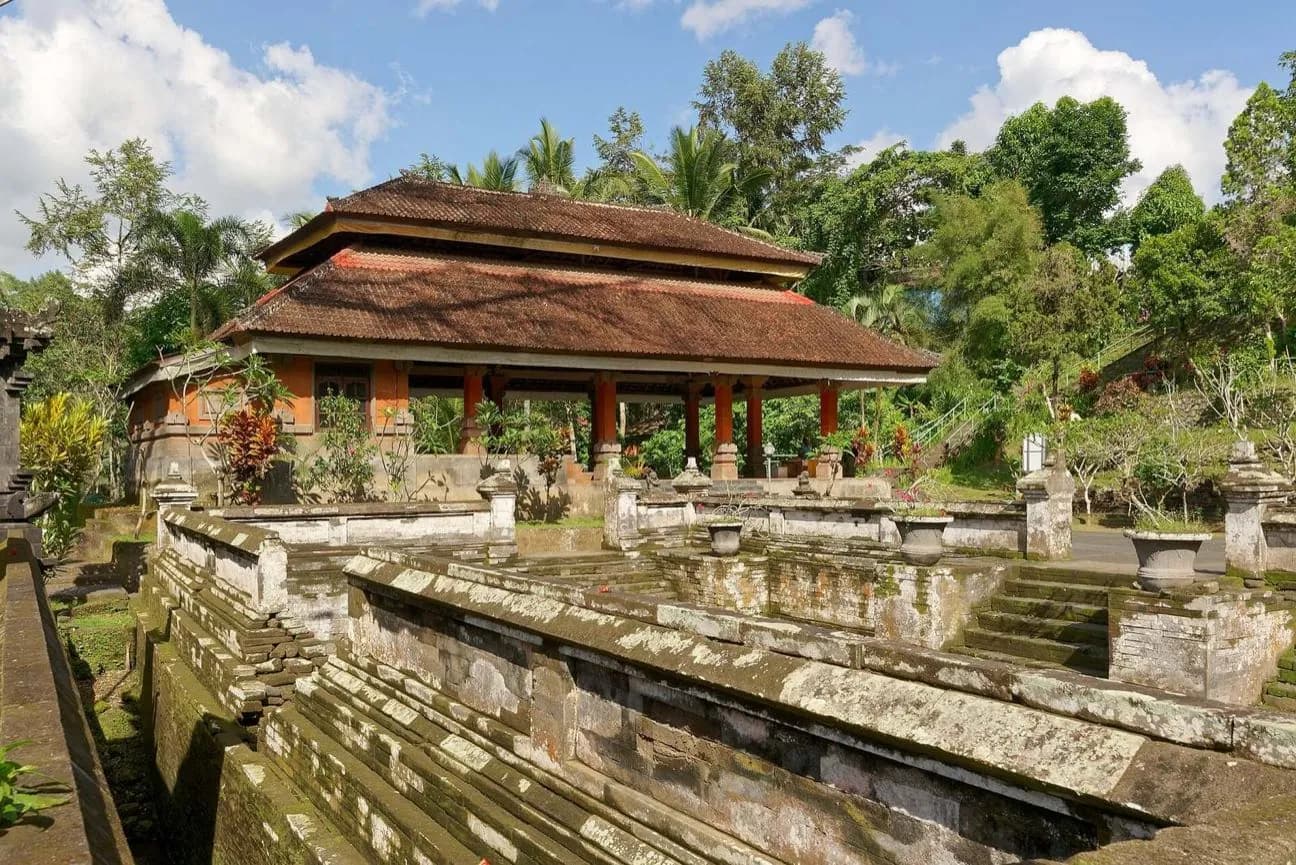
Goa Gajah rewards a slower look beyond its famous façade. The compact cave opens onto a ritual complex with fountains, stone fragments and paths descending into the ravine. It is useful for understanding how different religious traditions and periods overlap in Bali rather than fitting into a single architectural style.
What to look for
- The cave mouth is framed by a dense carving of foliage, creatures and a looming face.
- Stone fountain figures line the excavated bathing pools.
- Steps continue below the main court into a shaded river valley.
The full story
Goa Gajah developed through several phases, and that layered history is more important than any single origin story attached to the cave. Archaeological evidence connects the site with Hindu practice, while remains in the lower valley also point to Buddhist use. The cave itself contains a small worship space rather than a large underground chamber. Outside, the bathing pools were uncovered during twentieth-century archaeological work and now form the most open part of the complex. Carved fragments, water and vegetation create a sequence from compressed entrance to broad courtyard and then down into the ravine. Look closely at how the site uses natural slope and water rather than treating the façade as an isolated monument. It remains a sacred place, so ritual activity takes priority over photography.
Useful to know
- Wear a sarong and sash as directed and keep prayer areas clear.
- Allow extra time for the ravine only if steps are dry and you are comfortable with the climb back.
Your next visit
Estimated · Declared scenario and planning estimates; no live opening, weather, queue or booking service.
Outdoor visit · 45–75 min
World planning estimate; admission, opening, visit duration and access need checking.