
Why go
Gunung Kawi combines archaeology, landscape and physical movement more completely than a roadside temple. The descent reveals fields and irrigation before the large candi appear cut into cliff faces beside the river. It fits best with nearby Tirta Empul, provided the stairs and humid valley do not overfill the morning.
What to look for
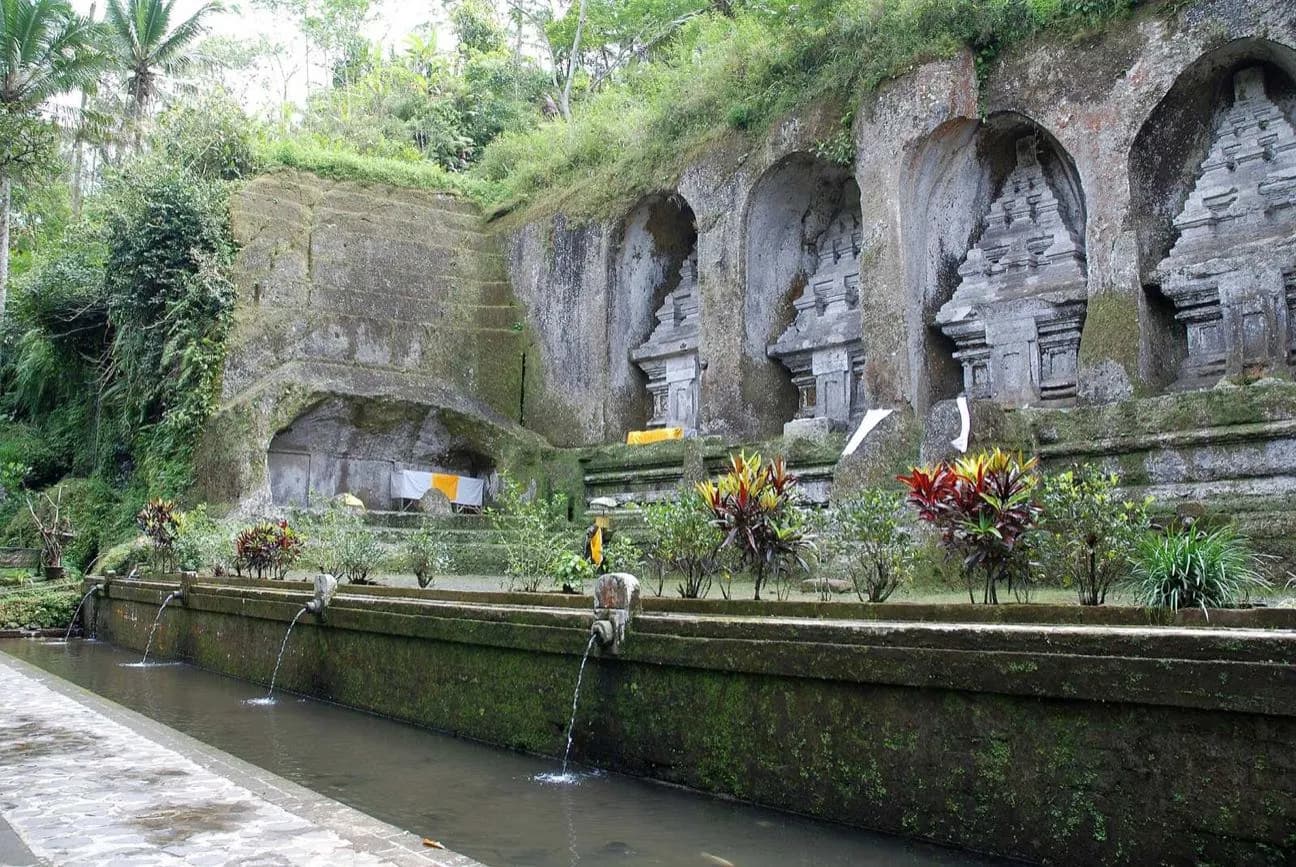
- Tall candi façades are carved directly into opposing rock walls.
- The Pakerisan River divides the principal groups of monuments.
- Stairs pass rice terraces and irrigation channels before reaching the sanctuary.
The full story
Gunung Kawi is commonly associated with Bali's eleventh-century Warmadewa rulers. Its large candi resemble the form of funerary towers, yet they are carved into rock rather than built as freestanding structures. Groups of monuments face one another across the Pakerisan River, linking royal memory with a landscape shaped by water and cultivation. The approach is part of the interpretation. Stairs descend from the modern entrance through terraces, channels and small shrines before the cliff-cut forms appear. This setting belongs to the wider Pakerisan component of Bali's UNESCO cultural landscape, where ancient monuments, temples and irrigation remain closely connected. Notice how the sound and humidity change near the river. The monuments feel monumental not through height alone, but because the valley conceals them until late in the descent.
Useful to know
- Expect a long stair descent and climb in humid conditions; carry water and pace the return.
- Wear temple clothing as directed and keep active worship spaces clear.
Your next visit
Estimated · Declared scenario and planning estimates; no live opening, weather, queue or booking service.
Outdoor visit · 60–105 min
World planning estimate; admission, opening, visit duration and access need checking.