
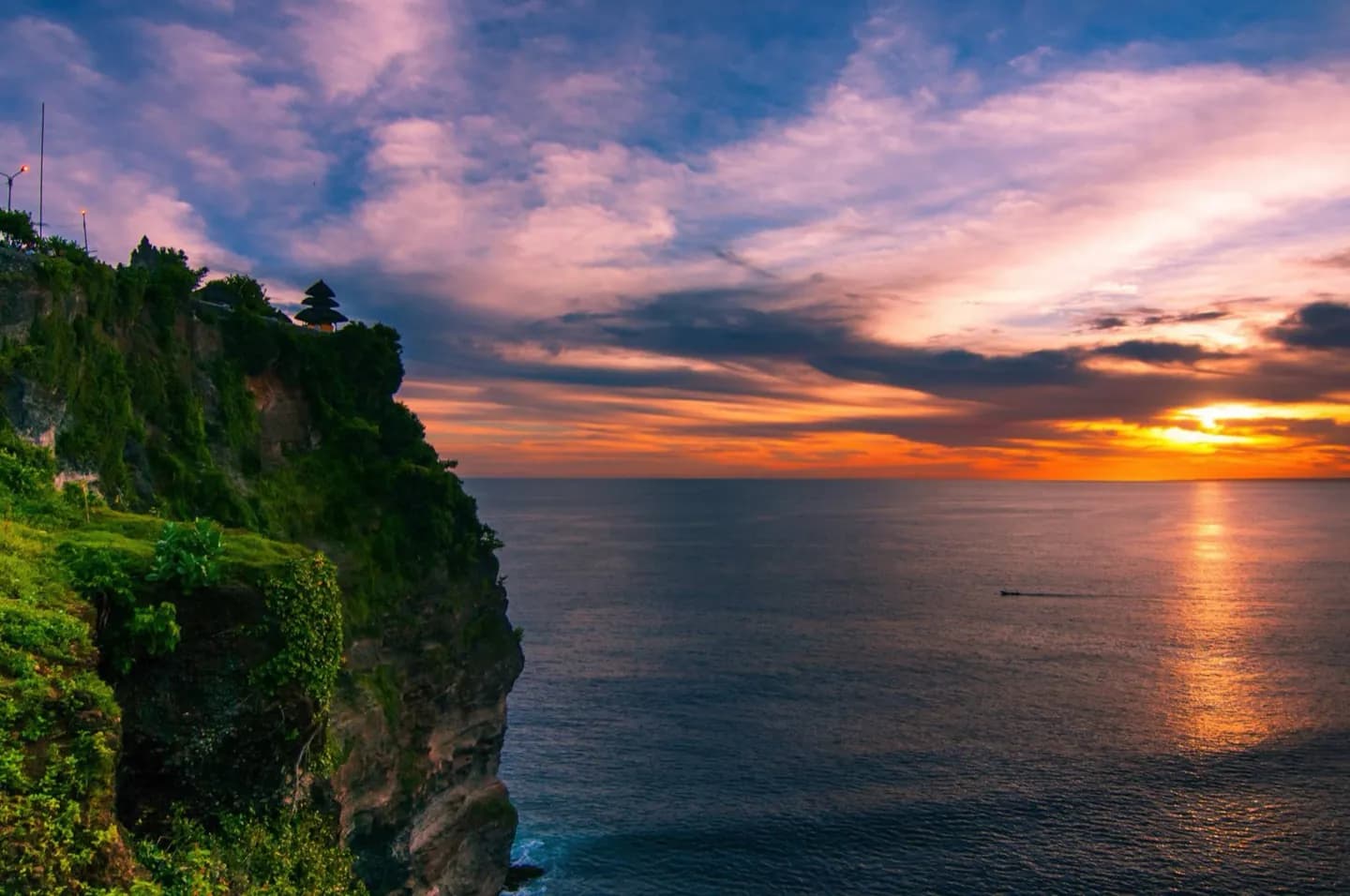
Why go
Few Bali temples make landscape and architecture interact so directly. The sanctuary sits above a sheer limestone coast, and the path exposes changing views of surf, headlands and the temple silhouette. Come for the cliff setting and sacred context; treat the Kecak show as a separate ticketed performance, not the whole visit.
What to look for
- The temple compound occupies a narrow cliff edge above the Indian Ocean.
- A paved path follows the headland and reveals the sanctuary from several distances.
- The open-air amphitheater stages Kecak against the late-day sky.
The full story
Uluwatu belongs to Bali's network of directional temples, sanctuaries associated with protecting the island from spiritually charged boundaries. Its Balinese name combines ulu, meaning land's end, with watu, meaning rock, and the geography makes that name literal. The sanctuary occupies the far southwest edge of the Bukit Peninsula, where limestone falls sharply to the Indian Ocean. Tradition connects the site with several Hindu priests, including Dang Hyang Nirartha, whose journeys also shape the stories of other coastal temples. The modern visitor route extends beyond the compact sacred core along the cliff rim. That walk matters: distance lets you see how little built mass is needed to command such a large horizon. Near sunset, the Kecak performance introduces a different tradition, using interlocking human voices and movement in an amphitheater outside the inner worship space.
Useful to know
- Secure loose glasses, hats and food around the resident macaques, and do not try to retrieve an item from them yourself.
- Check temple and performance information separately; ceremonies or weather can affect access and the evening program.
Your next visit
Estimated · Declared scenario and planning estimates; no live opening, weather, queue or booking service.
Outdoor visit · 60–120 min
World planning estimate; admission, opening, visit duration and access need checking.