
Why go
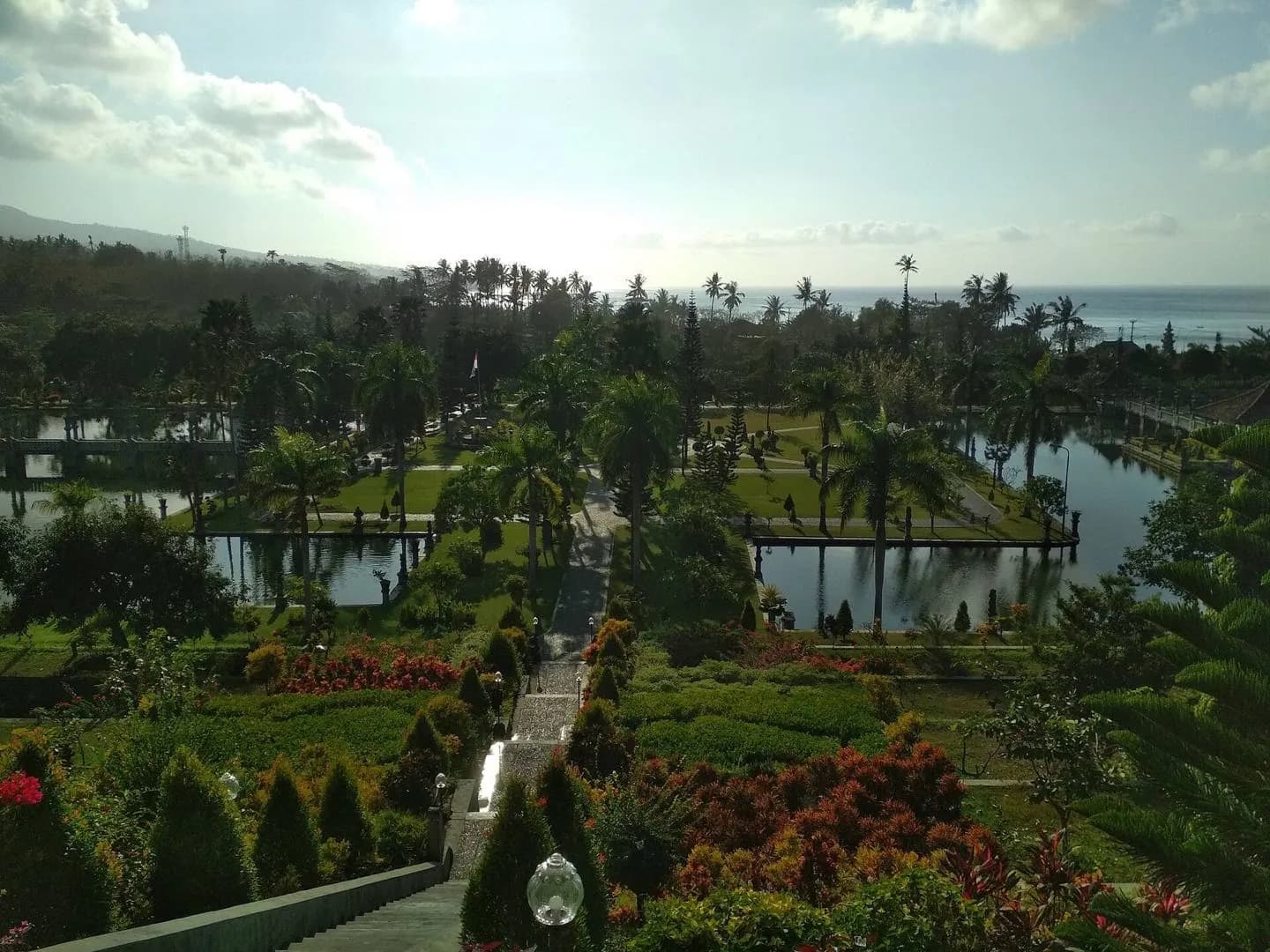
Taman Ujung feels broader and more exposed than Tirta Gangga. Its bridges and pavilions create long sightlines across water, while the elevated terraces place the palace within East Bali's mountain-to-sea geography. Pair the two water palaces only when the day has enough time for their different scales.
What to look for
- Bridges connect the principal pavilion across a broad rectangular pool.
- Upper terraces reveal the full garden plan and surrounding hills.
- European and Balinese forms meet in the restored palace buildings.
The full story
Taman Ujung was developed by the Karangasem royal family in the early twentieth century as a place for reception and retreat. Its design brings Balinese landscape principles together with European architectural details in pavilions set among large pools. Earthquakes, wartime neglect and the eruption of Mount Agung damaged the complex, and later restoration returned many buildings and bridges to use. The site is best understood from two levels. At water level, bridges and façades create long formal perspectives. From the upper terraces, the full plan becomes visible against hills, coast and, in clear conditions, Mount Agung. That larger view distinguishes Taman Ujung from the denser pools of Tirta Gangga and explains why both can support separate visits rather than interchangeable photo stops.
Useful to know
- Expect exposed walking between pools and terraces; carry sun and rain protection.
- Use the upper viewpoint before midday heat if continuing toward Tirta Gangga or Amed.
Your next visit
Estimated · Declared scenario and planning estimates; no live opening, weather, queue or booking service.
Outdoor visit · 45–75 min
World planning estimate; admission, opening, visit duration and access need checking.