
Why go
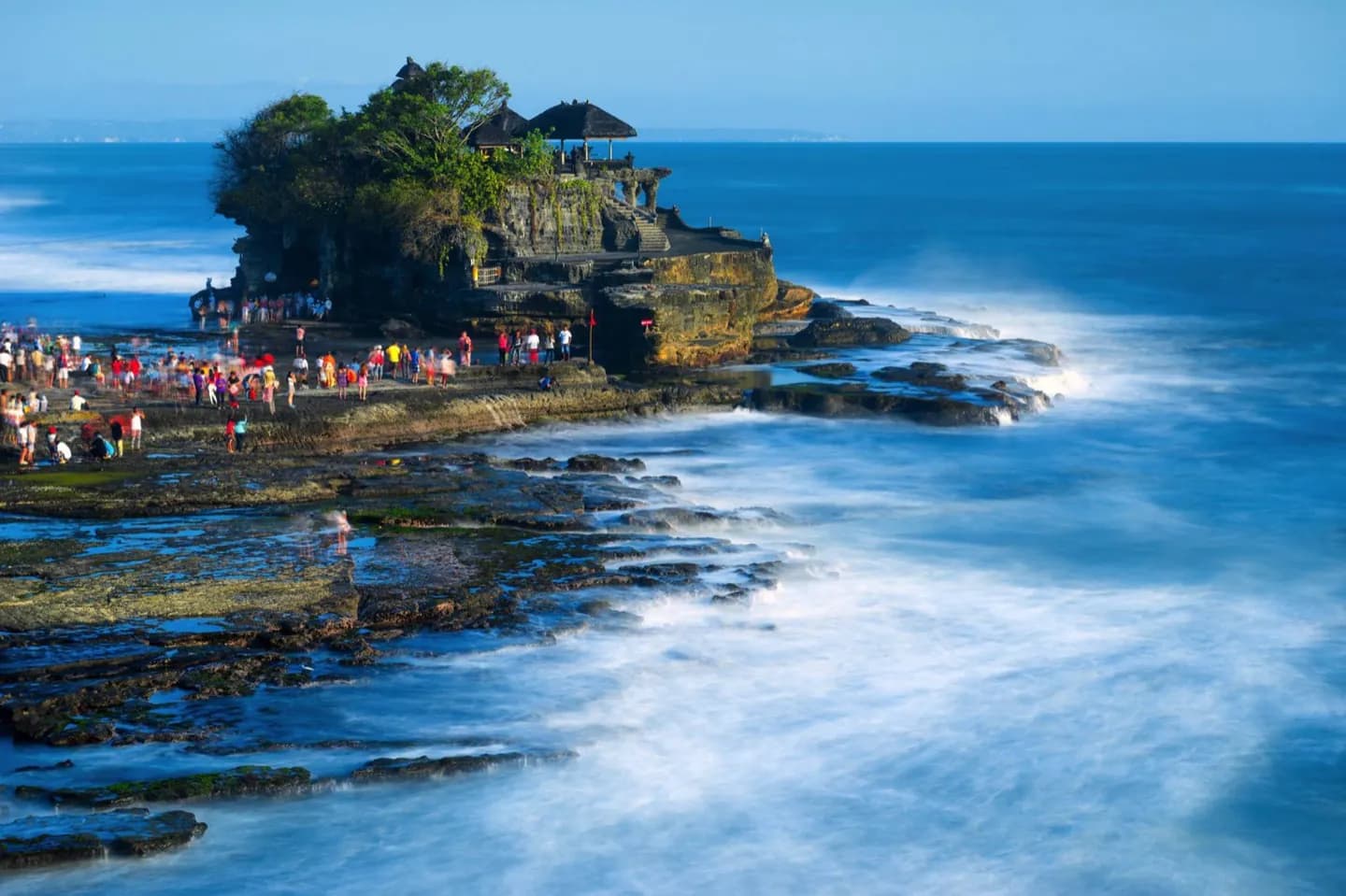
Tanah Lot rewards attention to the relationship between shrine, rock and water. At high tide the temple appears detached from Bali; lower water reveals the rough base and changes the whole silhouette. Nearby Batu Bolong and the clifftop terraces offer alternative angles when the main viewpoint is crowded.
What to look for
- Pura Tanah Lot stands on a wave-cut rock separated from shore by the tide.
- Pura Batu Bolong occupies a neighboring headland pierced by a natural arch.
- The sunset terraces show the temple as a dark outline against the western sky.
The full story
Tanah Lot is often photographed as a single temple, but the visit makes more sense as a small sacred coastal landscape. The name is commonly understood as land in the sea, an apt description of the shrine's offshore position. Balinese tradition connects the temple with the priest Dang Hyang Nirartha and the network of sea temples associated with his sixteenth-century journey around the island. The shoreline explains much of the site's power. Waves, spray and the tidal crossing make the separation between land and shrine visible rather than symbolic. The rock has also required substantial conservation work, so what looks entirely natural includes human intervention to protect it from erosion. Step back from the busiest terrace and compare Tanah Lot with Batu Bolong: the two silhouettes show different ways temple architecture is placed against an unstable coast.
Useful to know
- Check tide conditions as well as sunset time; the water level changes what can be seen and where you can stand.
- Keep worship areas clear and follow local directions during ceremonies.
Your next visit
Estimated · Declared scenario and planning estimates; no live opening, weather, queue or booking service.
Outdoor visit · 45–90 min
World planning estimate; admission, opening, visit duration and access need checking.