
Why go
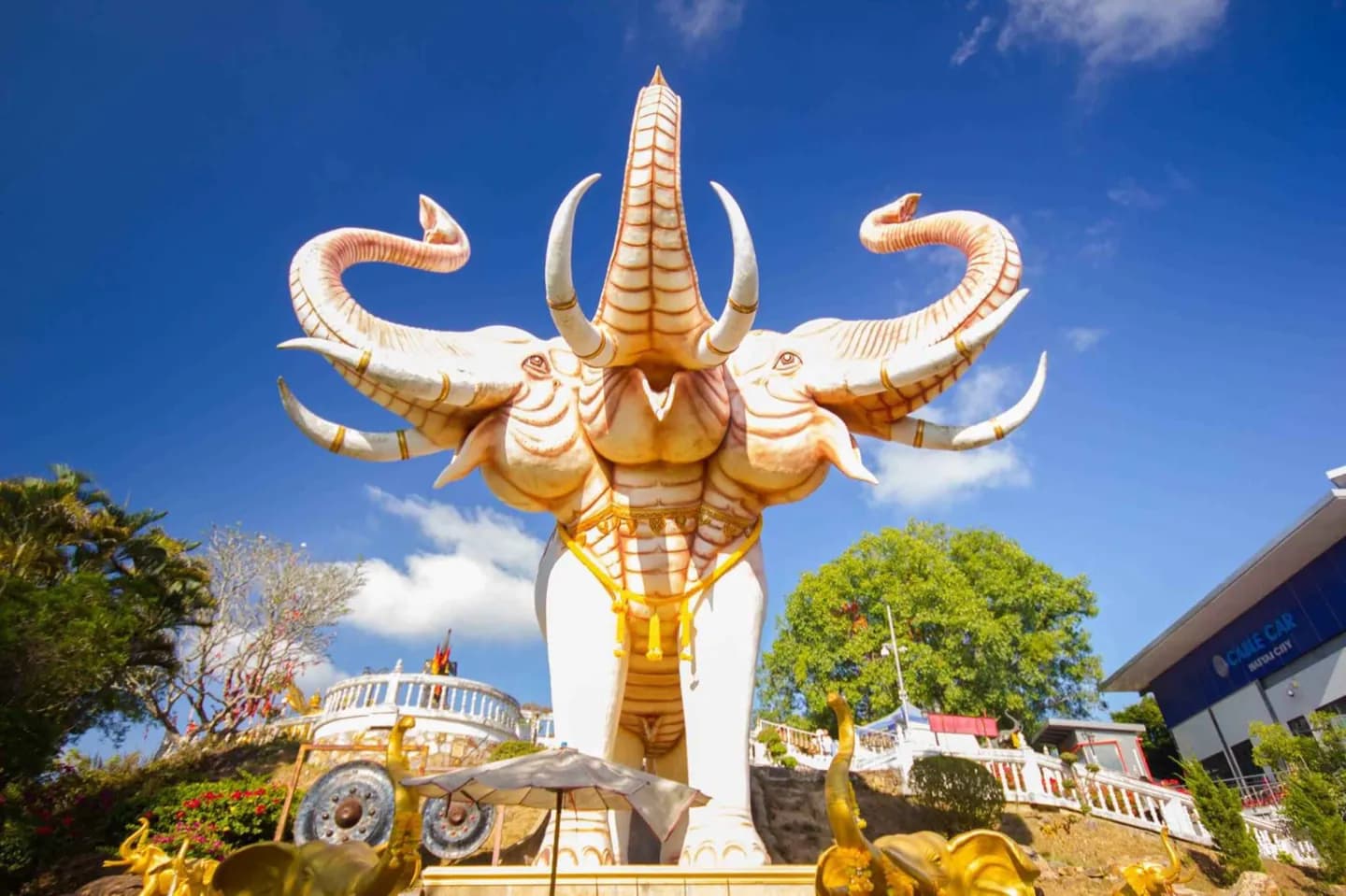
The building is the exhibit. Visitors move from an underworld level through the human realm to a celestial chamber inside the elephant, encountering ceramics, sacred images and dense decorative craft along the way. That vertical sequence gives the decorative architecture a clear narrative as well as a visual one.
What to look for
- Stand back to take in the immense three-headed elephant above its pedestal.
- Follow the symbolic climb from underworld to earth and then heaven.
- Look for the thousand-armed Guanyin and the celestial paintings in the upper chamber.
The full story
Collector Lek Viriyaphant conceived the Erawan Museum as a place to preserve religious objects and express continuities in Thai culture. Its defining sculpture is a three-headed bronze elephant weighing about 250 tonnes. The elephant rises above a high pedestal and contains the museum’s uppermost room. Inside, the sequence follows a Hindu model of the universe. The lowest level represents the underworld and includes Chinese ceramics and material on the museum’s construction. The middle level represents the human world, with further art and a prominent image of the thousand-armed Guanyin. The top chamber, reached inside the elephant’s body, evokes Tavatimsa heaven above Mount Meru. Buddha relics and images from several Thai periods appear beneath cosmic paintings. The literal ascent turns cosmology into movement. Rather than viewing separate galleries on one plane, visitors climb through a symbolic universe held within a single piece of monumental sculpture.
Useful to know
- Confirm current access before making the trip to Samut Prakan.
- Allow time to examine the decorated interior, not only photograph the exterior sculpture.
- Pair it with Ancient Siam only if you have transport and most of a day.
Your next visit
Estimated · Declared scenario and planning estimates; no live opening, weather, queue or booking service.
Outdoor visit · 30–45 min
World planning estimate; admission, opening, visit duration and access need checking.