
Why go
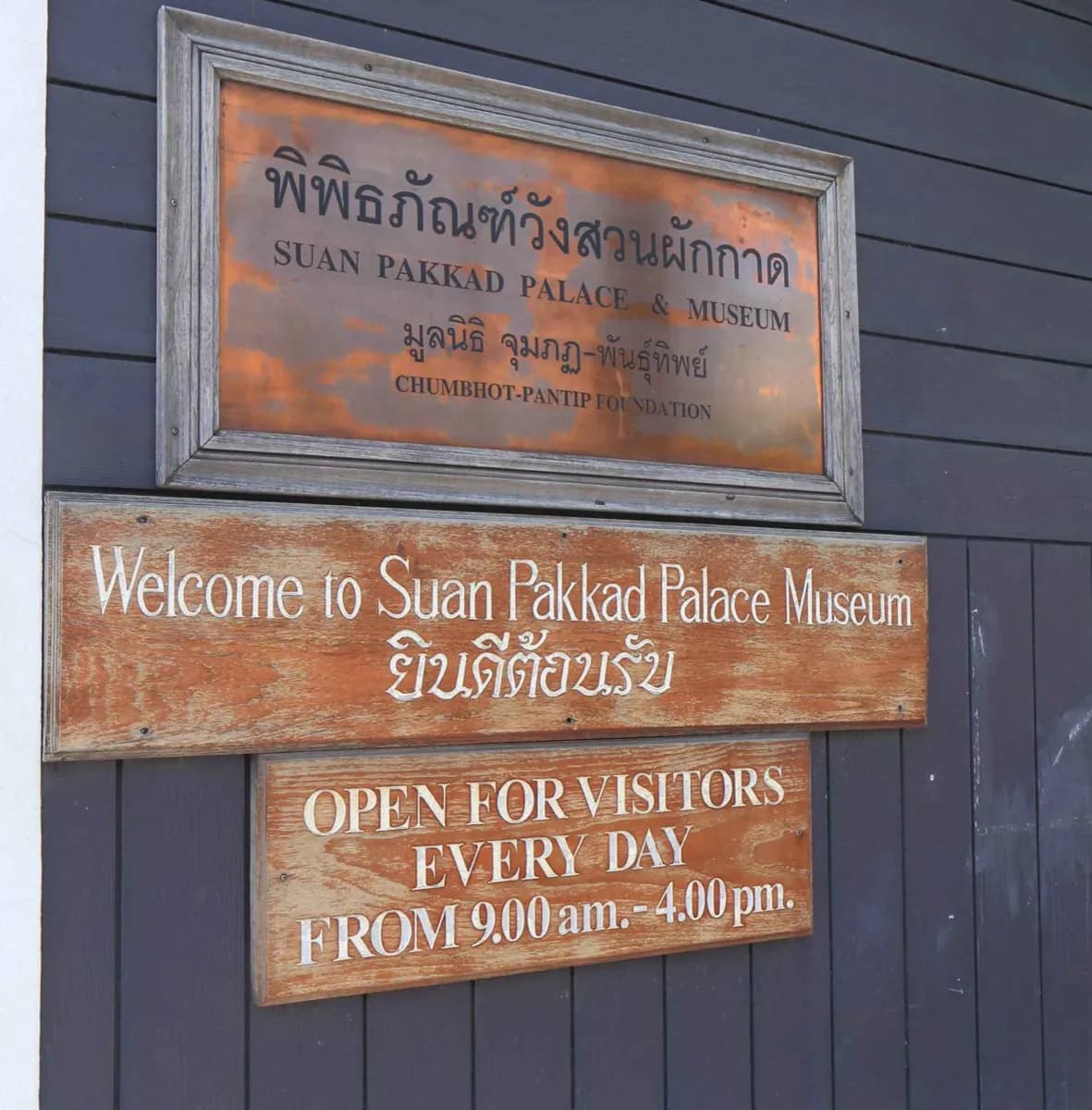
Suan Pakkad offers domestic scale after Bangkok’s monumental palaces. Covered passages connect timber houses filled with art and antiques, allowing architecture and collection to support each other. The Lacquer Pavilion, more than four centuries old, and prehistoric Ban Chiang pottery give the museum a historical range far greater than its intimate setting suggests.
What to look for
- Move among traditional Thai timber houses linked by covered walkways.
- Study the centuries-old Lacquer Pavilion and its painted decoration.
- Find Ban Chiang pottery displayed among the Suan Pakkad Palace collections.
The full story
Suan Pakkad means “cabbage patch,” an unexpectedly modest name for a palace museum. The property was the home of Prince Chumbhotpong Paripatra and his wife, who opened their private residence and collection to the public in 1952. Traditional Thai timber houses stand within the grounds and are connected by covered passages, creating a visit that moves between architecture, garden and objects rather than through conventional gallery blocks. The collections include Thai antiques, art and pottery from Ban Chiang, whose archaeological tradition reaches back thousands of years. The Lacquer Pavilion is the most distinctive building. More than four centuries old, it brings historic painted decoration into the compound and gives the museum a focal point beyond its royal associations. The result is less imposing than Bangkok’s great ceremonial palaces. Its strength lies in seeing how collecting, domestic life and traditional building forms can occupy the same carefully arranged setting.
Useful to know
- Follow the houses in sequence so the domestic architecture remains part of the museum experience.
- Give the Lacquer Pavilion more time than the general antiques displays; it is the clearest architectural highlight.
- Combine the museum with the Victory Monument or Phaya Thai area, and verify current entry details before leaving.
Your next visit
Estimated · Declared scenario and planning estimates; no live opening, weather, queue or booking service.
Outdoor visit · 30–45 min
World planning estimate; admission, opening, visit duration and access need checking.