
Why go
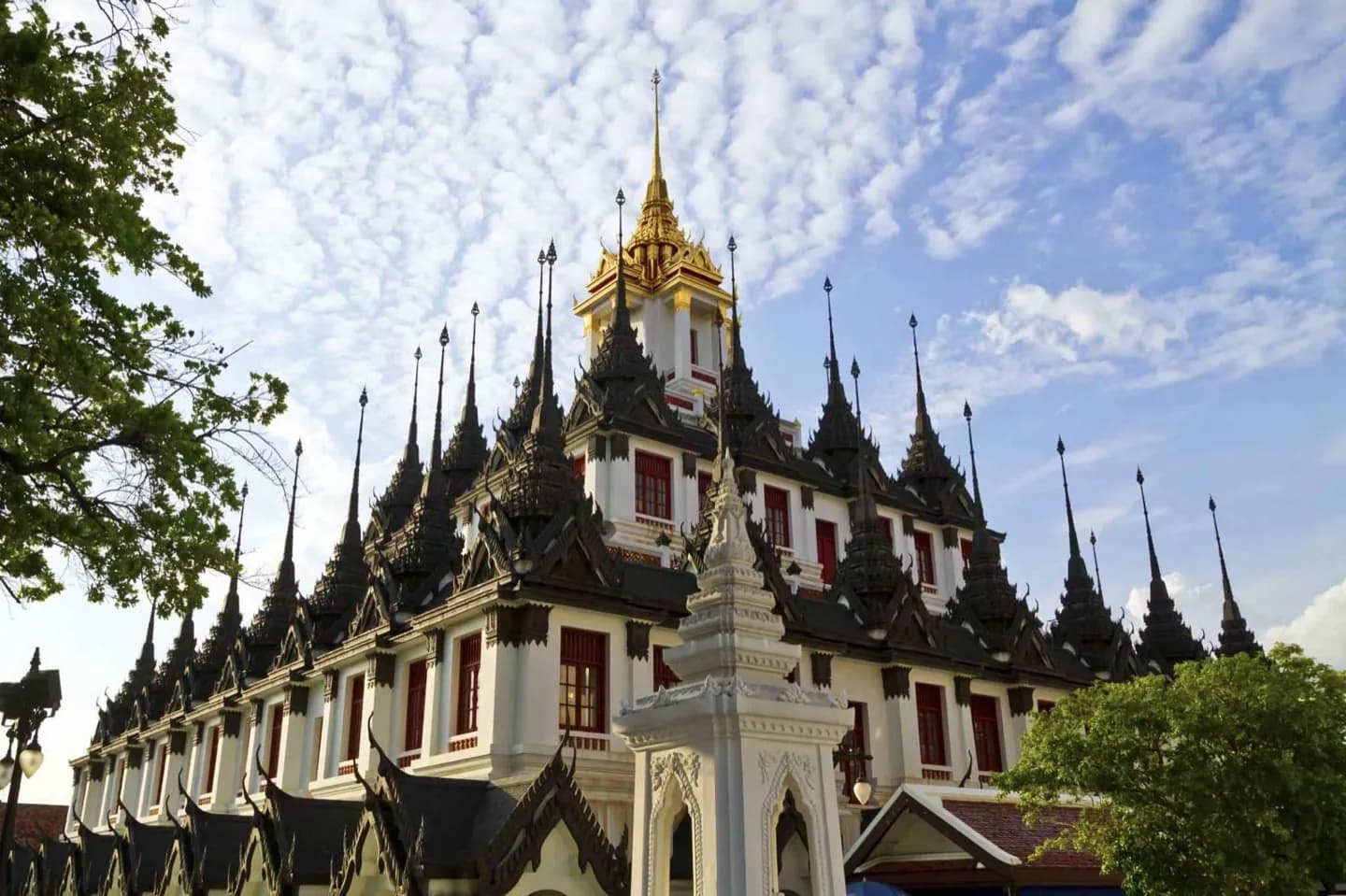
The temple offers one of Bangkok’s most unusual sacred interiors. From outside, Loha Prasat reads as a dark-spired pyramid; inside, repeated columns create a maze-like order beneath three narrowing levels. Its design refers to earlier Buddhist monasteries in India and Sri Lanka that no longer survive in comparable form.
What to look for
- Loha Prasat carries 37 metal spires across three narrowing tiers.
- Loha Prasat’s column-filled ground level creates a maze-like spatial rhythm.
- A central upper spire and relic chamber crown Loha Prasat.
The full story
Rama III ordered Wat Ratchanatdaram built in 1846 for his granddaughter, Princess Somanass Waddhanawathy. Its name means Temple of the Royal Niece, but the defining feature is Loha Prasat, the “metal castle.” The structure narrows through three main levels and carries 37 metal spires, a number associated with the virtues required for enlightenment. Its outer silhouette is strikingly geometric, while the ground floor feels almost labyrinthine because of the many supporting columns. The design looks beyond Bangkok to Buddhist architectural precedents in India and Anuradhapura in Sri Lanka. Those earlier buildings have disappeared or survive only as remains, which gives Bangkok’s version unusual importance. Rather than treating the spires as decoration, read them as a diagram: the broad lower tier, smaller middle tier and single central summit turn an abstract spiritual progression into built form.
Useful to know
- Study Loha Prasat from the road before entering; the full tiered geometry is clearest at a distance.
- Inside, use the repeated columns and central axis to understand the plan rather than rushing upward.
- Pair the temple with nearby Wat Saket, and confirm access before making the upper level essential.
Your next visit
Estimated · Declared scenario and planning estimates; no live opening, weather, queue or booking service.
Outdoor visit · 30–45 min
World planning estimate; admission, opening, visit duration and access need checking.