
Why go
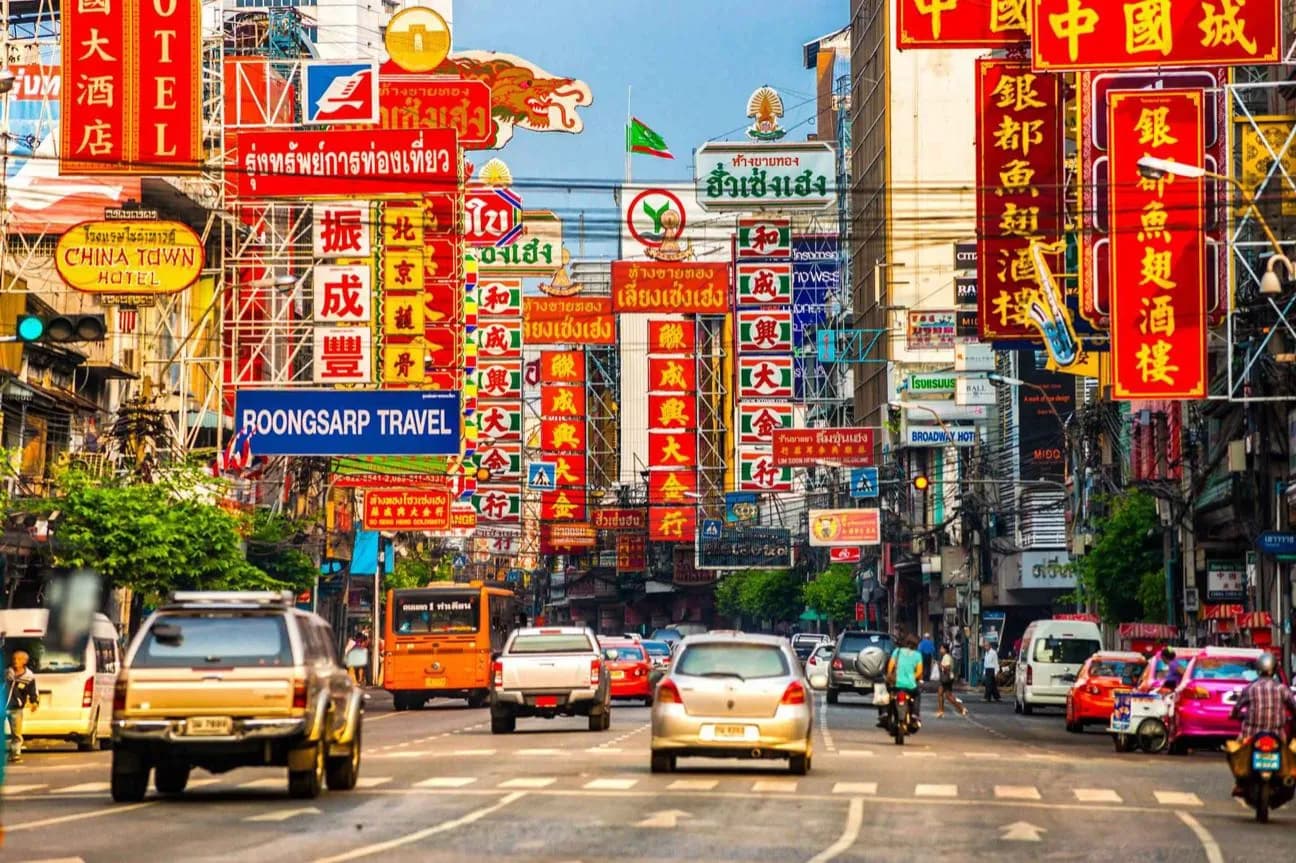
Yaowarat rewards wandering between scales. The main road carries neon, traffic and famous food stalls, while Sam Pheng and neighboring streets reveal the older wholesale and trading networks that made Chinatown a commercial center. Its connected lanes reveal how wholesale trade and street life extend beyond the main thoroughfare.
What to look for
- Look beyond Yaowarat itself to Sam Pheng Lane, Charoen Krung and Song Wat.
- Read the concentration of gold, textile and specialist shops as evidence of long commercial continuity.
- Watch the road shift from daytime trade toward its evening food identity.
The full story
Bangkok’s Chinese community moved to the area after Rama I established the new capital at Rattanakosin and cleared land for the Grand Palace and Wat Phra Kaew. Traders built a commercial district beside the Chao Phraya, with Sam Pheng Lane at its core. Yaowarat Road came later, ordered during the reign of Rama V at the end of the nineteenth century. Chinatown expanded across Yaowarat, Charoen Krung, Song Wat and other connected streets, trading in gold, cloth, imported goods, tools and food. The road’s curved path is sometimes compared with a dragon, an auspicious image associated with business. Yet the area makes most sense as a network rather than a symbol. Wholesale lanes, religious sites, old family property and evening vendors overlap in a dense piece of the city. Walking from Wat Traimit toward Sam Pheng shows how formal landmarks and everyday commerce support each other.
Useful to know
- Arrive before dusk to compare the daytime market district with the night food street.
- Start near Wat Traimit, then continue through side lanes rather than staying on the main road.
- Check individual businesses because Chinatown has no single opening schedule.
Your next visit
Estimated · Declared scenario and planning estimates; no live opening, weather, queue or booking service.
Outdoor visit · 30–45 min
World planning estimate; admission, opening, visit duration and access need checking.