
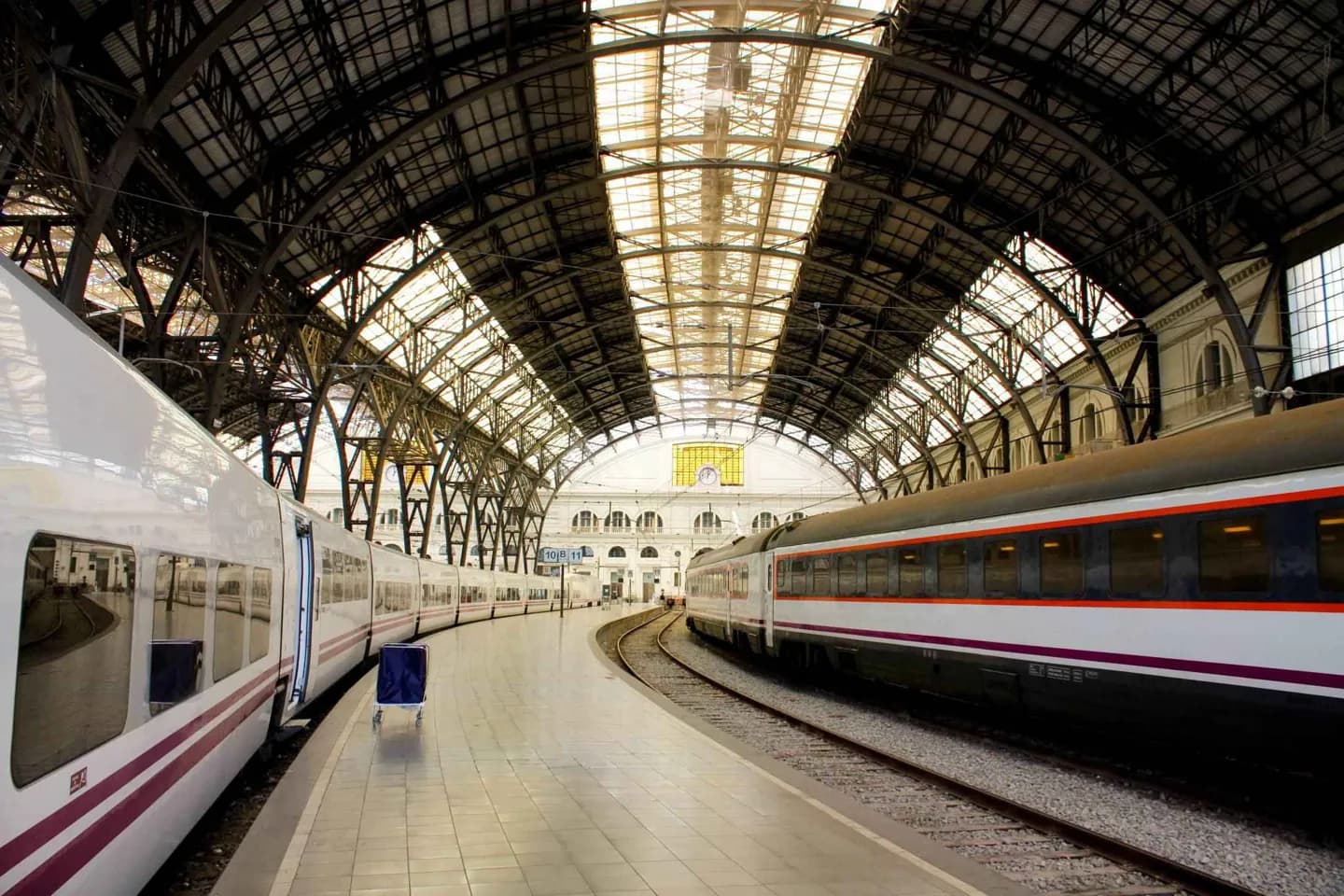
Why go
Rail is a natural choice for reaching Barcelona from other Spanish cities or via France. Check the arrival station as carefully as the departure time: Sants lies southwest of the center, while Passeig de Gràcia is nearer the central Eixample streets. Cross-border local routes require particular attention to connections.
The full story
Barcelona’s rail network connects the city with Spanish destinations and routes into France. High-speed and other long-distance services make Barcelona-Sants an important point of arrival. The station is southwest of the center, so a train journey still needs a final leg to a hotel or first stop. Barcelona-Passeig de Gràcia is another station named in the city’s rail network, near Carrer d’Aragó in Eixample. A journey across the Pyrenees by local train has historically been a slower alternative to a direct fast train. It can involve a change around La Tor de Querol, also called Latour-de-Carol, where Spanish and French services meet. That is a different planning task from booking a single long-distance train: verify each segment and allow for the connection. Services, operators and through-ticket options can change. Before choosing a scenic or budget route, compare the whole journey, including the station where you arrive and the onward trip into Barcelona. Check current departure times, fares and ticket rules for each border transfer.
Useful to know
- Check whether your train arrives at Sants or another Barcelona station before mapping the final transfer.
- For a journey via La Tor de Querol, check both sides of the border connection and ticket requirements.