
Why go
Read this before exploring the old city if you want to separate the city’s foundation myths from what its ground actually reveals. The contrast between pre-Roman settlement and later Roman Barcino gives the Gothic Quarter a deeper starting point. It also clarifies what remains uncertain.
The full story
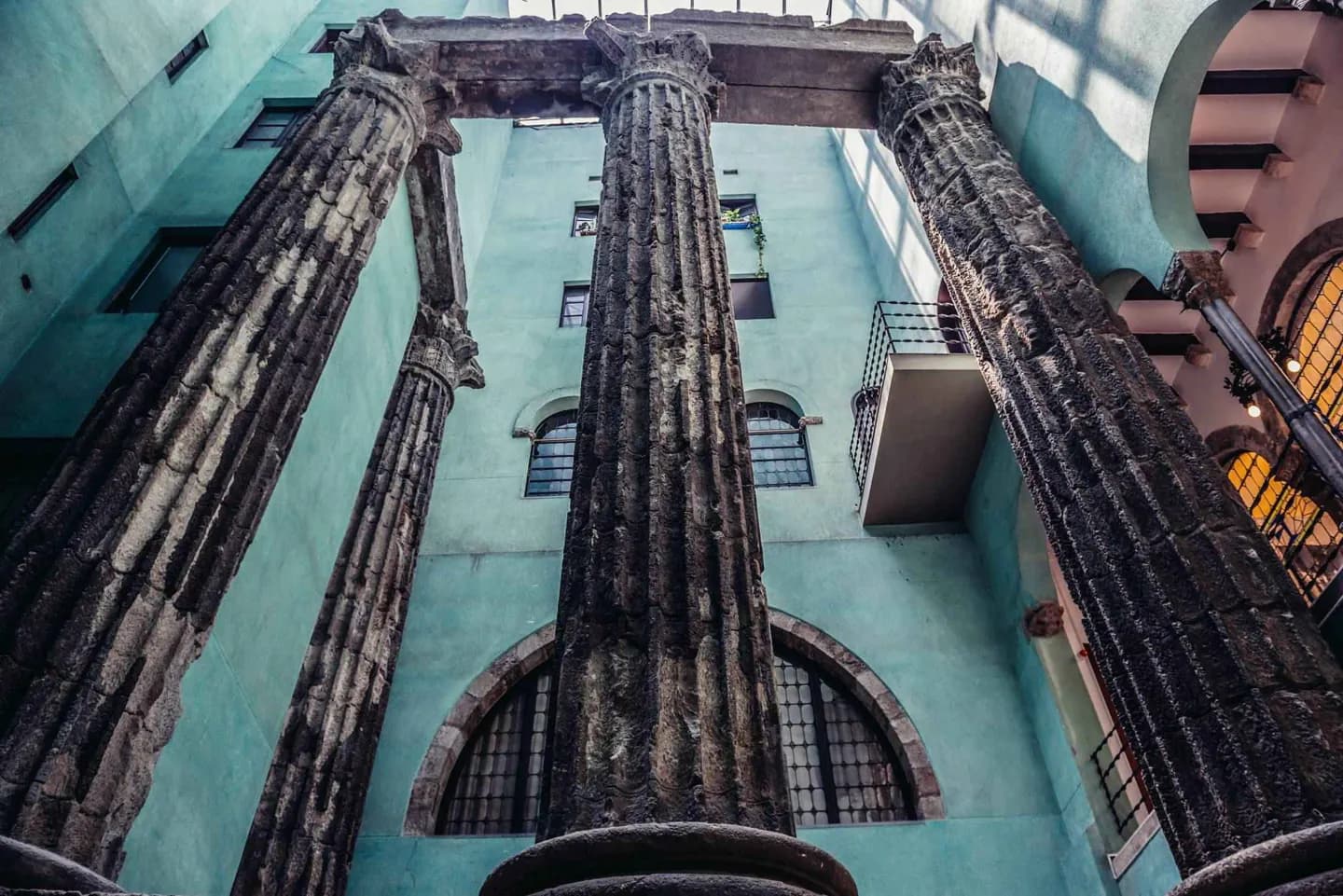
People lived on the Barcelona plain long before a Roman colony took shape. Archaeological finds include Neolithic and early Chalcolithic remains, while later Iberian communities occupied the area. The Laietani are associated with Barkeno near Mont Tàber and with a settlement thought to have stood around Montjuïc. Surviving coinage is one trace of that pre-Roman world. The precise route from those communities to the Roman city is still uncertain. A popular legend credits Hamilcar Barca, father of Hannibal, with founding Barcelona and giving it his family name. The material in the city’s early record does not establish a Carthaginian settlement, and the resemblance of the names is not proof. Another story attributes its foundation to Hercules. These tales are part of the way later generations imagined the city, rather than a secure account of its origins. When you walk the old centre, the Roman plan is the most legible ancient layer, but it was laid over a landscape that already had a long human history.