
Why go
The old city and Eixample tell different parts of Barcelona’s story. Begin around the historic centre for Roman and medieval traces, then look to the wider streets for Modernista buildings. The seafront and Montjuïc offer a change of scale when you want open space.
The full story
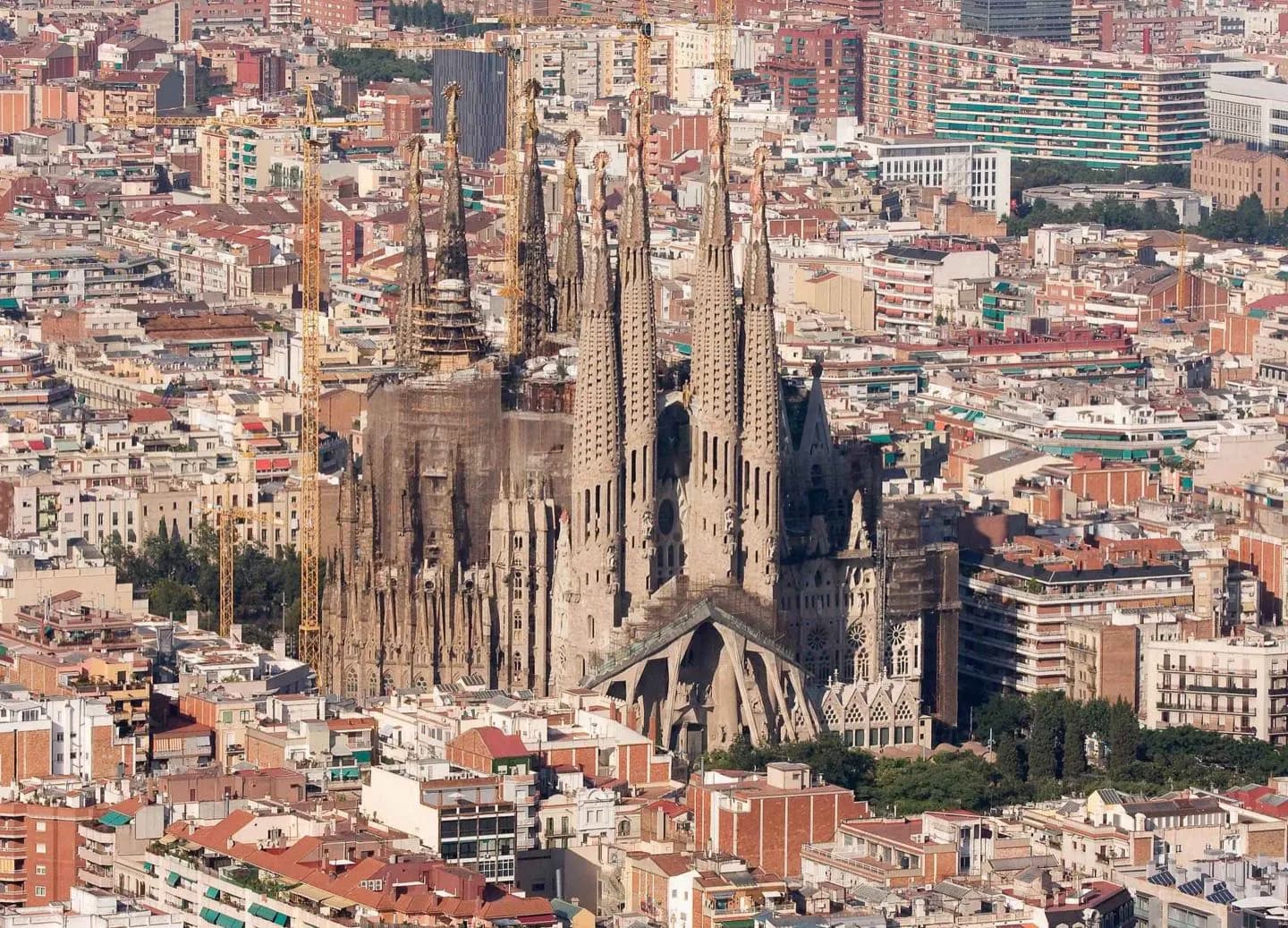
Barcelona is the capital of Catalonia, set on the Mediterranean between the Llobregat and Besòs rivers, with the Collserola hills behind it. The setting explains why its port and roads mattered across many centuries. Roman Barcino was a small colony. In the Middle Ages, Barcelona became the seat of its county and a major centre of the Crown of Aragon. The compact old city holds traces of both periods. Growth beyond the old walls produced Eixample, whose streets gave nineteenth-century Barcelona a much broader plan. Here the work of Antoni Gaudí and Lluís Domènech i Montaner offers a sharp contrast with the Gothic churches and older lanes. The 1992 Olympics left another visible layer in the city’s public spaces. For a first visit, use those differences to choose an area rather than chasing a single checklist: history in the old centre, Modernisme in Eixample, and a wider view of the city from Montjuïc or the coast.