
Why go
Decide what you want to buy before crossing the city. La Boqueria off La Rambla is a food-market stop; Barri Gòtic suits a browse through smaller shops, and Carrer dels Tallers has a record-shop tradition. Passeig de Gràcia and Diagonal make more sense for fashion-focused browsing.
The full story
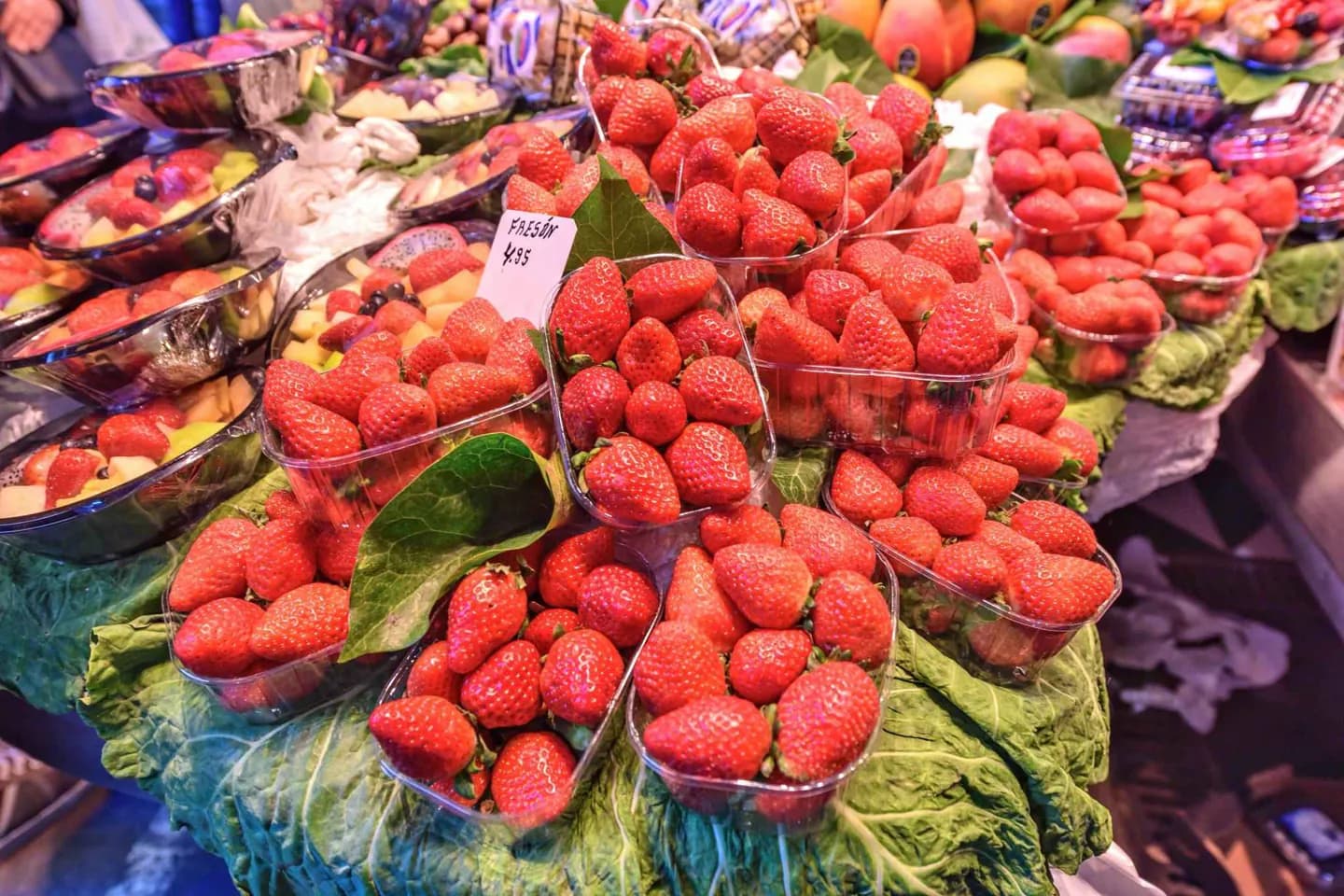
The shopping route through Barcelona changes character as it moves from the broad avenues of Eixample toward the old city. Passeig de Gràcia and Avinguda Diagonal have long been associated with fashion and larger stores. Around Plaça de Catalunya, those routes meet the denser streets that lead toward La Rambla and the waterfront. A shopping walk can therefore be shaped by district rather than by a list of individual businesses. For food, Mercat de la Boqueria sits beside La Rambla and brings together produce, fish and meat stalls. Other neighborhood markets offer a different setting from the most prominent central market. In Ciutat Vella, smaller shops and souvenir sellers sit close together; for records, Carrer dels Tallers is a more specific street to explore. If a Catalan keepsake interests you, the caganer figure belongs to the local Christmas nativity tradition and is more distinctive than a generic city souvenir. Check current opening times for any market or shop you specifically hope to visit. Smaller stores, market stalls and large shopping venues need not follow the same pattern.
Useful to know
- Group Passeig de Gràcia and Diagonal for fashion; use Ciutat Vella for markets and smaller shops.
- Check the opening day of a market or specific shop before building a walk around it.