
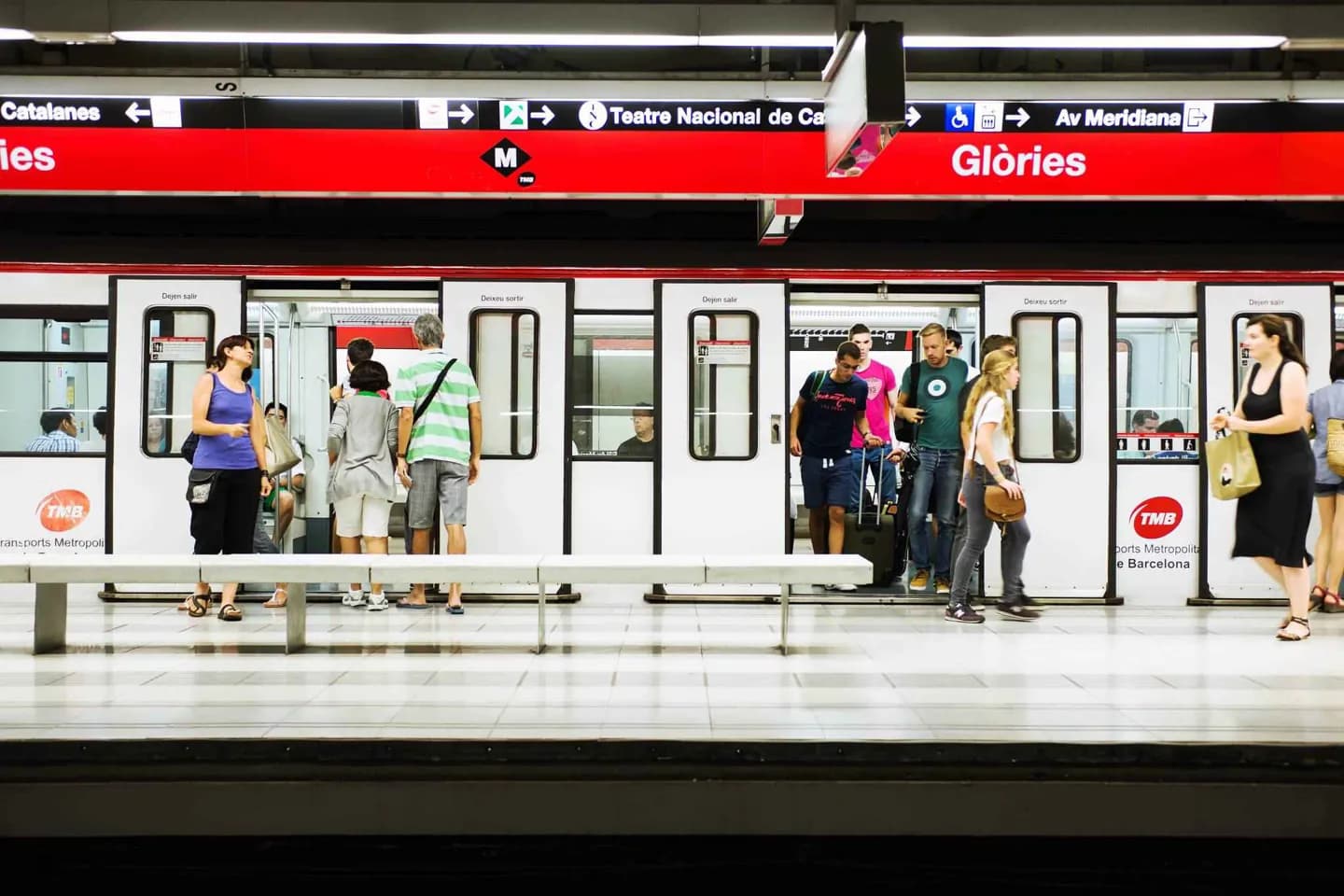
Why go
The integrated network makes it possible to pair sights in different districts without driving. Metro is useful for quick city crossings; buses and trams fill other corridors, while Rodalies and FGC extend the rail choices. Ticket validity matters most when you change operators or travel toward the airport.
The full story
Barcelona’s metropolitan transport brings together several modes under an integrated fare system. Metro and city buses are prominent within the city, with trams and commuter trains adding other connections. Transports Metropolitans de Barcelona operates much of the city network, while Rodalies de Catalunya and Ferrocarrils de la Generalitat de Catalunya are other names you may encounter when planning a rail journey. The network is divided into fare zones, so the destination matters when choosing a ticket. A single-mode ticket and an integrated travel product have served different purposes; the right choice depends on how often you will ride and whether transfers cross an operator boundary. Some interchanges require you to pass through a new gate, which makes ticket rules especially relevant. Start with the route, then check the current fare product and its conditions. For an airport journey, verify the particular mode and ticket rather than assuming every city ticket works on every airport service. Station maps can also help you choose an exit close to your destination, saving a surface detour after a fast ride.
Useful to know
- Check fare zones and transfer validity for the actual modes on your route before buying a ticket.
- For the airport, verify the ticket rules of the specific train, metro or bus service you plan to use.