
Why go
The museum connects large-scale natural systems with direct observation: an Amazon-style flooded forest, exposed geological formations and experiments in other galleries. Its location away from the center makes it a destination in its own right rather than a quick add-on.
What to look for
- The Flooded Forest recreates wet and dry Amazonian conditions.
- Large rock sections make erosion, faults and volcanic processes visible.
- A spiral route links floors within the expanded museum building.
The full story
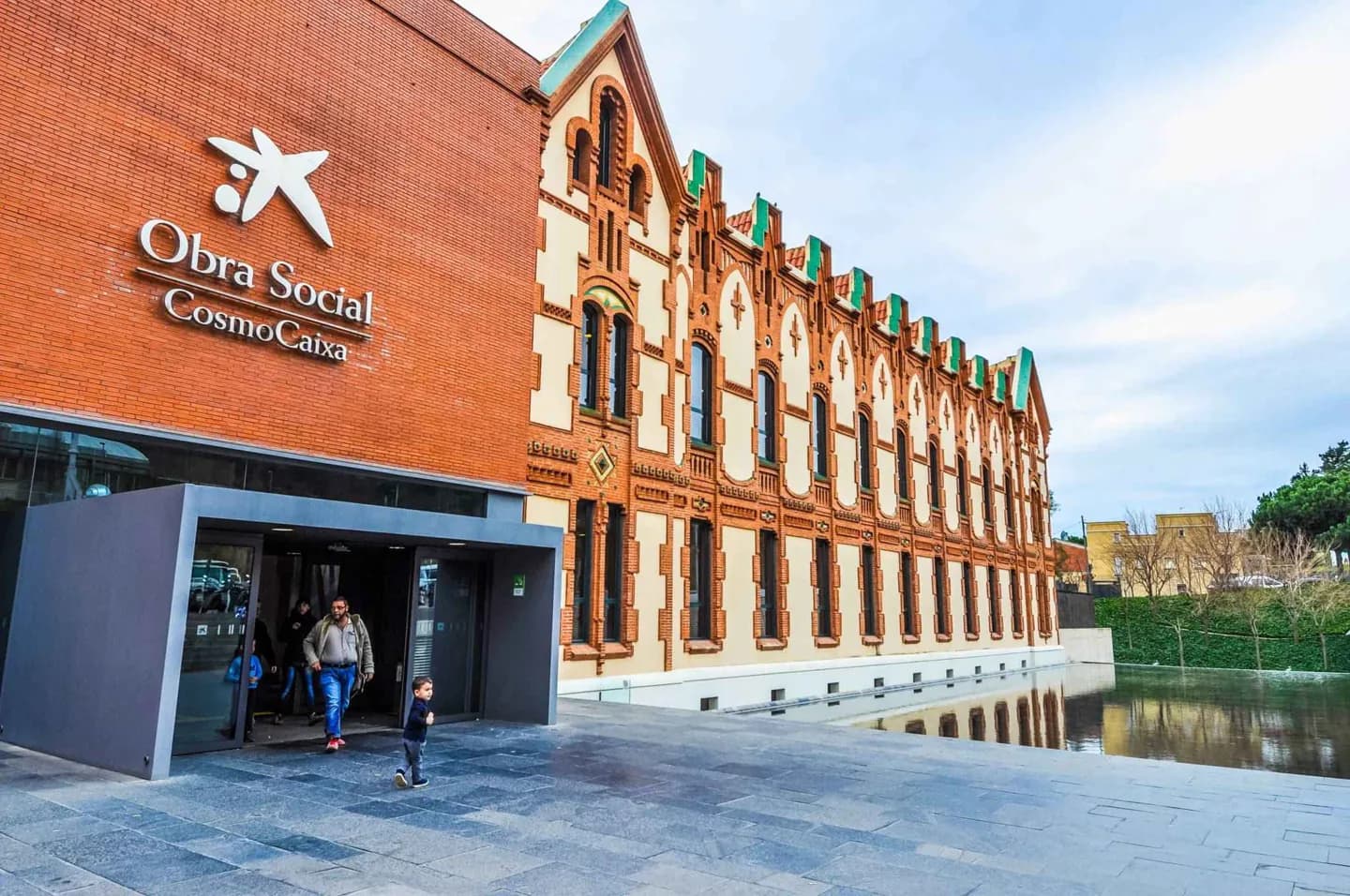
CosmoCaixa occupies a building originally designed by Josep Domènech i Estapà and built between 1904 and 1909 for an asylum for blind people. After that use ended, the structure became a science museum; a later enlargement retained its historic facade and the institution reopened as CosmoCaixa in 2004. This layered building is part of the experience. A broad spiral walkway connects the floors, while the exhibitions shift between living systems, geology and fundamental questions about matter. In the Flooded Forest, the museum recreates changing wet and dry conditions in an Amazonian environment. The Geological Wall uses large rock sections, including material associated with Catalan landscapes, to show processes such as erosion, faults and volcanism. Those installations invite slow looking rather than a race from room to room. Interactive areas make the museum particularly appealing to families, but the natural-science displays give adults plenty to investigate. Plan the planetarium separately if it is a priority, since its access can differ from the main museum.
Useful to know
- Give the museum a substantial block of time rather than fitting it between central sights.
- Check separate access for the planetarium or special activities before planning around them.
Your next visit
Estimated · Declared scenario and planning estimates; no live opening, weather, queue or booking service.
Indoor visit · 75–120 min
World planning estimate; admission, opening, visit duration and access need checking.