
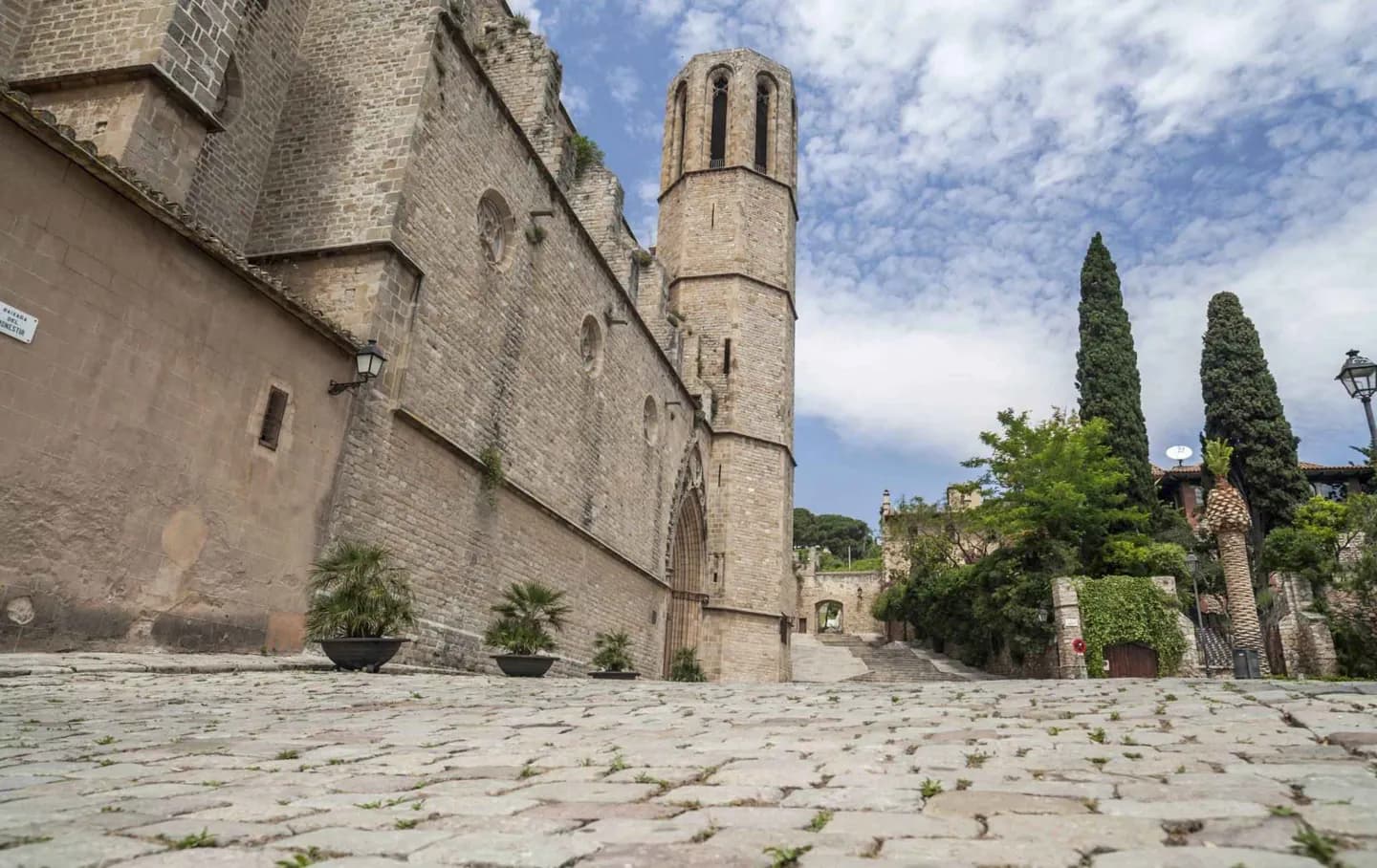
Why go
Founded in 1326 for Queen Elisenda de Montcada, Pedralbes ties royal patronage to a religious community whose daily spaces still shape the visit. Walk the cloister to understand how the chapel, dormitory, refectory and kitchen connected. The garden and repeated arches provide a strong contrast to the monumental church, while Elisenda's tomb keeps the founder's story close to the architecture.
What to look for
- The three-storey Gothic cloister encloses a garden with palms and orange trees.
- Elisenda de Montcada's tomb stands by the cloister.
- The former convent rooms reveal how a Poor Clare community lived.
The full story
King James II founded the monastery in 1326 for his wife, Elisenda de Montcada. After his death, Elisenda lived in a palace beside the convent. The Poor Clare community included women from noble families, and the monastery received privileges and the protection of Barcelona's city council. These connections help explain why a place of religious retreat also carries royal emblems and a prominent founder's tomb. The cloister is the best place to read that double identity. Its three levels bring together the church and the rooms used for daily life, while the garden forms a calm centre. Look at the capitals as you move around the arches: they bear emblems of the Aragonese rulers and the Montcada family. The monastery's history is therefore visible in small details as much as in the scale of the building.
Useful to know
- Give the cloister and convent rooms time; the value here lies in their relationship, not a single façade.
- Check the official visit timetable before travelling to Pedralbes.
Your next visit
Estimated · Declared scenario and planning estimates; no live opening, weather, queue or booking service.
Outdoor visit · 30–45 min
World planning estimate; admission, opening, visit duration and access need checking.