
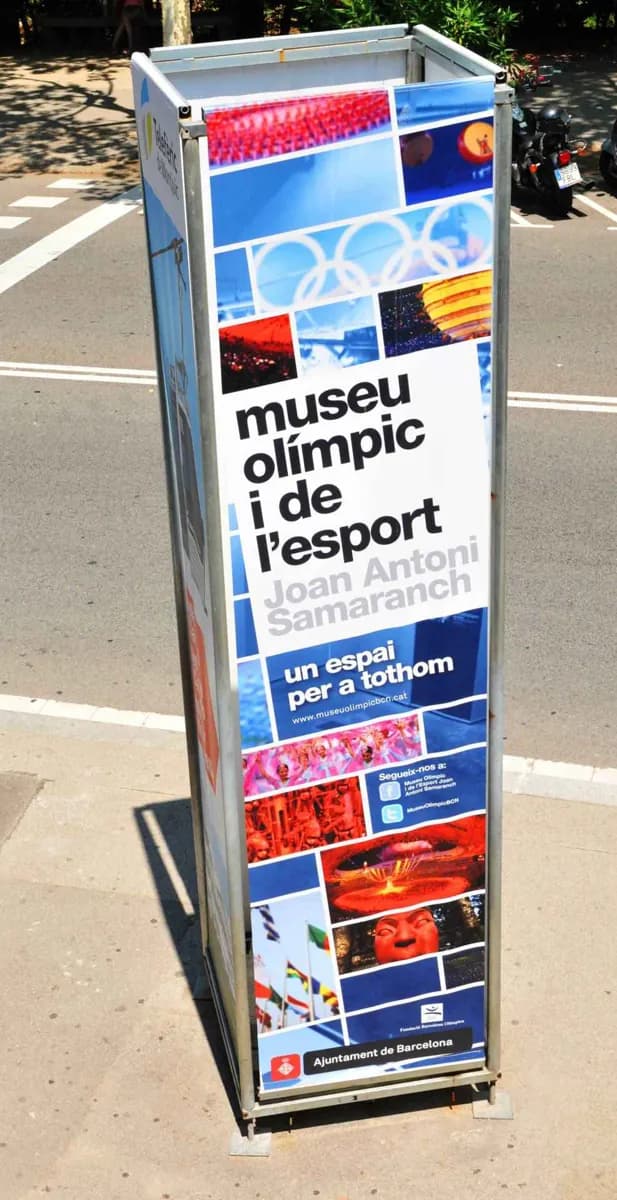
Why go
The museum broadens a visit to Montjuïc beyond the stadium exterior. It links Olympic memory with the experiences of athletes and everyday participants, and its position near the Olympic Ring makes the subject easy to connect to the surrounding sites.
What to look for
- Displays compare elite competition with recreational and disability sport.
- Interactive installations invite visitors to explore sporting achievements.
- The museum stands opposite Estadi Olímpic Lluís Companys.
The full story
The museum opened in 2007 at Montjuïc’s Olympic Ring, across from the Lluís Companys Olympic Stadium. In 2010 it took the name of Joan Antoni Samaranch, president of the International Olympic Committee from 1980 to 2001 and a prominent figure in the era of Barcelona’s 1992 Games. The setting matters: after seeing the stadium and other Olympic spaces outdoors, the museum shifts attention to the people and ideas behind sport. Its displays encompass high-level competition, everyday participation and sport for people with disabilities. Interactive and multimedia installations sit alongside collections associated with Samaranch and exhibitions about sport across different civilizations. That broader frame keeps the visit from being solely a nostalgia stop for 1992. The low museum building was designed for its site on the hill, with several levels inside; a visit also offers a pause from Montjuïc’s exposed paths. Pairing the museum with the stadium exterior makes the relationship between Barcelona’s Olympic landscape and the wider sporting story clearer.
Useful to know
- Combine it with the Olympic Stadium or another Montjuïc stop.
- Allow for the hill’s slopes and check museum access before planning a full Olympic Ring circuit.
Your next visit
Estimated · Declared scenario and planning estimates; no live opening, weather, queue or booking service.
Indoor visit · 45–60 min
World planning estimate; admission, opening, visit duration and access need checking.