
Why go
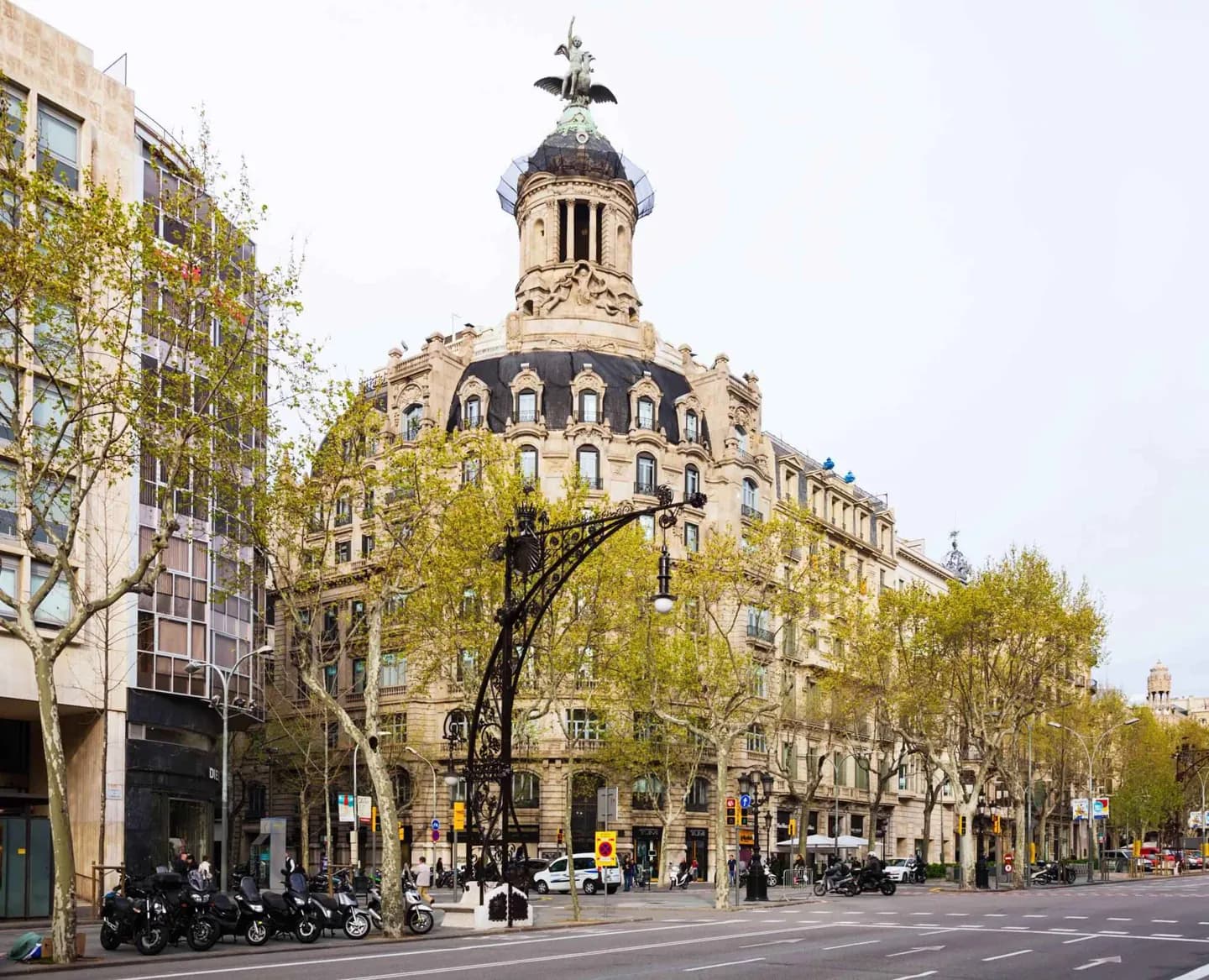
Casa Batlló, Casa Amatller and Casa Milà sit along the same street, making it easy to compare architects without crossing the city. Even between the buildings, the paving stones, benches and streetlamps reward attention. The close spacing makes comparison possible in one walk.
What to look for
- Gaudí-designed paving stones cover parts of the boulevard.
- Pere Falqués benches and streetlamps line the avenue.
- Casa Batlló, Casa Amatller and Casa Milà show different modernista styles.
The full story
Passeig de Gràcia began as a route between Barcelona and Gràcia, once a separate town. As the Eixample grew, it became a prominent avenue lined with ambitious buildings. That history is still visible in the sequence of façades. Around the Illa de la Discòrdia, Casa Batlló, Casa Amatller and Casa Lleó Morera show very different interpretations of modernisme close together. Farther up the avenue, Gaudí’s Casa Milà shifts the emphasis from decorated frontage to an undulating stone surface and distinctive roof. The street details matter too: Gaudí-designed paving and Pere Falqués’s benches and streetlamps make the public space part of the architectural walk. The avenue is long enough to reward a chosen section rather than a hurried end-to-end march. Decide whether one interior visit is worth the time, then use the rest of the walk to compare exteriors and the changing rhythm of the boulevard.
Useful to know
- Pick one paid interior if your time is limited.
- Walk a selected section between the buildings you most want to compare.
Your next visit
Estimated · Declared scenario and planning estimates; no live opening, weather, queue or booking service.
Outdoor visit · 30–60 min
World planning estimate; admission, opening, visit duration and access need checking.