
Why go
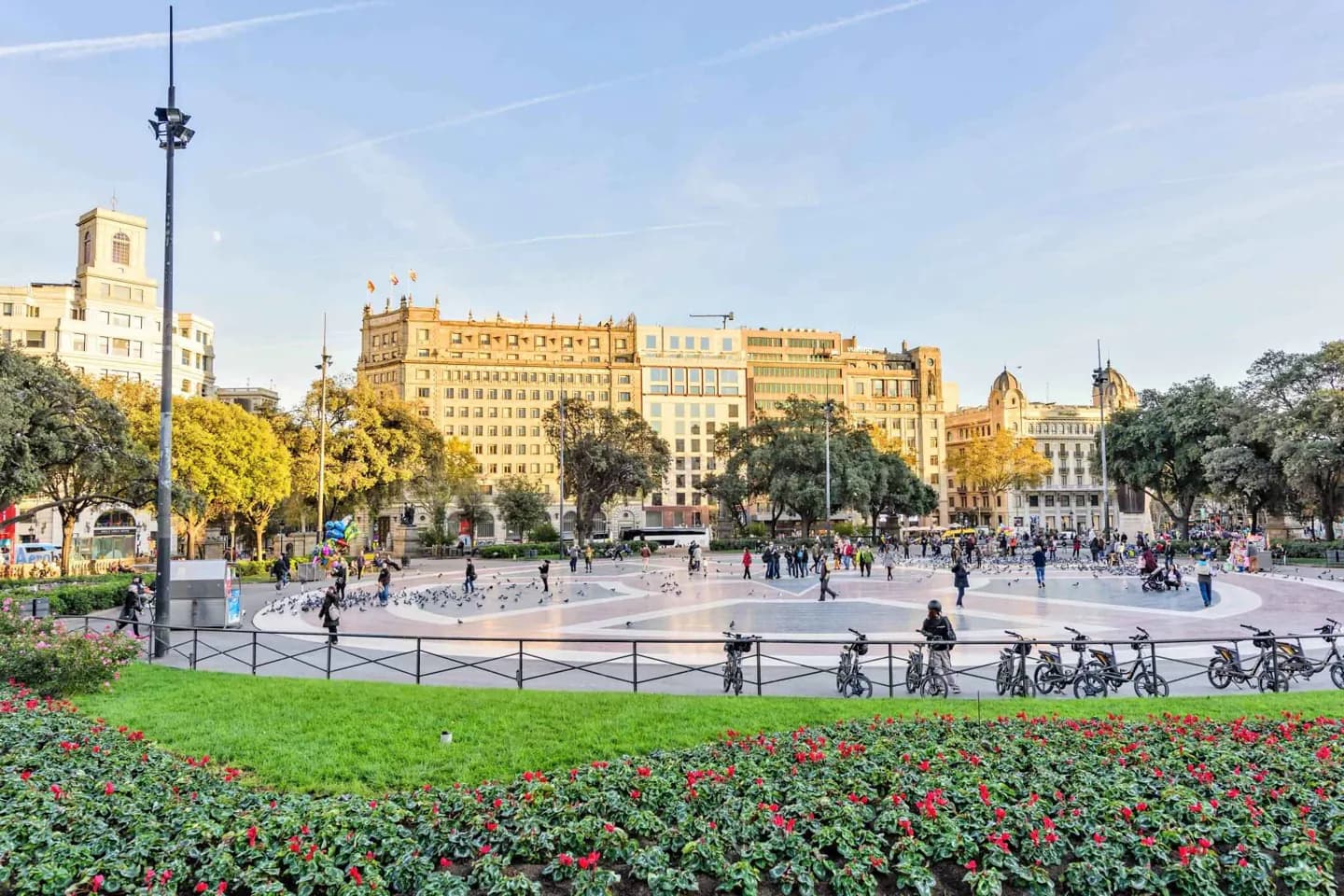
Plaça de Catalunya makes the city’s street pattern legible at a glance. La Rambla leads toward the old centre and waterfront, while Passeig de Gràcia heads into Eixample. The square also holds sculptural details worth noticing during a short pause.
What to look for
- Fountains and civic sculptures punctuate the large open square.
- La Rambla and Passeig de Gràcia lead away in contrasting directions.
- The edge of the old city meets the broad Eixample street plan here.
The full story
Plaça de Catalunya sits where the old city gives way to the nineteenth-century Eixample. The streets radiating from it take you toward very different Barcelona experiences: La Rambla into the older centre, Passeig de Gràcia toward Modernista architecture, and other routes into neighbouring districts. The square itself took shape after the demolition of the medieval city walls, when planners could imagine larger public spaces between old and new Barcelona. It was first urbanised in the early twentieth century and altered again for the 1929 International Exposition. Fountains and sculptures mark the square. Rather than treating it as a destination requiring a long stay, pause to read the surrounding avenues and then continue in the direction that fits your day. The view across the square is a quick lesson in how Barcelona expanded beyond its historic core.
Useful to know
- Use the square as a starting point for either La Rambla or Passeig de Gràcia.
- A short outdoor stop fits between nearby sights; allow more time only if studying the sculptures.
- Expect weather exposure in the open square and adjust the length of the pause.
Your next visit
Estimated · Declared scenario and planning estimates; no live opening, weather, queue or booking service.
Outdoor visit · 10–20 min
World planning estimate; admission, opening, visit duration and access need checking.