
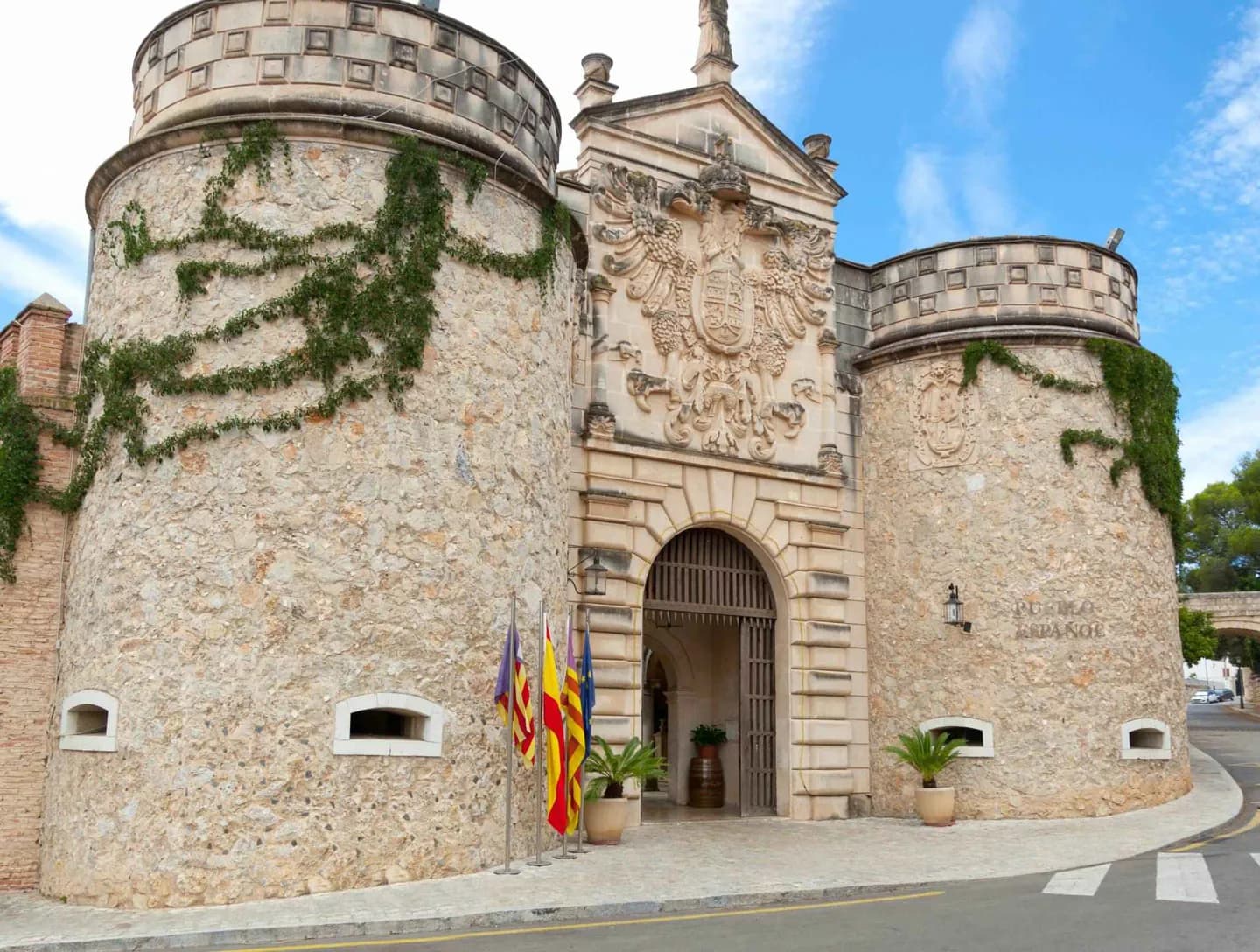
Why go
Across 117 full-scale reproductions, the village condenses building styles from different regions of Spain into a walkable setting. Artisans at work add a second reason to linger. It suits visitors who enjoy comparing façades and watching craft processes, while recognising that these are interpretations rather than original town buildings.
What to look for
- Regional architectural reproductions form streets and squares within the village.
- Craft workshops let visitors see artisans working on site.
The full story
Poble Espanyol was conceived for the 1929 International Exposition as a compressed survey of Spanish architecture and craft. Its buildings reproduce forms from different regions at full scale, arranged as streets and squares that visitors can walk through. This is why it feels more like a small town than a conventional gallery. The buildings are replicas, but that is also the point: doors, arcades and façades that would normally be separated by long journeys can be compared on one visit. Workshops add living activity to the architectural display. Look for how the street changes as one regional style gives way to another, then pause where artisans are working. The site makes most sense when treated as an exhibition created for Barcelona’s fair, rather than as a preserved historic village.
Useful to know
- Set aside enough time to follow several streets rather than only the entrance area.
- Check the current visitor arrangements before going; access is through a ticketed site.
Your next visit
Estimated · Declared scenario and planning estimates; no live opening, weather, queue or booking service.
Outdoor visit · 30–45 min
World planning estimate; admission, opening, visit duration and access need checking.