
Why go
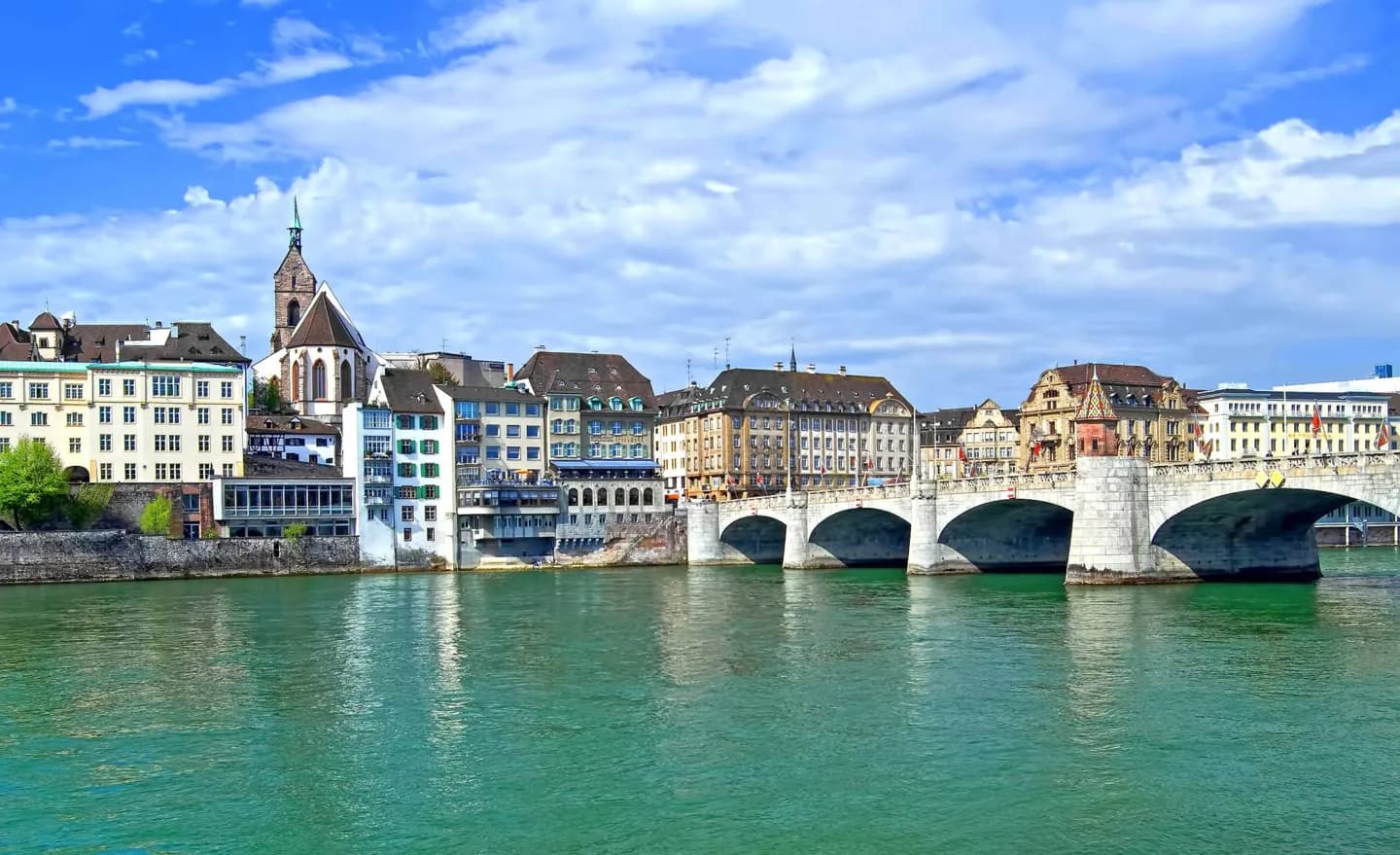
Read the Minster as a centre of church authority, then consider the river bridge that helped Kleinbasel develop opposite the older town. The same period brought powerful guilds, the Council of Basel and a university, making the old centre a record of both religious and civic ambition.
The full story
Construction of Basel's cathedral began in the early eleventh century. In 1225–26, Bishop Heinrich von Thun built a permanent Rhine bridge; Kleinbasel developed as a bridgehead on the opposite bank. The crossing strengthened trade, while guilds gained influence in the growing market. By the thirteenth century, several guilds had formed, including one for furriers. This is the political background to the old town's church and civic buildings. The period also includes violence that should not be hidden behind an account of prosperity. In 1349, before plague reached Basel, the city council murdered hundreds of Jewish residents after the guilds blamed them for it. The 1356 earthquake later damaged much of Basel, including the Minster, whose rebuilding shaped what visitors see today. In the fifteenth century, the Council of Basel made the city an ecclesiastical meeting place. The university was founded in 1460, and printing became a notable local craft. Erasmus and Paracelsus later taught in the city. These developments explain why medieval Basel's legacy lies in books and institutions as well as surviving stone.