
Why go
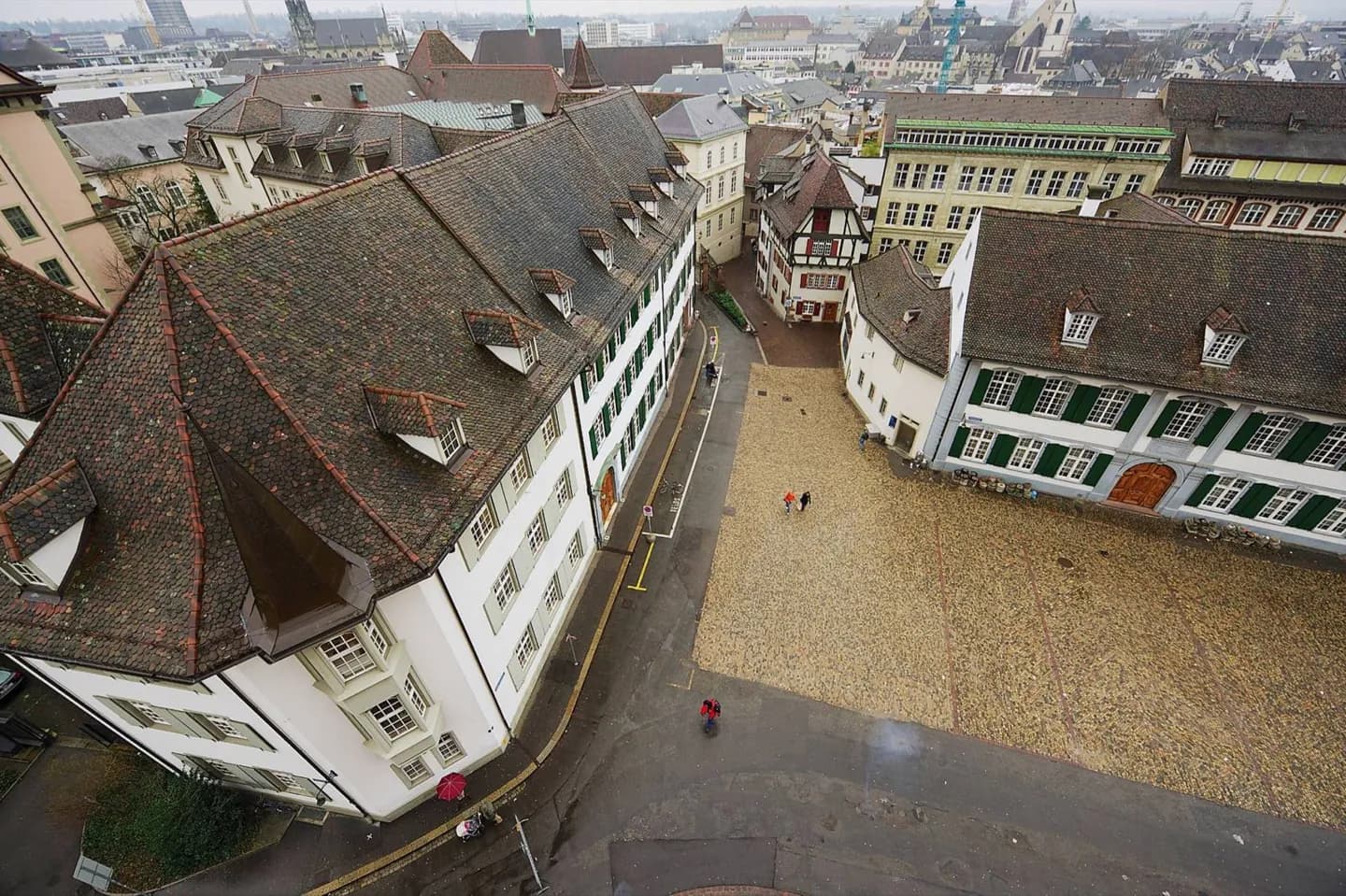
Stand by Basel Minster to understand why the height above the Rhine mattered long before the present church. The early settlement sequence also helps separate Basel itself from Augusta Raurica, an archaeological destination upstream that merits its own trip if Roman history is your main interest.
The full story
The hill occupied by Basel Minster was useful before it held the cathedral. Celtic settlement preceded a Roman fort overlooking the Rhine, while the Roman town of Augusta Raurica developed upstream from present-day Basel. The Latin name Basilea is documented from the fourth century. Those layers make Münsterhügel a good place to think about continuity of location, even though the buildings a visitor sees today come largely from later periods. The early medieval town faced disruption. Magyar incursions devastated Basel in 917, but the settlement continued. A turning point came in 999, when Rudolph III of Burgundy granted Moutier-Grandval Abbey and its possessions to Bishop Adalbero II. Basel then entered a long period of rule by prince-bishops. The bishop's crozier survived as a civic emblem, so an early political arrangement remains visible in the city's coat of arms. For physical Roman remains, make Augusta Raurica a separate visit; for the origin of Basel's central settlement, begin on the river hill.