
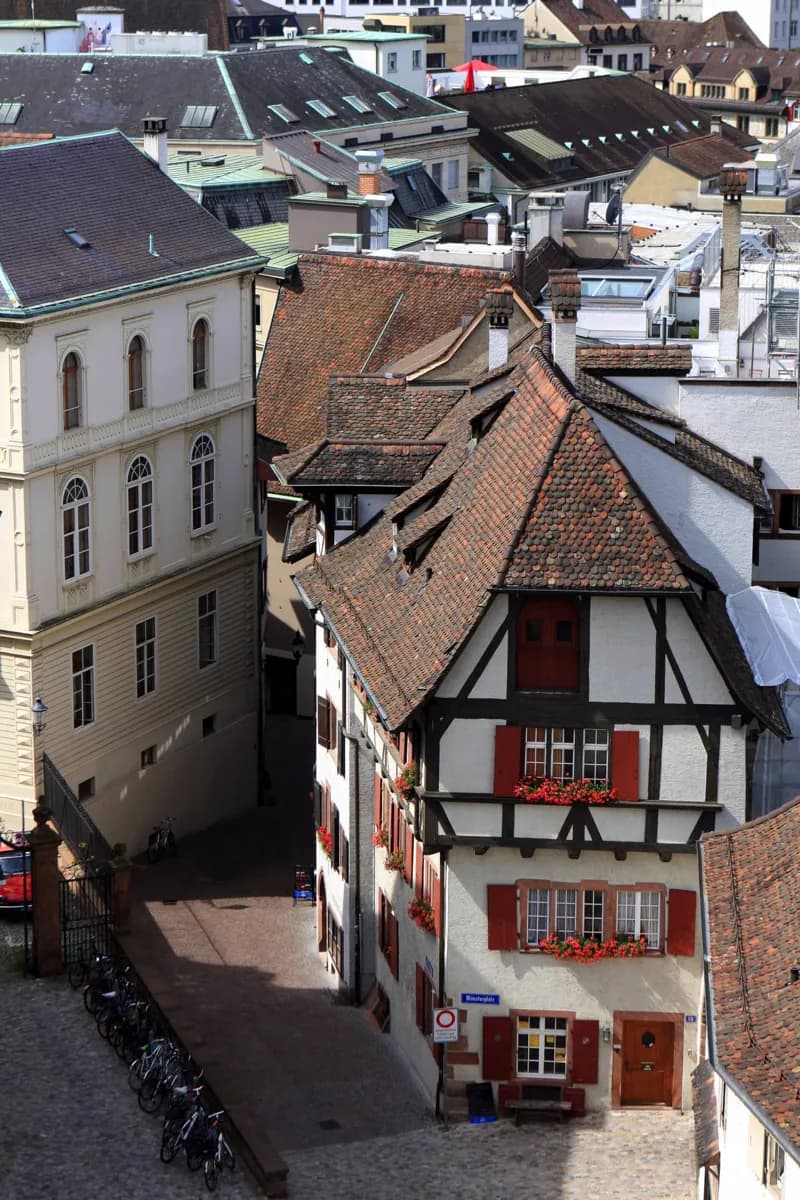
Why go
At Marktplatz, the Town Hall signals the council's growing authority after Basel entered the Confederation. At the Minster, the Reformation explains why a medieval cathedral belongs to a different religious city than the bishops who built it. Together they clarify two turns in Basel's identity.
The full story
Basel joined the Swiss Confederation as its eleventh canton in 1501. The city had valuable control over trade routes and grain imports from Alsace; membership also offered military support and a role in mediation among the cantons. Soon afterward, conflict with the bishop over constitutional authority accompanied the building of a new Town Hall. Its prominent position on Marktplatz gives a visitor a clear image of the council's civic confidence. In 1529, Basel adopted the Protestant Reformation under Johannes Oecolampadius, and the bishop moved his seat to Porrentruy. The bishop's crozier nevertheless remained on the city's coat of arms. That contrast is worth holding in mind inside the Minster: the building began as the bishop's cathedral, but its later use reflects the Reformed city. Basel's intellectual and publishing life continued through the change. Andreas Vesalius's anatomy book was printed here in 1543, and the Amerbach Cabinet became the foundation of the city's public art collection after its purchase in 1661. The two landmarks make the political turn easy to see; museums and books show what followed.