
Why go
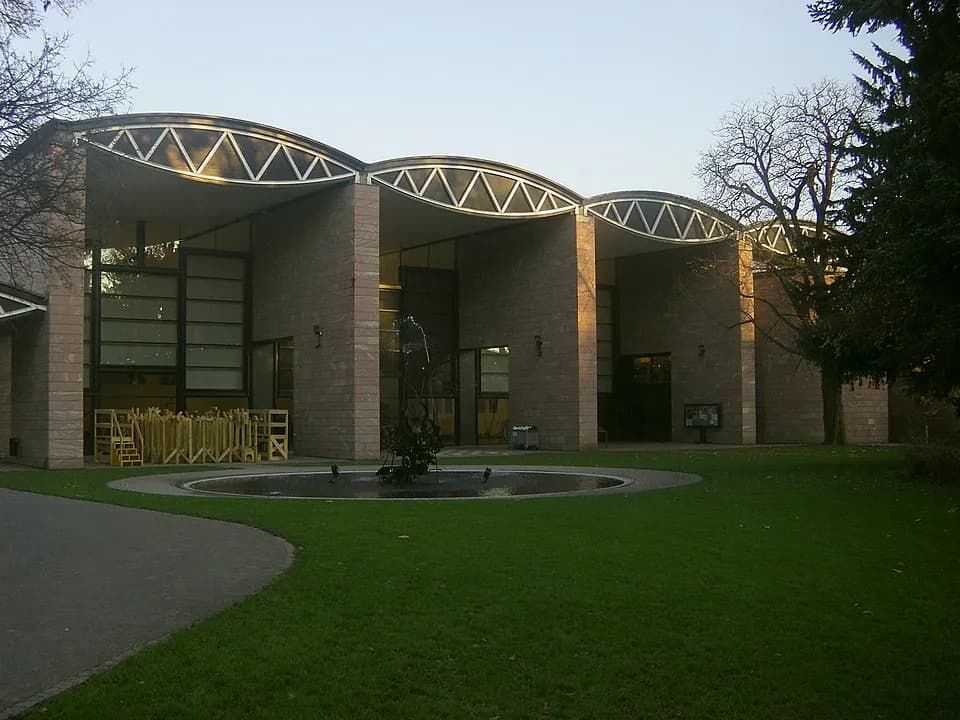
Tinguely's kinetic pieces make motion, sound and mechanical construction part of the artwork rather than merely its subject. The permanent presentation ranges from early reliefs to large machine sculptures, with drawings and documents adding context. The Rhine-side park and Botta's architecture give the museum a setting unlike the central galleries.
What to look for
- Kinetic sculptures from several phases of Tinguely's work
- Mario Botta's museum building
- The museum's Rhine and Solitudepark setting
The full story
Museum Tinguely opened in 1996 in a building designed by Mario Botta on the Rhine at Solitudepark. Its core is the work of Swiss artist Jean Tinguely, whose sculptures put motors, movement and sometimes noise at the centre of art. Drawings, photographs and other documents help trace how those ideas developed from early reliefs to monumental machines. The museum also connects Tinguely to artists around him, including Niki de Saint Phalle, who donated works to the collection. That context matters because the machines are not simply ingenious objects: they are part of a wider conversation about modern sculpture and performance. The riverside setting offers a physical pause after the intensity of the galleries. Observe more than one movement cycle where possible: the mechanics are part of each work’s form, not merely a way to animate it.
Useful to know
- Give the moving works time to cycle; a still glance misses part of their effect.
- Pair the indoor visit with Solitudepark and the Rhine bank beside the museum.
Your next visit
Estimated · Declared scenario and planning estimates; no live opening, weather, queue or booking service.
Outdoor visit · 30–45 min
World planning estimate; admission, opening, visit duration and access need checking.