
Why go
Read this before the Roman Baths and Bath Abbey if you want more than a date sequence. The spring's dedication to Sulis explains the Roman name Aquae Sulis, while the abbey and later crescents show how Bath kept changing its purpose without losing the water at its centre.
The full story
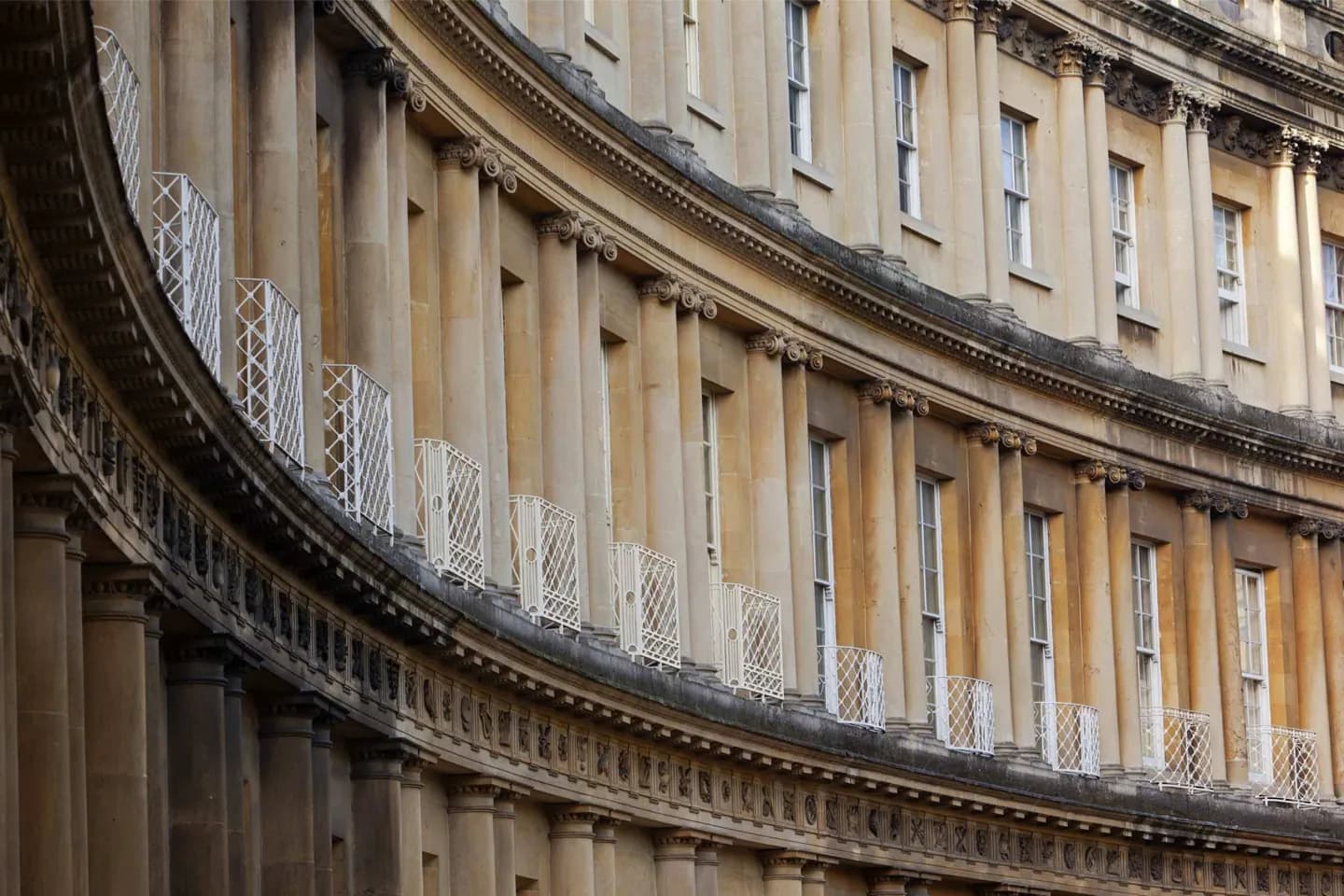
Before the Roman town, the main spring was a shrine dedicated to the Celtic goddess Sulis. The Romans linked her with Minerva and named the settlement Aquae Sulis, ‘waters of Sulis’. At the Roman Baths, the Sacred Spring and the recovered curse tablets make that religious role as tangible as the bathing rooms. The temple rose in the first century, and the baths grew over the following centuries, with hot, warm and cold rooms built around the spring. After Roman rule ended, the complex fell into disrepair and was eventually buried by silt. Bath's name itself comes from an Anglo-Saxon word meaning ‘at the baths’. A monastic house developed in the walled area, and Edgar's coronation in 973 ties today's abbey precinct to the medieval city. Interest in the waters revived in later centuries, then Georgian fashion remade Bath with avenues, terraces and crescents. The Royal Crescent and the Circus show that planned urban scale. The city also bears later losses: wartime raids damaged Georgian buildings, including the Assembly Rooms and houses around the Circus and Royal Crescent. Seeing those layers together explains why Bath is more than either a Roman ruin or a Georgian streetscape.