
Why go
This overview helps you choose a first walk: begin with the Roman Baths and Bath Abbey for the older core, cross Pulteney Bridge for the river and Bathwick streets, or head toward the Royal Crescent for Georgian architecture on a larger scale. Each route reveals a different part of the same spa city.
The full story
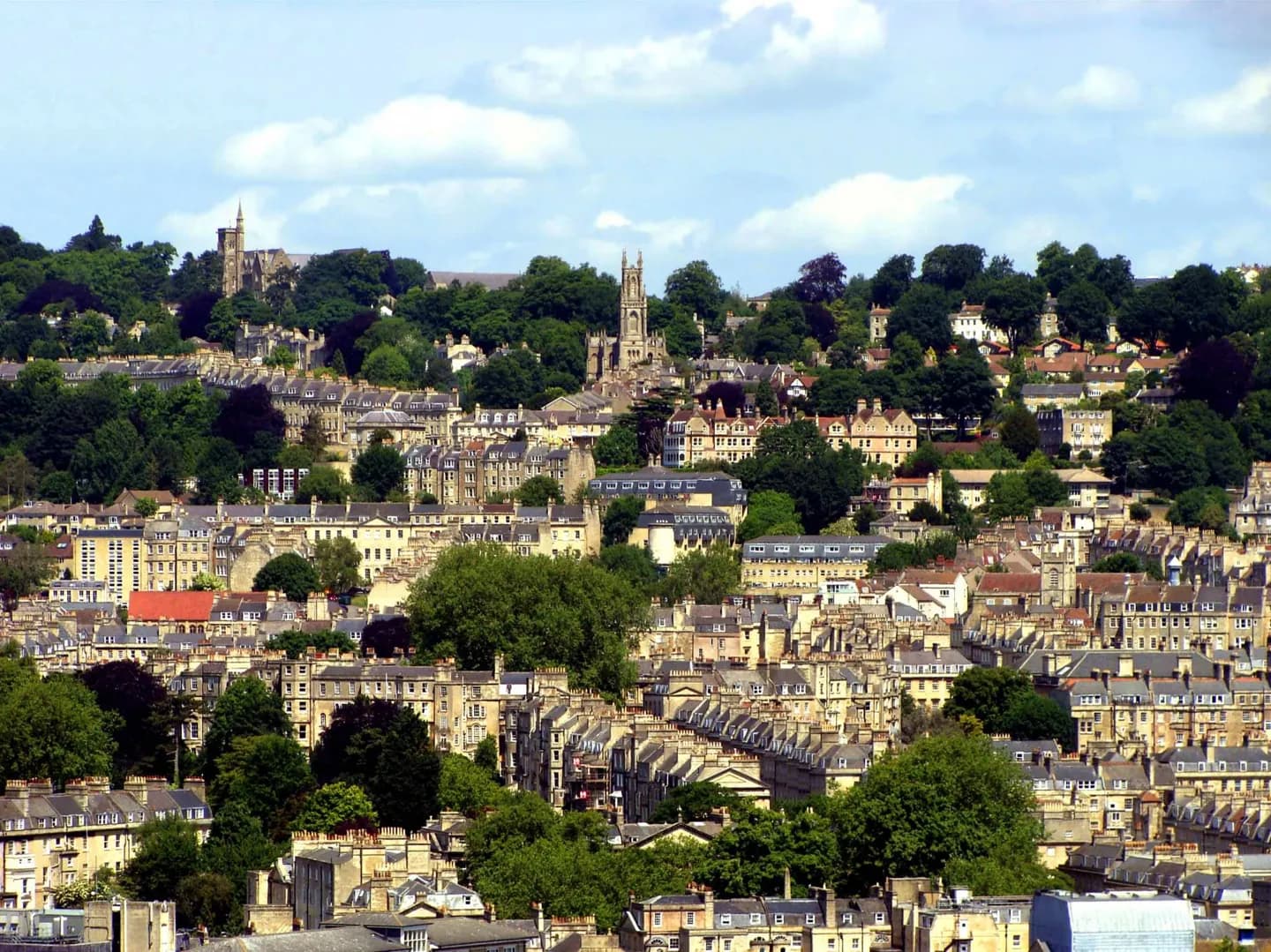
Bath sits in the River Avon valley in southwest England. The natural hot springs explain the first great concentration of buildings here: the Romans called their settlement Aquae Sulis, or ‘waters of Sulis’, and built a bathing complex and temple around the spring. The Roman Baths remain the clearest place to see that foundation. Nearby Bath Abbey marks another long chapter of religious and civic life; Edgar was crowned king of England here in 973. The city later drew visitors to take the waters, and Georgian expansion gave Bath its broad streets, terraces and crescents in pale Bath Stone. You can see that shift as you move away from the ancient centre toward Pulteney Bridge, Great Pulteney Street and the Royal Crescent. These landmarks explain why a short central walk can cover very different periods, while an uphill extension changes the scale of the architecture. Bath was inscribed as a World Heritage Site in 1987 for this exceptional urban inheritance.