
Why go
This working engineering site makes the canal’s water supply visible. Avon water turns a large wheel at river level, and its gearing drives pumps that raise water about 48 feet to the canal. It rewards visitors who want to see industrial mechanics in motion, though operation depends on both the river and the machinery.
What to look for
- A broad waterwheel takes its power from the Avon.
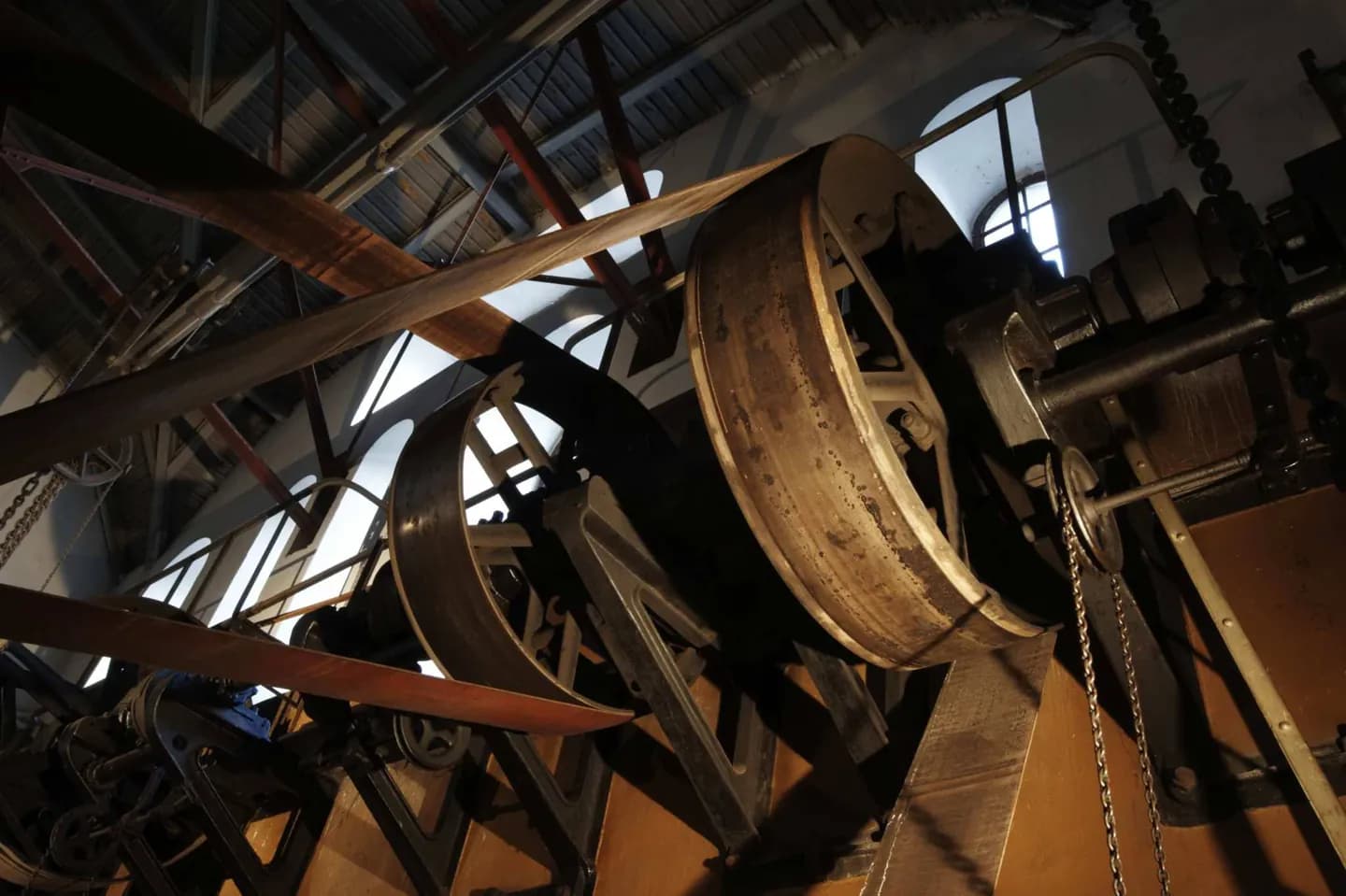
- Gears and rocking beams transfer the wheel’s motion to the pumps.
- The canal runs well above the river beside the station.
The full story
The Kennet and Avon Canal runs well above the River Avon at Claverton, so boats needed a dependable way to replace water lost through the locks. The pumping station uses the river’s own flow to solve that problem. Water diverted from the Avon turns a large wheel, and a chain of gears, cranks and rocking beams drives pumps below. Those pumps lift water roughly 48 feet into the canal. Watch the movement pass from wheel to machinery if the station is running; the separate parts make more sense as a single system. This is an example of canal engineering that worked with local topography rather than merely crossing it. The site also makes the hidden cost of a navigable canal clear: water must keep reaching the higher level even as boats move through the locks.
Useful to know
- Check the next open day and whether the pump is expected to run before making the trip to Claverton.
- Start at the waterwheel, then follow the gears and rocking beams to see how the pumps move water up to the canal.
Your next visit
Estimated · Declared scenario and planning estimates; no live opening, weather, queue or booking service.
Outdoor visit · 30–45 min
World planning estimate; admission, opening, visit duration and access need checking.