
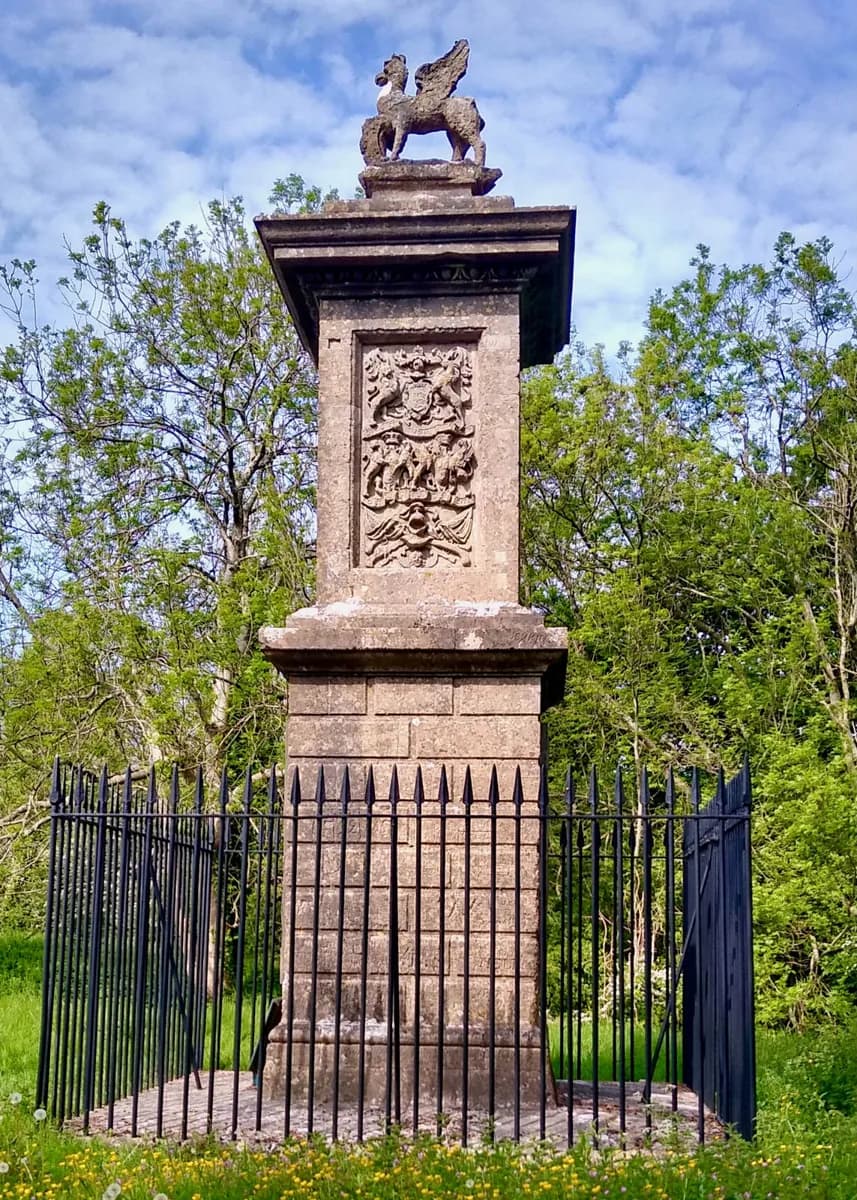
Why go
The monument gives a clear place to start reading a battle that otherwise stretches across open ground. Stand by the memorial to Sir Bevil Grenville, then look over the hilltop where Royalist and Parliamentarian forces fought for the crest. It suits a history stop or a longer walk on the Cotswold Way.
What to look for
- Read the monument to Royalist commander Sir Bevil Grenville.
- Look across the hilltop ground contested during the 1643 battle.
- The Cotswold Way passes the monument, linking the memorial with a longer walk.
The full story
On 5 July 1643, Royalist forces led by Lord Hopton met Sir William Waller’s Parliamentarian army on Lansdowne Hill. Waller held the high ground northwest of Bath. After confused cavalry fighting, Hopton’s Cornish infantry pressed up the slope and attacked near the crest. Sir Bevil Grenville led the Cornish pikemen and was mortally wounded. Waller’s men fell back to a wall across the hilltop and continued firing until dark, then withdrew during the night. The Royalists held the field, but their losses and disorder made victory costly. An ammunition cart exploded the following day, injuring Hopton and destroying powder his army needed. He retreated to Devizes while Waller regrouped in Bath. The monument gives that complicated result a human focus: Grenville’s death amid a battle whose tactical gain did not lead to an easy advance.
Useful to know
- Use Sir Bevil Grenville’s Monument as the destination point; the battle name covers a wider landscape.
- Allow for an exposed hilltop stop and check the weather before adding a Cotswold Way walk.
- Stay on the public route rather than treating the wider battlefield as open-access land.
Your next visit
Estimated · Declared scenario and planning estimates; no live opening, weather, queue or booking service.
Outdoor visit · 30–45 min
World planning estimate; admission, opening, visit duration and access need checking.