
Why go
A few visual and musical cues make the form far easier to follow. Rather than expecting realistic scenery, watch how gesture, rhythm, costume and role type carry place, character and action. That context gives the topic a practical place in a selective itinerary and keeps the guidance useful as individual operating details change.
The full story
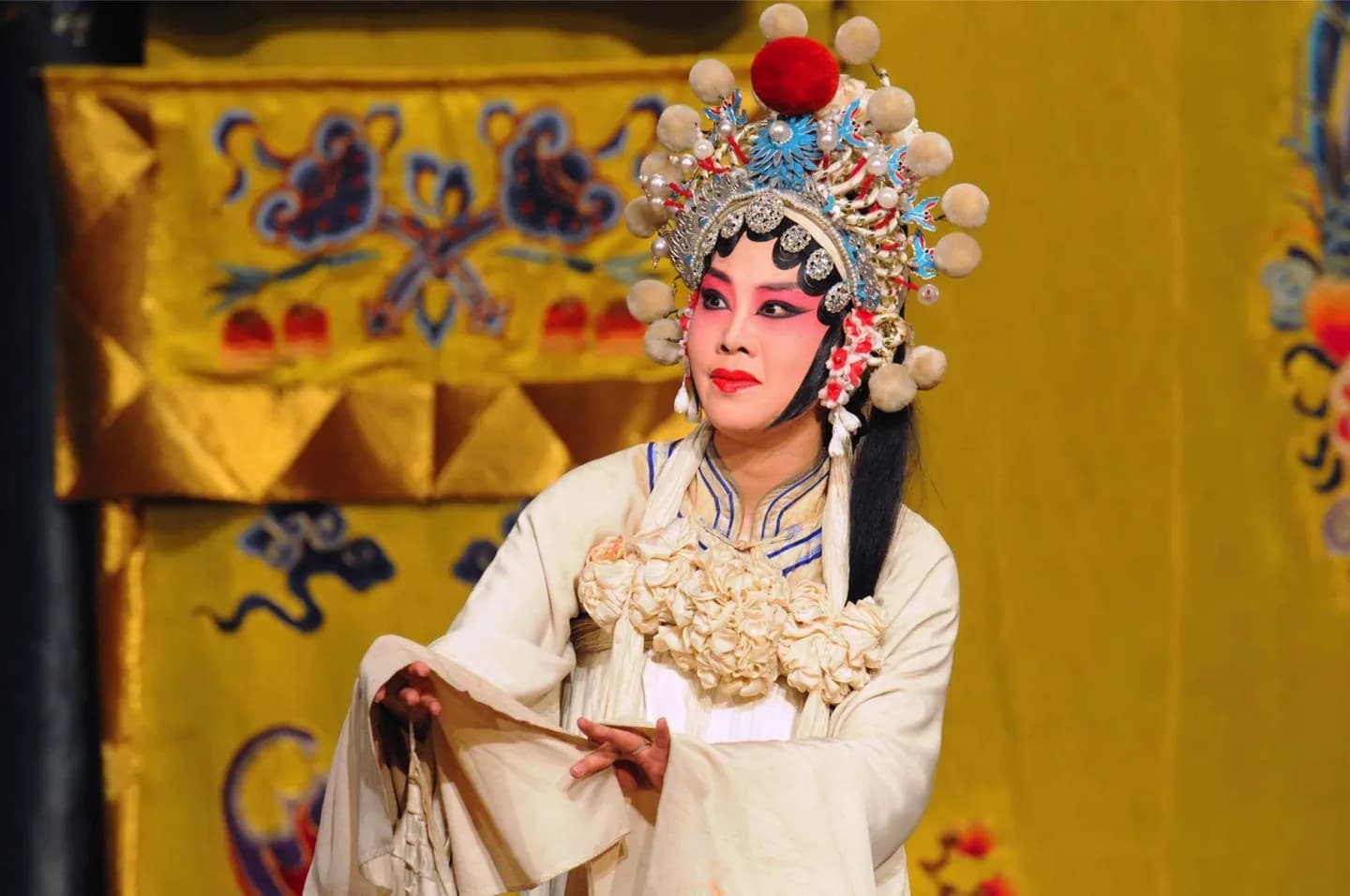
Peking opera developed as a performance tradition centered on Beijing while drawing on earlier regional forms. It combines singing, recitation, acting and martial skills. The stage is often sparse because movement and convention do much of the descriptive work: a gesture can suggest opening a door, mounting a horse or traveling a great distance. Music controls pace and atmosphere. Civil scenes emphasize melodic string and wind instruments, while military scenes rely more strongly on percussion. Costumes identify rank and role, and facial patterns use established colors and shapes to signal aspects of character. Performers train through close master-student transmission, repeating precise movements until they become expressive. Before attending, learn the basic role types and read a short plot outline. Then follow the physical vocabulary even when the sung text is unfamiliar.