
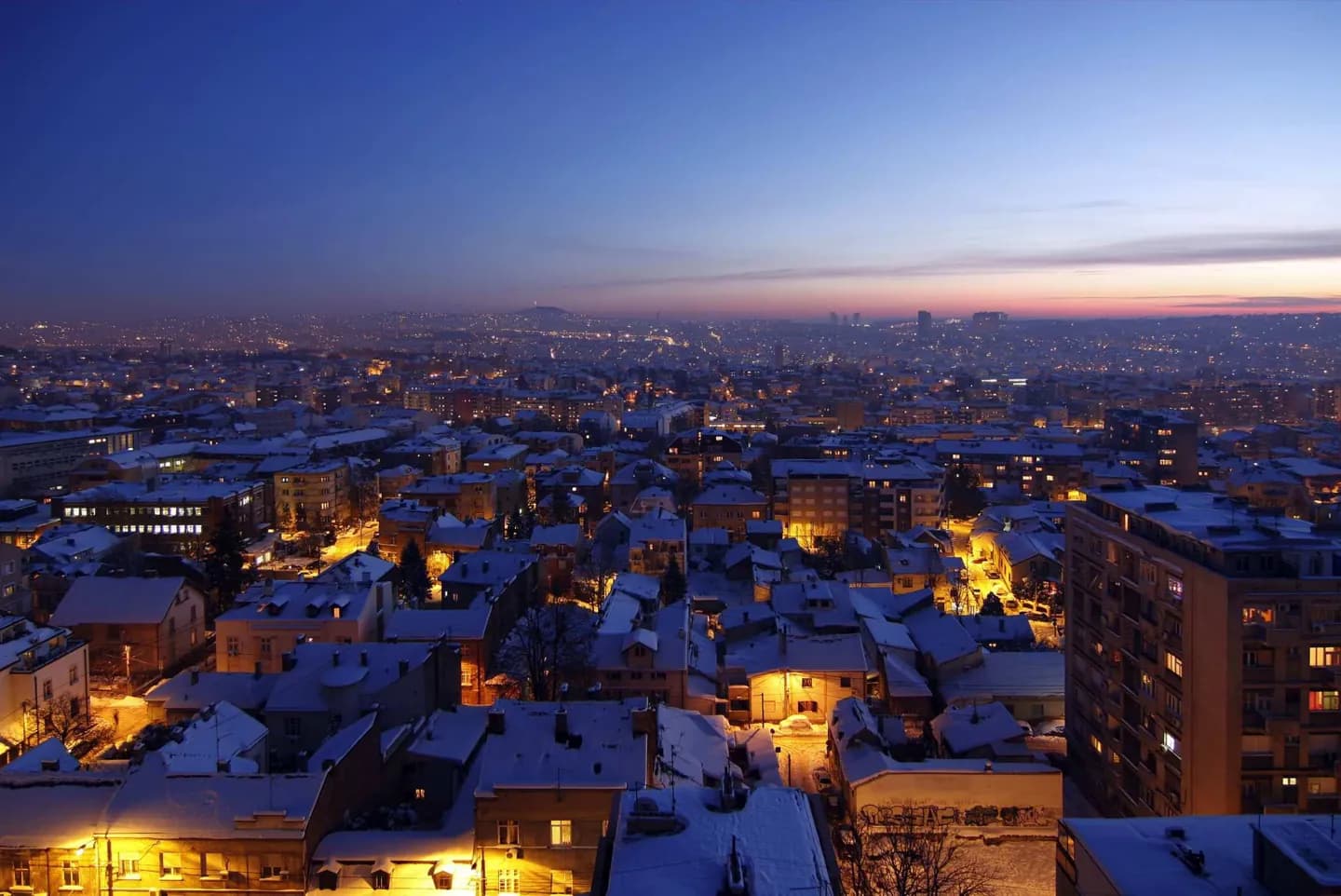
Why go
This orientation makes the city easier to explore: Kalemegdan marks the old strategic position, while Novi Beograd shows the scale of postwar expansion across the Sava. The contrast is more useful on a visit than a list of rulers or population figures.
The full story
The historic core stands above the point where the Sava enters the Danube. That position made Belgrade a contested crossing and fortress for centuries. The Celtic name Singidun became Roman Singidunum; later Byzantine, Hungarian, Serbian, Ottoman and Habsburg rule each left a different chapter in the city's history. The city became Serbia's capital in the nineteenth century and later the capital of Yugoslavia. The rivers still explain its layout. Kalemegdan occupies the old high ground, and the central streets extend south and east from it. Across the Sava, Novi Beograd represents a very different phase of growth after the Second World War. Zemun, farther along the river, was historically on the Habsburg side before it became part of the united city. A short comparison between these districts reveals more about Belgrade than trying to cover every landmark in one sweep.