
The full story
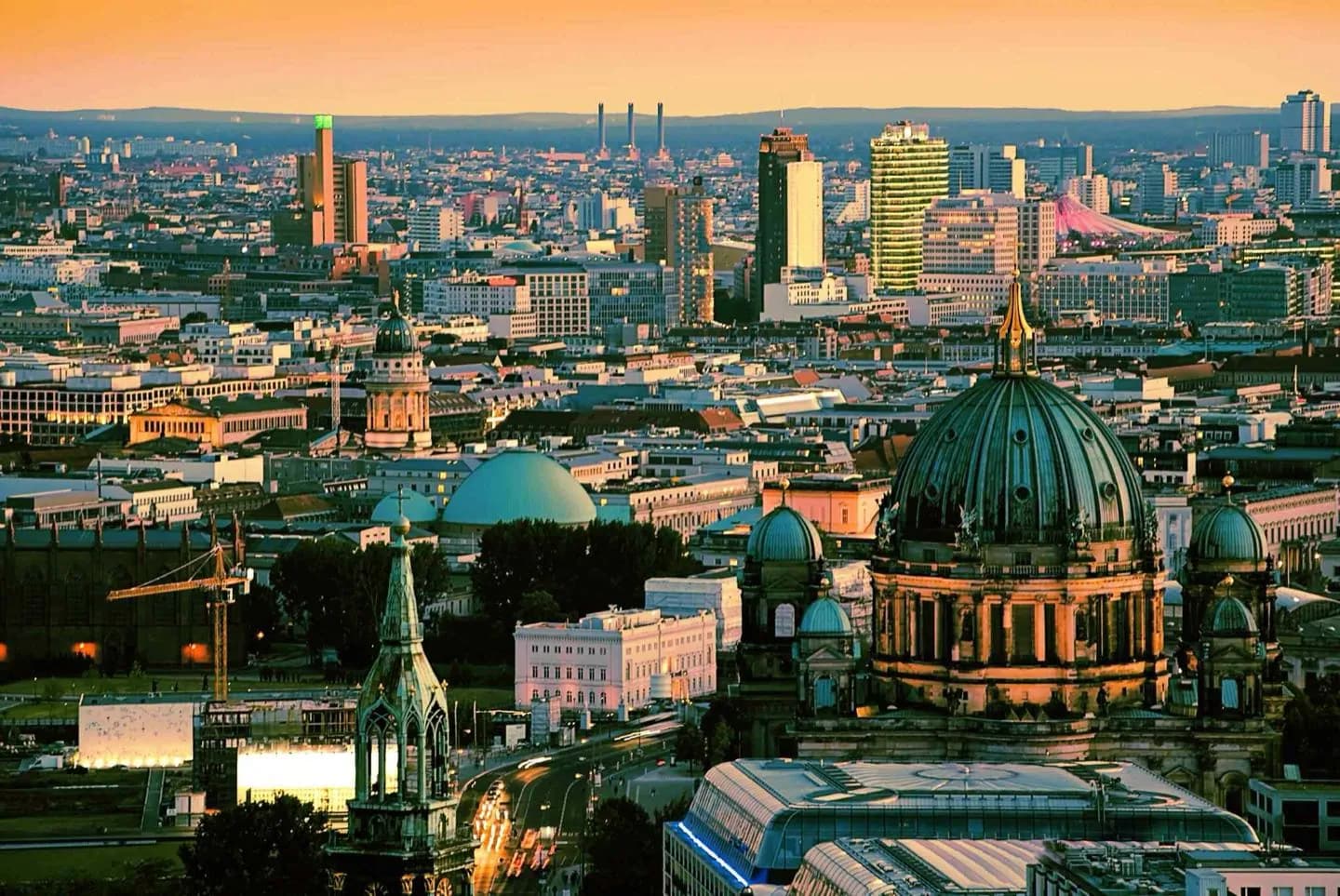
With a population of approximately 3.6 million people, Berlin is the second most populous city proper and the seventh most populous urban area in the European Union. Located in northeastern Germany on the banks of Rivers Spree and Havel, it is the centre of the Berlin-Brandenburg Metropolitan Region, which has about 6 million residents from more than 180 nations. Due to its location in the European Plain, Berlin is influenced by a temperate seasonal climate. Around one-third of the city's area is composed of forests, parks, gardens, rivers and lakes. First documented in the 13th century and situated at the crossing of two important historic trade routes, Berlin became the capital of the Margraviate of Brandenburg (1417–1701), the Kingdom of Prussia (1701–1918), the German Empire (1871–1918), the Weimar Republic (1919–1933) and the Third Reich (1933–1945).Berlin in the 1920s was the third largest municipality in the world.