
Why go
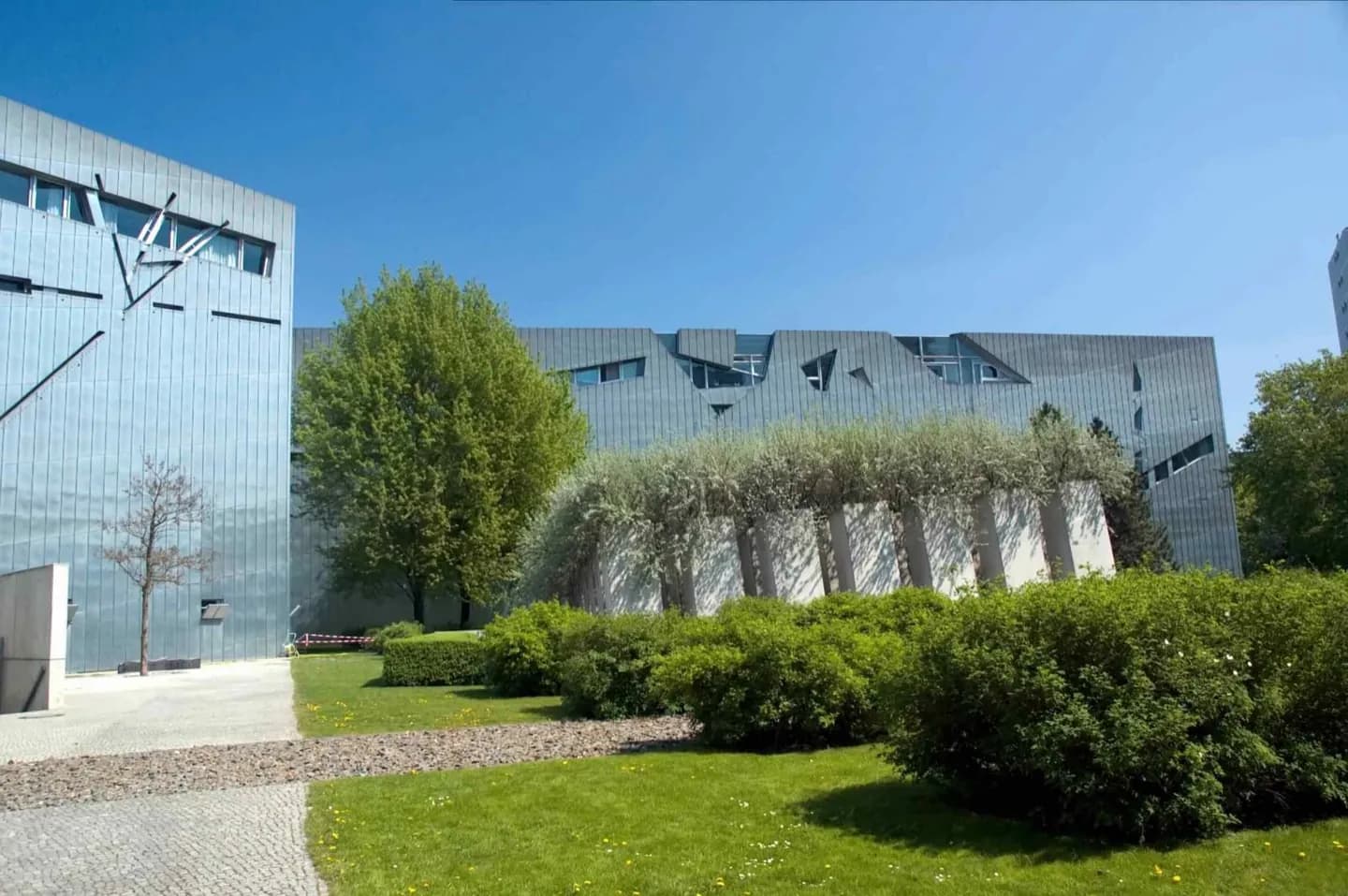
The core exhibition traces Jewish life in Germany from the Middle Ages to the present. In three buildings, two of which are new additions specifically built for the museum by architect Daniel Libeskind, two millennia of German-Jewish history are on display in the permanent exhibition as well as in various changing exhibitions.
What to look for
- Daniel Libeskind's axes, voids and Garden of Exile make the building part of the historical interpretation.
- The core exhibition traces Jewish life in Germany from the Middle Ages to the present.
The full story
Opposite the building ensemble, the W. Michael Blumenthal Academy of the Jewish Museum Berlin was built – also after a design by Libeskind – in 2011/2012 in the former flower market hall. The archives, library, museum education department, and a lecture hall can all be found in the academy. Michael Blumenthal, who was born in Oranienburg near Berlin and was later President Jimmy Carter's Secretary of the Treasury, was the director of the museum from 1997 to 2014; Peter Schäfer was appointed as the new director in September 2014. History The first Jewish Museum in Berlin was founded on Oranienburger Straße in 1933, but was closed soon thereafter, in 1938, by the Nazi regime. In 1976 a "Society for a Jewish Museum" formed and, three years later, the Berlin Museum, which chronicled the city's history, established a Jewish Department, but already, discussions about constructing a new museum dedicated to Jewish history in Berlin were being held.
Useful to know
- Verify current opening hours, closures and timed-entry rules on the official visitor page before setting out.
- Allow extra time for security or ticketing when the visit includes an interior collection or viewing platform.