
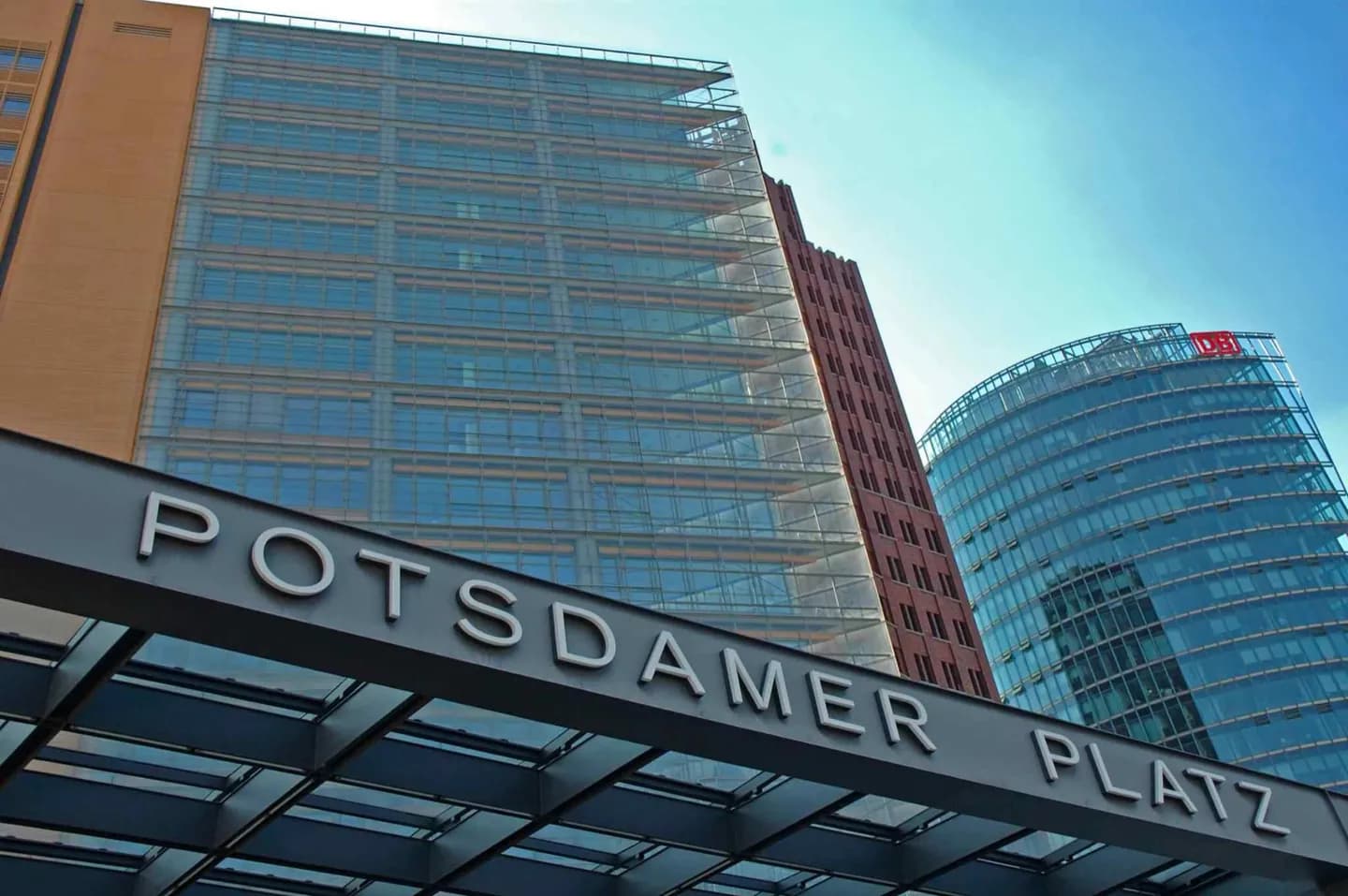
Why go
It is named after the city of Potsdam, some 25 km (16 mi) to the south west, and marks the point where the old road from Potsdam passed through the city wall of Berlin at the Potsdam Gate. After developing within the space of little over a century from an intersection of rural thoroughfares into the most bustling traffic intersection in Europe, it was totally laid waste during World War II and then left desolate during the Cold War era.
What to look for
- Compare the contemporary high-rise ensemble with preserved traces of the divided city.
The full story
Potsdamer Platz began as a trading post where several country roads converged just outside Berlin's old customs wall. The history of Potsdamer Platz can probably be traced back to 29 October 1685, when the Tolerance Edict of Potsdam was signed, whereby Frederick William, Elector of Brandenburg-Prussia from 1640 to 1688, allowed large numbers of religious refugees, including Jews from Austria and Huguenots expelled from France, to settle on his territory. A key motivation behind the Edict was so the Elector could encourage the rapid repopulation, restabilising and economic recovery of his kingdom, following the ravages of the Thirty Years' War (1618–48). Altogether up to 15,000 Huguenots made new homes in the Brandenburg region, some 6,000 of these in its capital, Berlin (indeed, by 1700 and for a while afterwards as much as 20% of Berlin’s population was French-speaking).
Useful to know
- Visit in daylight for the clearest reading of the architecture and surrounding urban space.
- Combine the stop with nearby sights on foot, allowing extra time only for any separate interior component.