
Why go
From this eastern hill, Bogotá's spread and the neighbouring Monserrate sanctuary become part of the same view. The religious setting gives the summit a different focus from a simple lookout. It suits a visit centred on the city panorama and the hill's long history of devotion.
What to look for
- The viewpoint faces Monserrate and its sanctuary across the eastern hills.
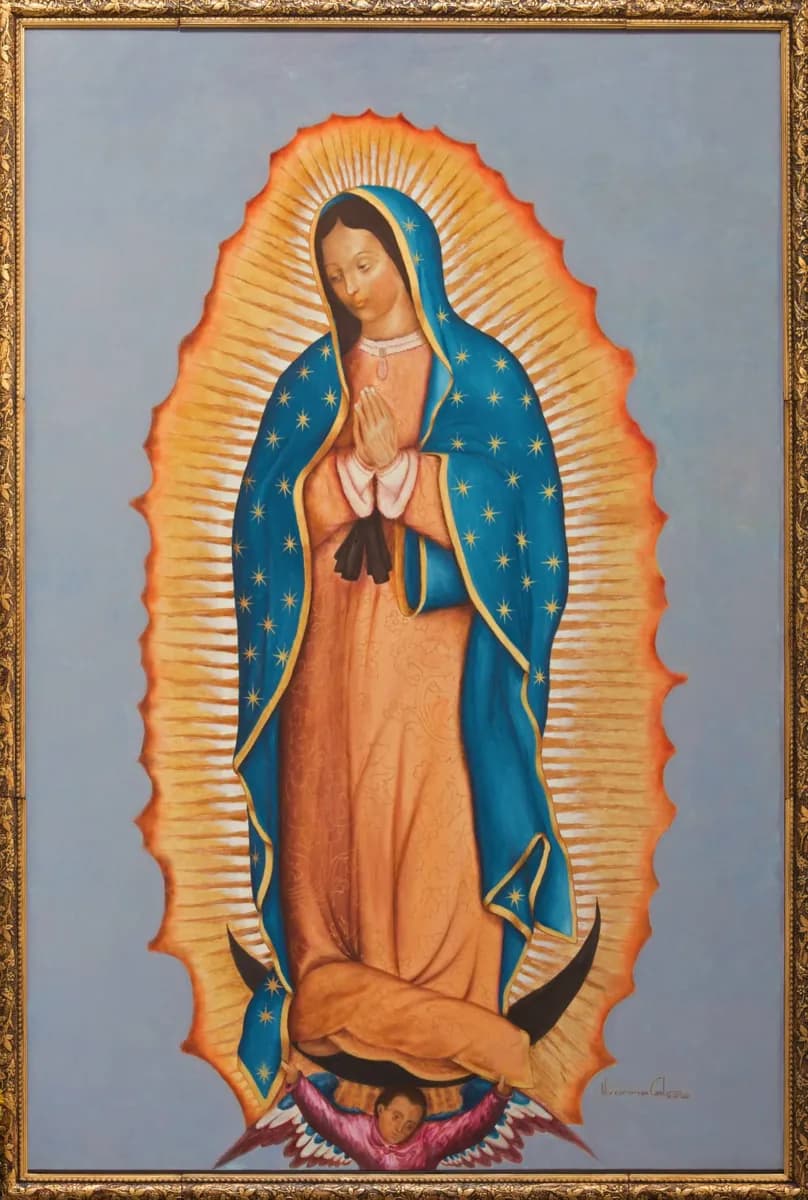
- The 15-metre statue depicts the Immaculate Conception, despite the hill's Guadalupe name.
- A small chapel stands beside the summit viewpoint.
The full story
Guadalupe's chapel has a history of rebuilding rather than uninterrupted survival. The first sanctuary was consecrated in 1656. Earthquakes repeatedly damaged or destroyed it, including those of 1743, 1785 and 1826. Another earthquake in 1917 left the chapel in ruins for decades. The rebuilding of 1945 restored a place of worship to the summit. A year later, sculptor Gustavo Arcila Uribe's monumental statue was erected above it. Although the hill is called Guadalupe, the figure represents the Immaculate Conception, patroness of Bogotá's archdiocese. That distinction gives the familiar silhouette a more precise meaning. Seen together, the modest chapel and the much larger statue tell different parts of the hill's religious story: a sanctuary repeatedly recovered after earthquakes, and a twentieth-century image visible against the skyline. The panorama places that devotional history directly above the city it overlooks.
Useful to know
- Check visibility before making the road journey; low cloud or rain can obscure the city panorama.
- Confirm summit access and road conditions before departure via the Choachí route.
- Distinguish the summit sanctuary from the separate Guadalupe–Aguanoso hiking trail when arranging your visit.
Your next visit
Estimated · Declared scenario and planning estimates; no live opening, weather, queue or booking service.
Outdoor visit · 30–45 min
World planning estimate; admission, opening, visit duration and access need checking.