
Why go
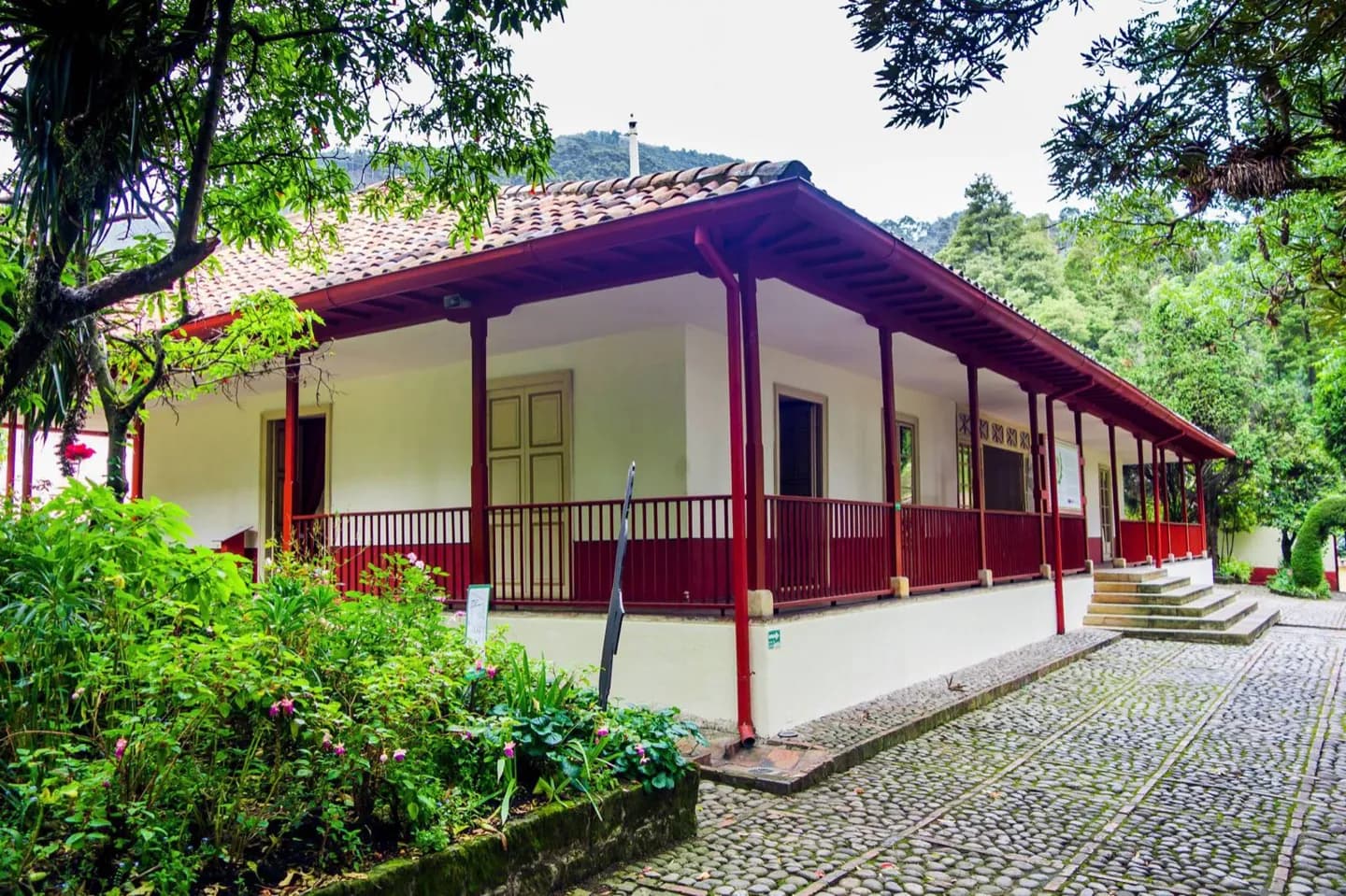
The house brings Bolívar’s public role down to the scale of a residence used between campaigns and political duties. The crucial distinction is that he owned it for a decade but stayed for only 423 days. That intermittent use makes the retreat more revealing than the idea of a permanent family home.
What to look for
- The country-house setting recalls Bolívar’s retreat from military and political duties.
- The museum interprets Bolívar’s life and the independence period.
The full story
New Granada gave the house to Simón Bolívar in June 1820 in gratitude for his role in independence. He owned it for ten years but occupied it for 423 days, staying between campaigns and political responsibilities. That difference between ownership and residence is central to understanding the place. After Bolívar left the capital, the property changed hands and served several other purposes, including a brewery, a tannery and a school. A public campaign begun in 1919 helped secure it for preservation and its later role as a museum. The house’s story therefore includes both Bolívar’s visits and the later effort to turn a much-altered property into a place of national memory. Its domestic scale offers a useful counterpoint to statues and government buildings that commemorate the same independence era.
Useful to know
- Read the house as an intermittently used retreat when considering its rooms and historical interpretation.
- Use the museum’s own visitor information to confirm admission details before setting out.
Your next visit
Estimated · Declared scenario and planning estimates; no live opening, weather, queue or booking service.
Outdoor visit · 30–45 min
World planning estimate; admission, opening, visit duration and access need checking.