
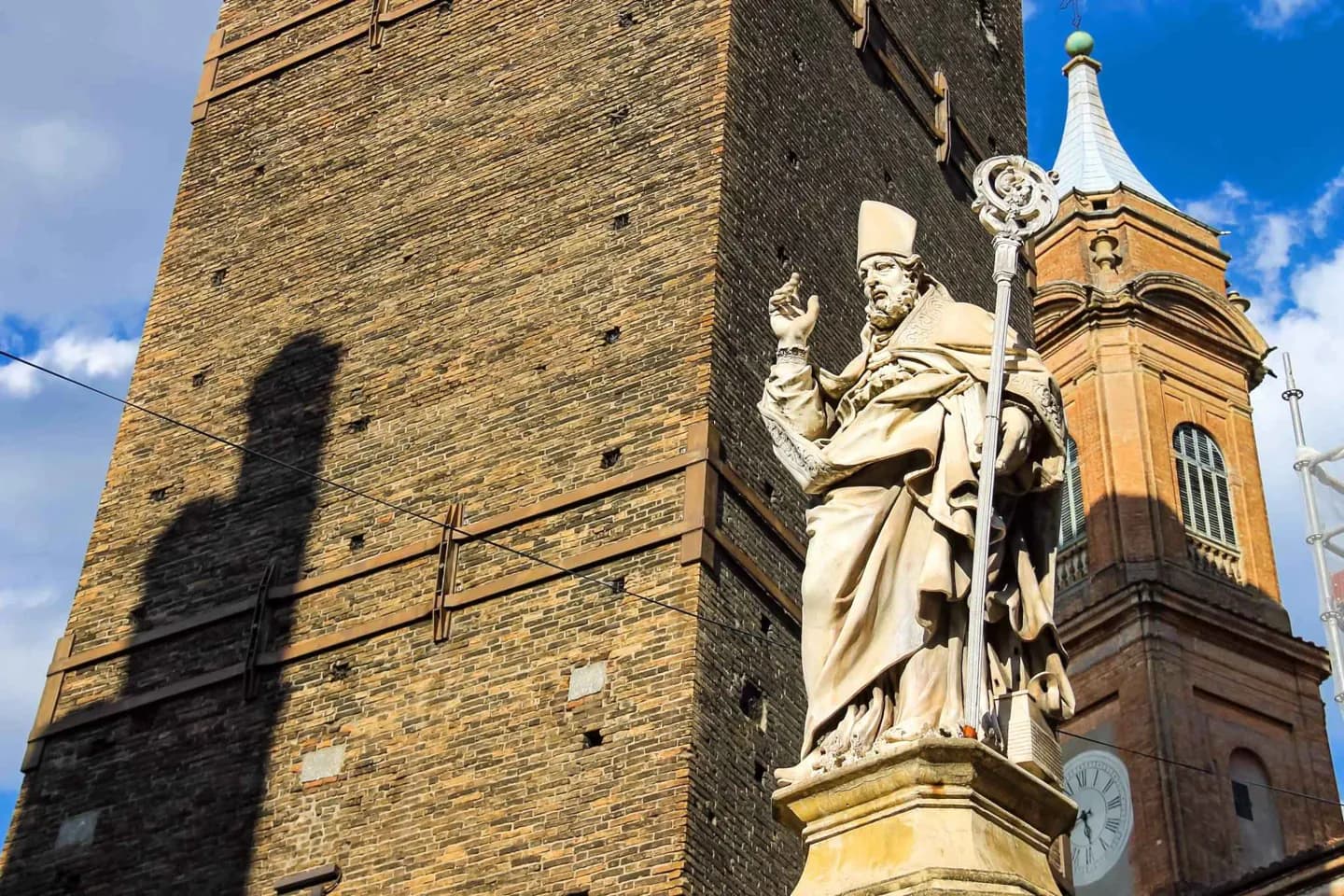
Why go
Follow the medieval city through the Two Towers, Santo Stefano and the university's older sites. Their different roles—family display, religion and scholarship—explain why Bologna became more than a market town. The former canal system adds a less obvious commercial layer to the same story.
The full story
After the Roman city declined, Bologna endured as a frontier settlement. Its association with Bishop Petronius and the complex of Santo Stefano belongs to this early medieval memory, though stories of his building work are traditional rather than a precise construction record. The city later grew under its commune, gaining greater control of its legal and economic affairs in the twelfth century. Trade helped pay for that growth. Canals moved goods through and beyond Bologna, while competing families raised towers in the crowded centre. The Asinelli and Garisenda towers remain a striking pair from a much larger towered city. At the same time, teachers and students gathered to study Roman law. The institution that became the University of Bologna grew from that culture of scholarship rather than from one original campus. Walk from the towers toward Santo Stefano, then look to the Archiginnasio for a later attempt to gather university teaching under one roof. Those stops show how medieval Bologna kept changing long after its first surge of wealth.