
The full story
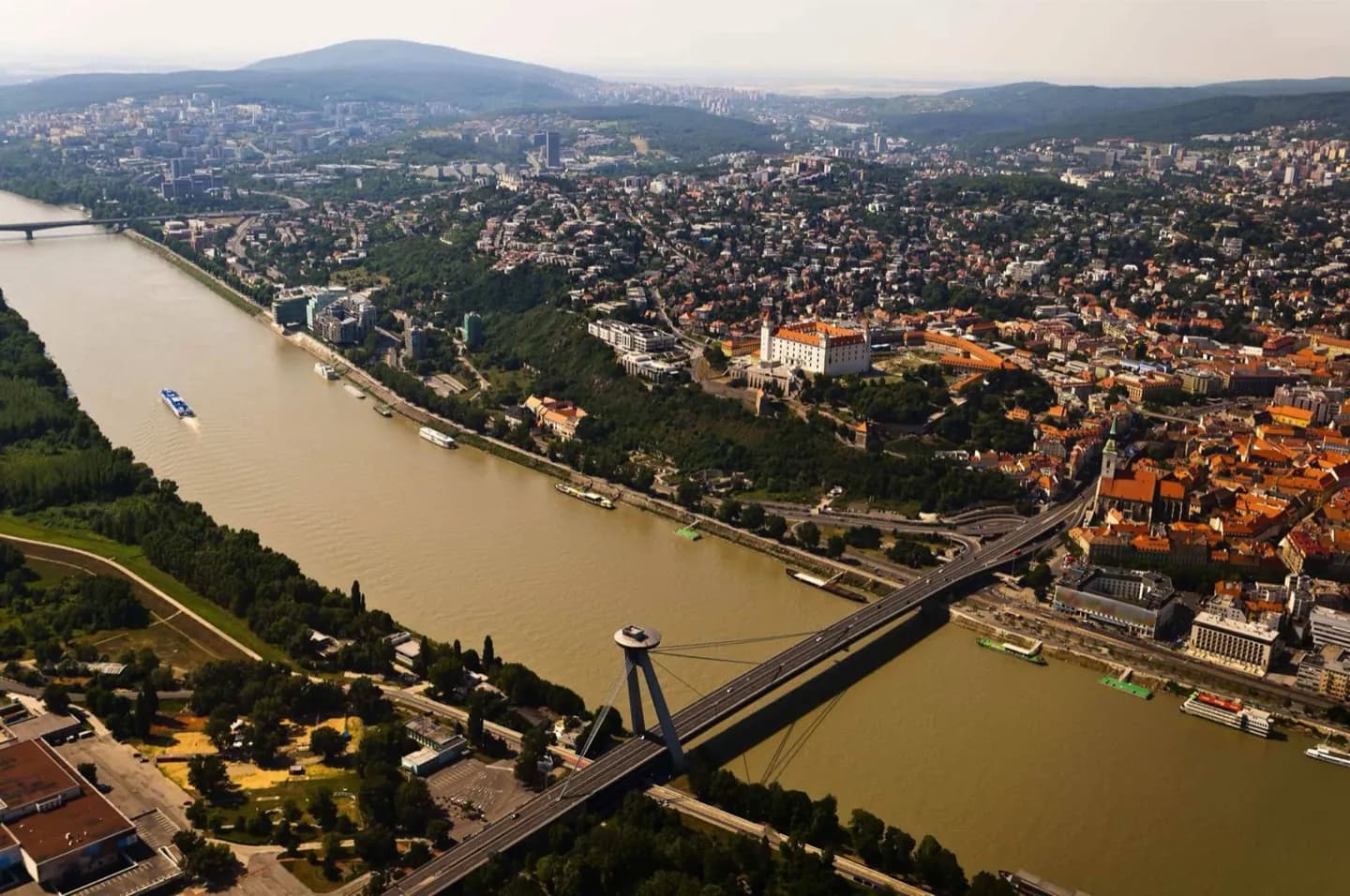
Bratislava sits on both banks of the Danube at the meeting point of the Carpathians and the lowlands. Austria begins just west of the city and Hungary lies to the south, making the capital’s cross-border position part of everyday geography rather than an abstract fact. Vienna is close enough to influence regional travel, but Bratislava retains a different scale and rhythm. For centuries the city was known by names including Pressburg and Pozsony. After Ottoman expansion changed the political map of the Kingdom of Hungary, it became the kingdom’s capital and a coronation city. That role survives in St Martin’s Cathedral, the palace district and crown markers along the historic route. The modern city extends far beyond the compact Old Town. Castle slopes, Danube bridges, twentieth-century civic buildings and the large Petržalka housing district show different periods side by side. Read Bratislava through these contrasts: royal and republican, Slovak and multilingual, medieval lanes and planned modern districts.