
Why go
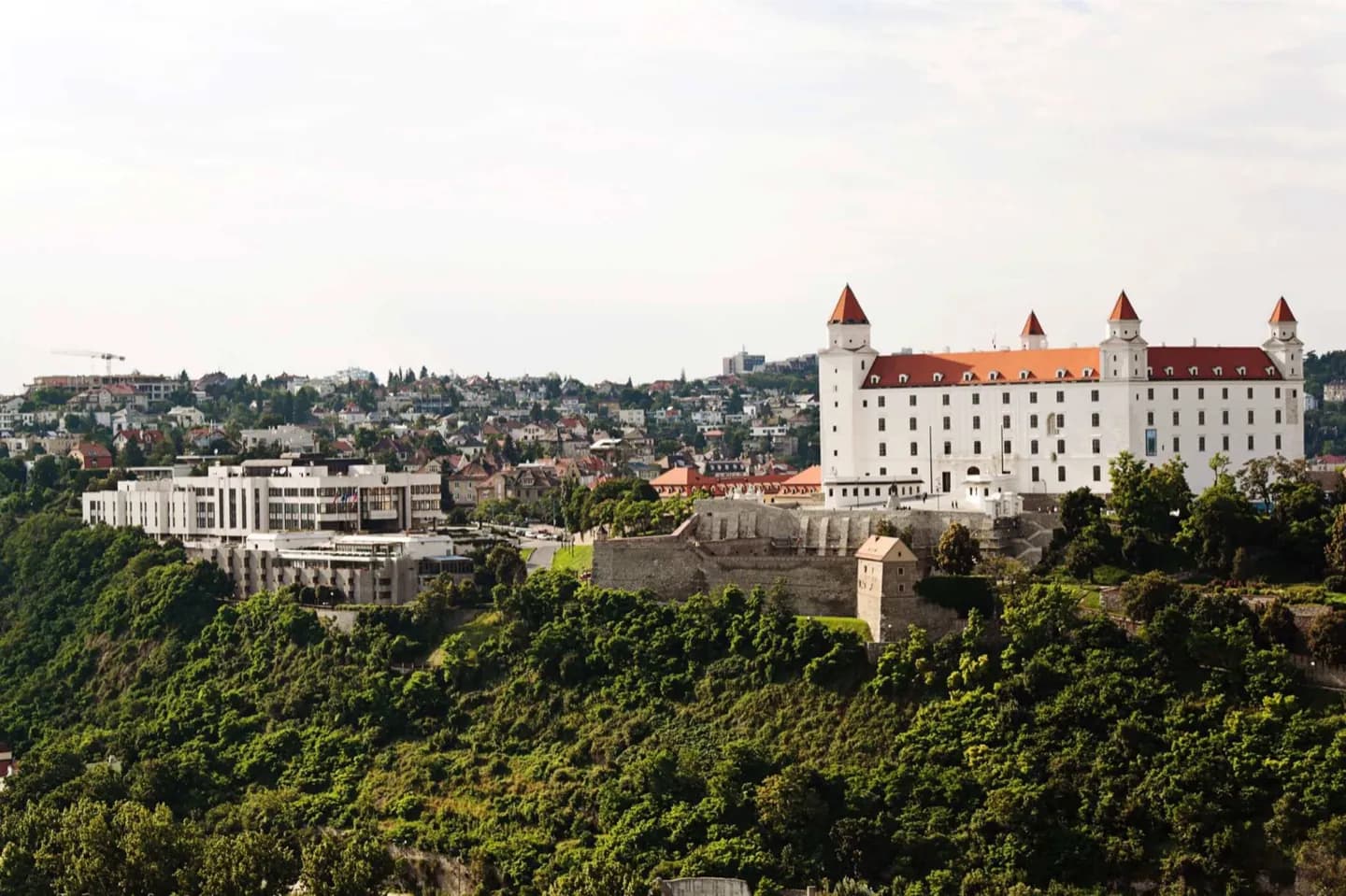
Bratislava’s geography changes the effort and comfort of a day. The Old Town is compact, but Bratislava Castle and Slavín require climbing, river bridges are exposed to wind, and Devín or the forest park add open terrain far from the centre. Put hilltop and river stops in the clearest, calmer part of the day.
The full story
The Danube crosses Bratislava from west to southeast, while the Morava joins it below Devín Castle. North of the centre, the Little Carpathians rise into forested city districts; south of the river, flatter land opens toward Hungary and Austria. This means a single itinerary can shift quickly from sheltered streets to steep slopes or exposed riverbanks. Bratislava has four distinct seasons. Summers can be hot, and hard surfaces in central squares amplify afternoon heat. Winters are cold and can feel sharper beside the river or on castle terraces. Wind matters throughout the year, especially on bridges, viewpoints and the Devín headland. Spring and autumn often suit long walks, though transitions can be brief and changeable. Build outdoor routes around the most exposed stop. Use museums, galleries and palace interiors as weather buffers. Carry water for the castle, forest park or zoo, and check daylight before committing to Devín or a longer woodland route.
Useful to know
- Put hilltop and river stops in the clearest, calmer part of the day.
- Keep one museum or palace interior available when heat, cold, rain or wind interrupts an outdoor route.