
Why go
The palace rewards visitors who want more than a handsome façade. The Peace of Pressburg was signed here after Austerlitz, while the interior collection includes six seventeenth-century English tapestries whose survival gives the visit an unexpected art-historical focus. The Hall of Mirrors recalls the signing of the 1805 Peace of Pressburg.
What to look for
- The Hall of Mirrors recalls the signing of the 1805 Peace of Pressburg.
- Six English tapestries form the palace’s most distinctive interior ensemble.
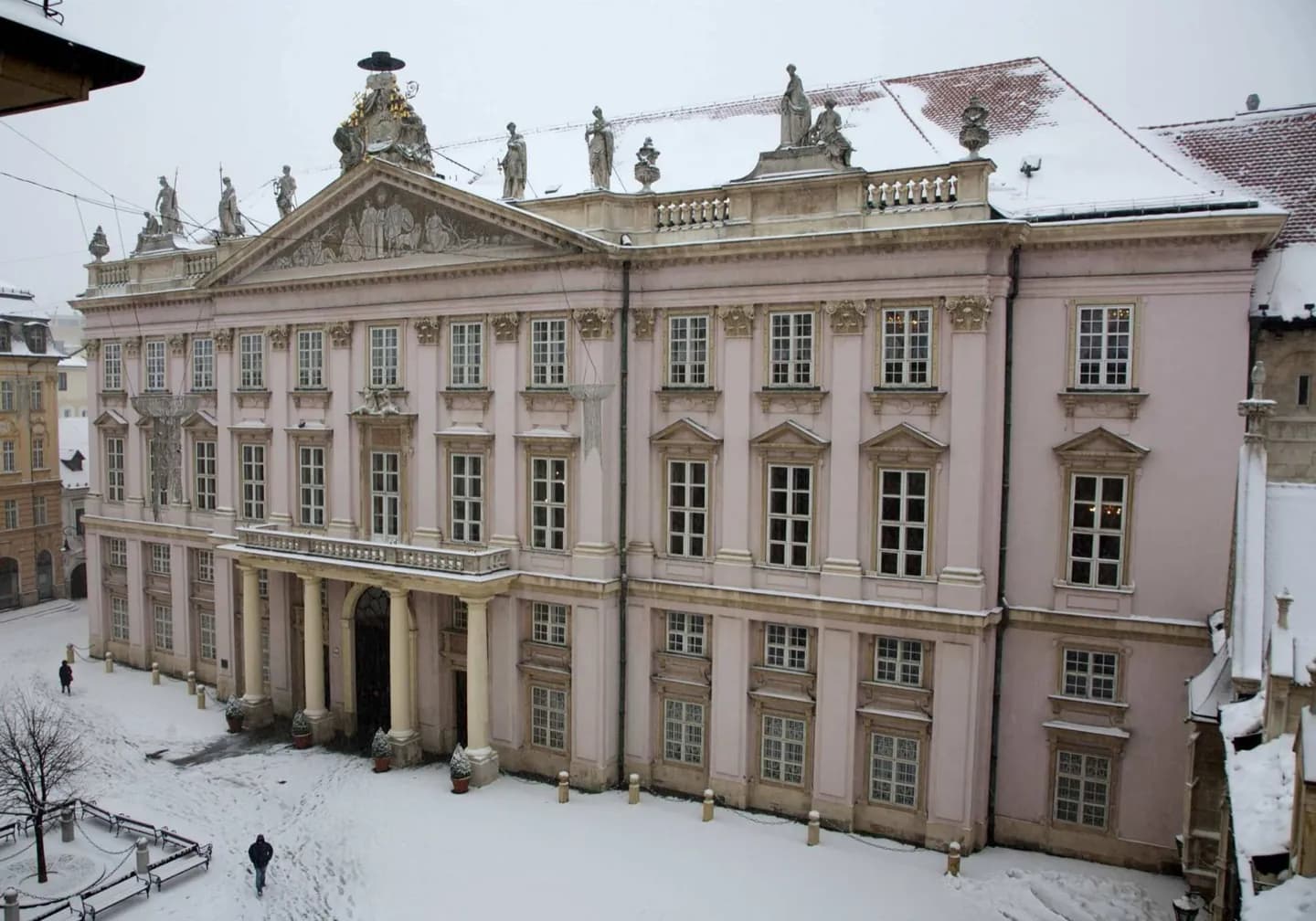
- The restrained façade contrasts with richer Baroque buildings nearby.
The full story
A pale Neoclassical palace with ceremonial rooms, rare English tapestries and a major diplomatic story, offering a focused interior visit in the Old Town. The palace rewards visitors who want more than a handsome façade. The Peace of Pressburg was signed here after Austerlitz, while the interior collection includes six seventeenth-century English tapestries whose survival gives the visit an unexpected art-historical focus. The Hall of Mirrors recalls the signing of the 1805 Peace of Pressburg. Six English tapestries form the palace’s most distinctive interior ensemble. The restrained façade contrasts with richer Baroque buildings nearby. Check current public-room access before visiting because the building retains civic functions. Combine it with Old Town Hall; their entrances are only a short walk apart. Seen together, these features make Primate’s Palace easier to understand within its particular urban and historical setting.
Useful to know
- Check current public-room access before visiting because the building retains civic functions.
- Combine it with Old Town Hall; their entrances are only a short walk apart.
Your next visit
Estimated · Declared scenario and planning estimates; no live opening, weather, queue or booking service.
Outdoor visit · 30–45 min
World planning estimate; admission, opening, visit duration and access need checking.