
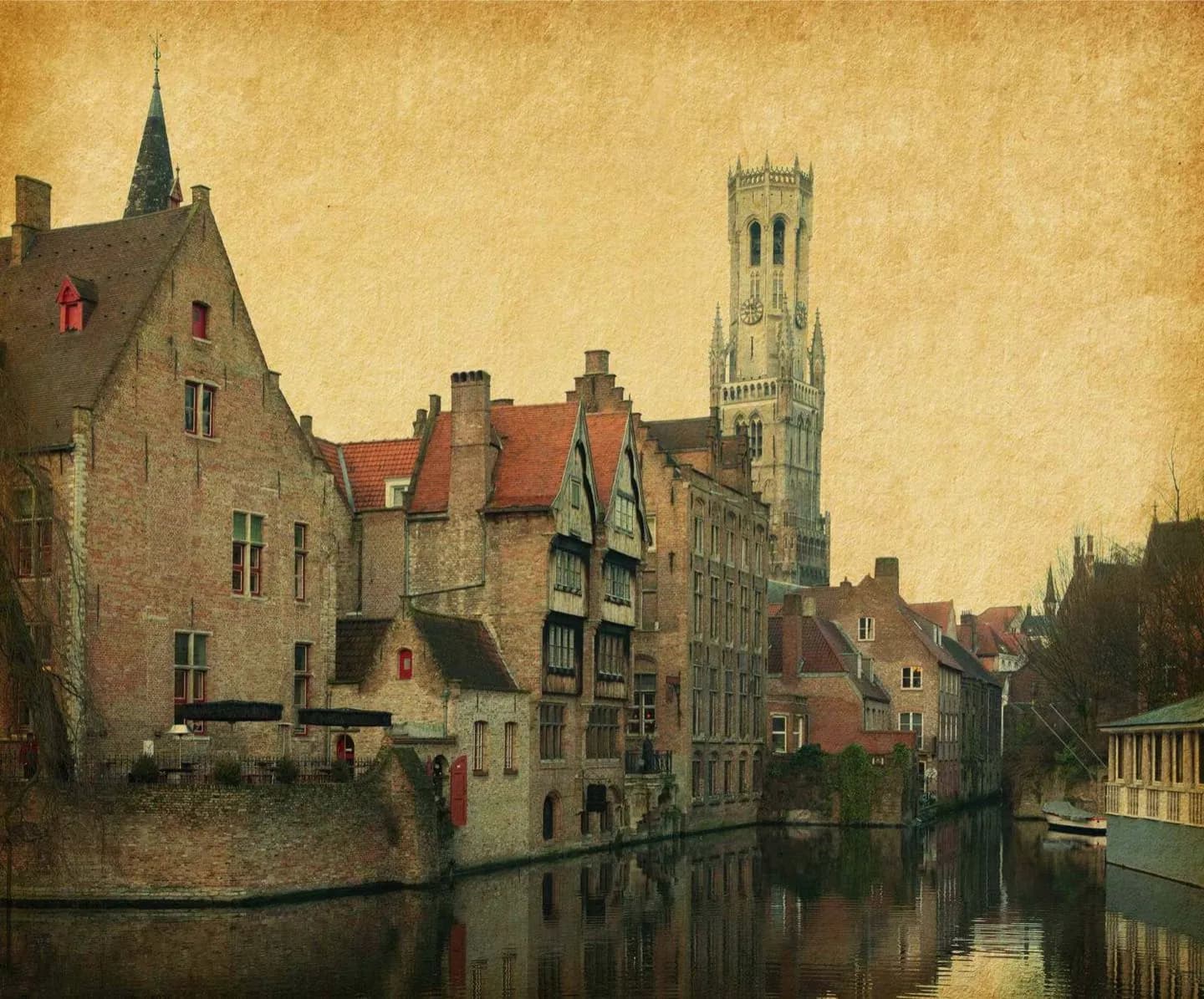
Why go
The city’s history explains why civic monuments and sacred art stand so close together. Cloth, international shipping and finance brought merchants and capital to Bruges, while later political and economic change preserved a centre whose buildings still reveal that rise. Reading the city chronologically adds meaning to the Markt, belfry and museum collections.
The full story
Early Bruges developed around fortified ground in coastal Flanders, with trade links returning after periods of instability. By the 12th and 13th centuries, cloth production and protected markets had made the city part of a wider Flemish commercial network. English wool, Hanseatic shipping and Mediterranean merchants connected Bruges to northern and southern Europe. Genoese traders arrived in 1277, and Venetian galleys followed, bringing goods, capital and new financial practices. The city’s wealth funded the civic and religious culture now visible in the Markt, belfry, churches and collections of Flemish painting. It also produced conflict. In 1302, the Bruges Matins preceded the Flemish victory over French forces at the Battle of the Golden Spurs near Kortrijk. Trade later shifted as access to the sea changed and rival centres grew. Bruges lost its dominant commercial position, but the surviving street plan and monuments allow the medieval trading city to be read unusually clearly on foot.