
Why go
The collection makes it possible to follow regional painting beyond Bruges’ medieval peak. Begin with the concentrated Flemish Primitive rooms, then compare their precise surfaces with later Renaissance, Baroque, Symbolist, Expressionist and modern works rather than trying to absorb every period equally.
What to look for
- Flemish Primitive panels form the collection’s clearest link to Bruges’ artistic importance.
- Works by Jan van Eyck reward close attention to faces, fabrics and reflected light.
- Later galleries carry the story through Belgian Symbolism, Expressionism and modern art.
The full story
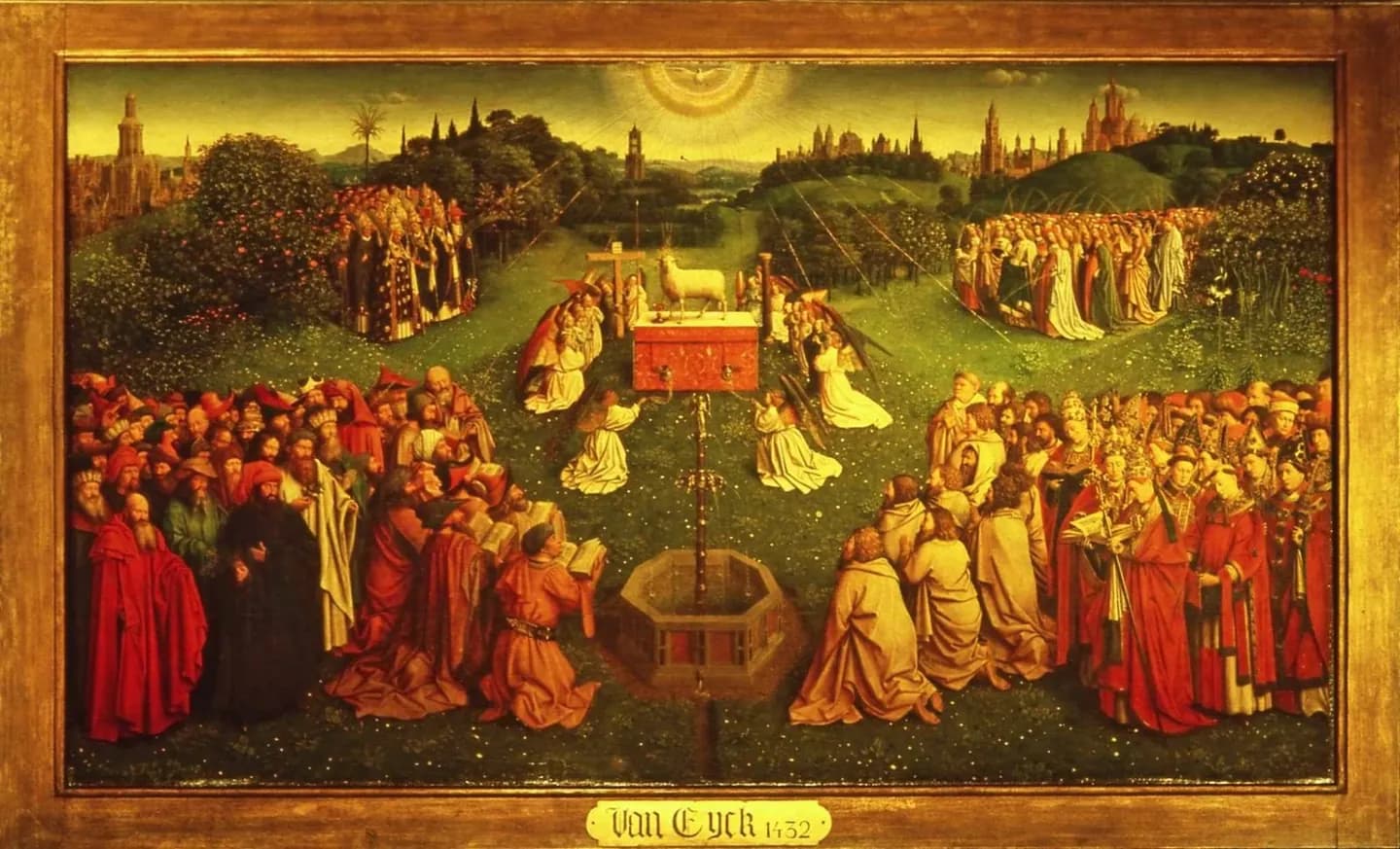
The Groeningemuseum is best known for Flemish Primitive painting, but its collection deliberately extends across six centuries. Early Netherlandish panels establish the opening argument: close observation, controlled light and minute material detail could carry both religious meaning and social status. Jan van Eyck is the central name, yet the sequence matters as much as any single work. Renaissance and Baroque painting show later artists responding to different patrons and pictorial fashions. Eighteenth- and nineteenth-century galleries introduce Neoclassicism and Realism, followed by Belgian Symbolism and Modernism. Flemish Expressionism and post-war art bring the survey into a very different visual world. Moving chronologically shows that Bruges’ artistic identity did not end with its medieval prosperity. The museum is therefore most rewarding as a series of comparisons—surface against gesture, devotion against modern experiment—rather than as a checklist of famous painters.
Useful to know
- Choose two or three periods before entering; the chronological range is broad enough to reward a selective visit.
- Pair the museum with the nearby Church of Our Lady if comparing painted panels with sculpture appeals.
- Check the current museum timetable before setting out, especially at the start of the week.
Your next visit
Estimated · Declared scenario and planning estimates; no live opening, weather, queue or booking service.
Outdoor visit · 10–15 min
Public-space walk and exterior observation only; no interior, garden, tower or ticketed admission included. Durations and walking are estimates. Check temporary restrictions and park or market opening times.
Outdoor visit · 30–45 min
World planning estimate; admission, opening, visit duration and access need checking.