
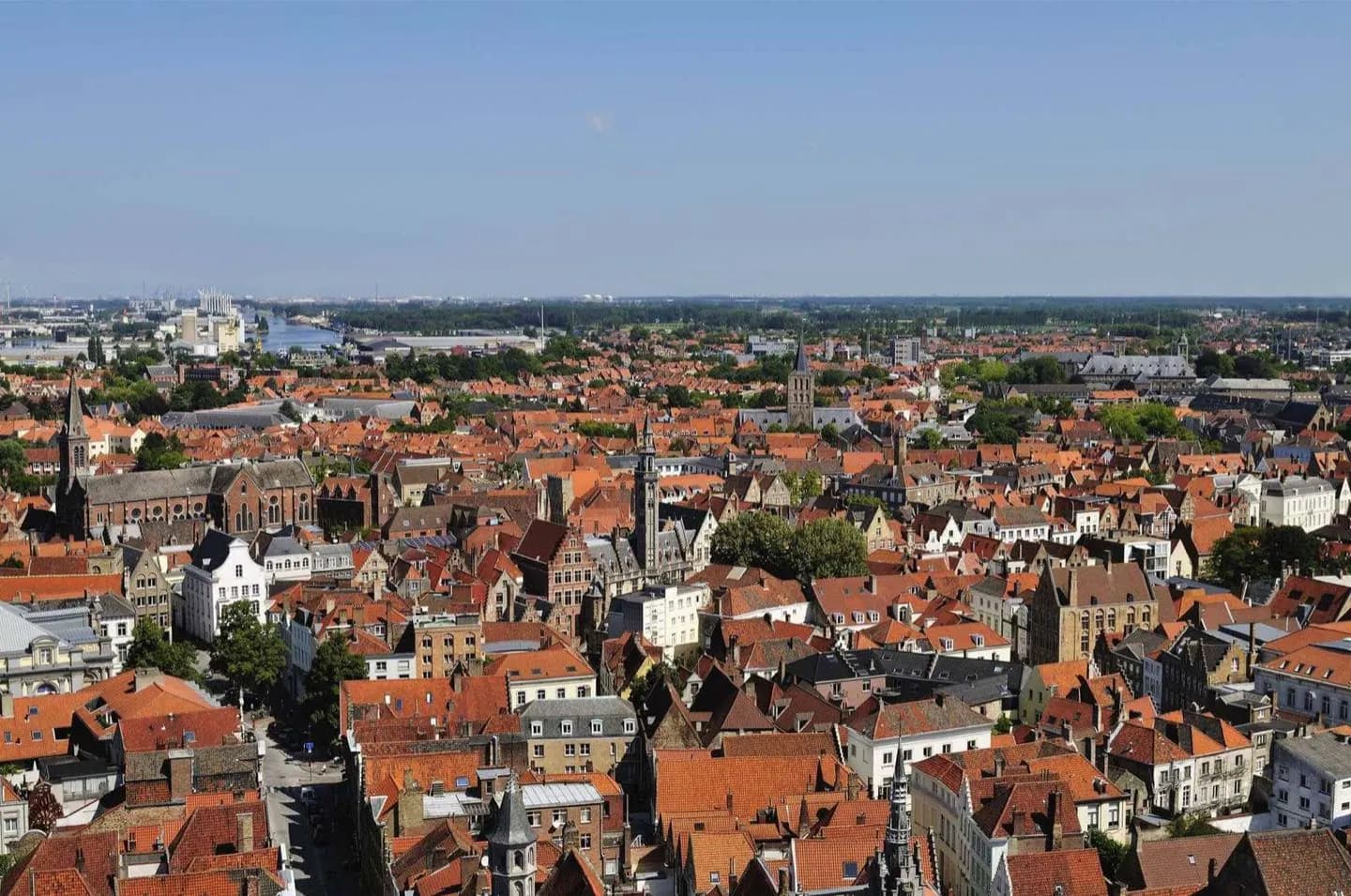
Why go
Zeebrugge offers a sharp change from Bruges’ enclosed medieval centre. Walk the beach, look across the harbour and notice how a seaside resort, fishing community and industrial port share the same strip of coast rather than expecting a conventional historic-town excursion.
What to look for
- A wide sandy beach opens the district directly onto the North Sea.
- The harbour panorama brings fishing craft and large-scale port infrastructure into one view.
- The older fishing-town character remains distinct from the restricted industrial terminals.
The full story
Zeebrugge is both a subdivision of Bruges and the city’s modern connection to the North Sea. That dual identity explains its unusual layout. A beach and seafront sit close to a marina and fishing activity, while the larger harbour handles vehicles, containers, energy products and other cargo on an international scale. Rail and tram links connect the coast with Bruges and the other Belgian seaside towns. The contrast is the main point of a visit: leisure, fishing and logistics occupy adjacent spaces but follow different access rules. The industrial terminals are working infrastructure, not a public attraction, whereas the beach, town streets and designated harbour views are open parts of the district. Seen from those public areas, the port gives context to Bruges’ long commercial history without pretending that its current operations resemble the medieval trade represented in the city centre.
Useful to know
- Use the train or Coastal Tram to reach the public district without navigating port traffic.
- Keep to the beach, marina and public viewpoints; operational terminals are not sightseeing areas.
- Check coastal weather before leaving Bruges, as the beach and harbour viewpoints are exposed.
Your next visit
Estimated · Declared scenario and planning estimates; no live opening, weather, queue or booking service.
Outdoor visit · 30–45 min
World planning estimate; admission, opening, visit duration and access need checking.